
Museums are strange places if you think about them honestly. People respect them, but they don’t always feel comfortable inside them. A lot of people like the idea of museums more than the experience itself. They say museums are important, educational, meaningful. Still, many don’t visit unless there’s a clear reason.
Part of the hesitation comes from not knowing what to expect. You don’t know how big the place is. You don’t know where to start. You don’t know whether you’ll understand what you’re looking at or feel lost five minutes in. That uncertainty stays in the background and quietly stops people from going. This is where 360° image-based museum tours fit in, without trying to fix everything or explain too much.
What It Feels Like to Enter a Museum Online
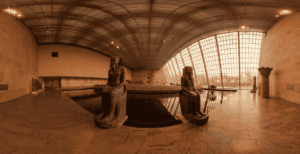
A 360° museum tour doesn’t feel like content. It feels more like standing somewhere and taking a moment before moving. You open the tour and suddenly you’re inside a room. Not moving. Just there.
You turn slightly. You notice the walls. You notice the space between objects. You notice how quiet the room feels, even through a screen. Nothing tells you what to do next. You move when you’re ready. That small sense of control matters more than people realize.
Why Images Work Better Than Videos Here
Videos are always in a hurry. Even slow videos are still moving forward. You’re always catching up with them. With a 360° image, there’s no hurry. The image waits. You don’t.
You might stare at the ceiling for a few seconds. You might ignore half the room. You might move backward instead of forward just to understand how the space connects. None of that feels wrong. Museums are not places meant to be rushed, and image-based tours respect that.
Understanding History Without Being Told What to Think
A lot of history feels heavy because it’s usually explained before it’s seen. Dates, names, movements, periods. All of that comes first.
But when you see a historical space before hearing the explanation, something changes. You notice how small or large a room is. You notice which objects are protected behind glass and which are more open. You start forming questions instead of memorizing answers. That’s a quieter way of learning, and for many people, a more honest one.
Art Needs Space, Not Just Attention
Art looks very different when it’s removed from its environment. A painting on a website is just an image. In a gallery, it’s something you stand in front of.
Through a 360° tour, you begin to feel that difference again. You see how far back you would need to stand. You notice whether the room feels crowded or open. You see which works are given space and which are grouped together. These details don’t need explanation. You understand them naturally.
What You Usually See in These Tours
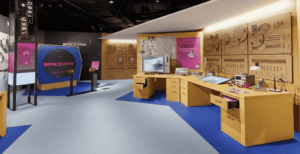
Most museum tours don’t try to show everything, and that’s a good thing. Too much information makes people disengage.
Typically, you’ll move through:
- the entrance area
- a few introductory rooms
- main galleries or exhibition halls
- spaces that define the building’s character
You won’t see storage rooms or staff-only areas. That’s not about hiding. It’s about keeping the experience clear.
How These Tours Are Put Together, Quietly
Before any images are taken, someone walks the museum again and again. They pay attention to how people naturally move. Where they slow down. Where they seem unsure. The camera isn’t placed for drama. It’s placed where a person would normally stand.
Museums are difficult spaces to photograph. There are reflections, glass surfaces, mixed lighting, and strict rules. Nothing is shifted to look nicer. What you see in the tour is what a visitor would actually see.
After the images are ready, they’re connected in the simplest way possible. One room leads to the next. No tricks. No shortcuts.
How People Really Use These Tours
Not everyone uses these tours the same way.
Some students open them while working late, just to understand layout. Some teachers show a single room during a class discussion. Some people open them for a few minutes, then close them and never return. Others come back again and again, slowly exploring. There is no correct usage. That’s part of why these tours work.
Access Without Pressure or Attention
For some people, museums are physically difficult to visit. For others, they’re mentally exhausting. Crowds, noise, unfamiliar spaces—all of that adds up.
An online tour removes those layers. You don’t have to explain why you’re leaving early. You don’t have to keep up with anyone else. You don’t even have to understand everything. You can just look.
Why Museums Choose This Approach
From a museum’s point of view, image-based tours are practical. They help visitors arrive more prepared. They reduce repeated questions. They preserve exhibitions digitally.
But more than that, they allow museums to stay visible without turning into entertainment. They don’t shout. They don’t simplify. They just open the space.
Who Benefits the Most
These tours help people who:
- feel unsure about museums
- learn better visually
- prefer to explore privately
- cannot travel easily
- want to understand before committing
Sometimes that’s enough to change someone’s relationship with cultural spaces.
360° image-based museum tours don’t replace real visits, and they don’t try to. They lower the barrier to entry.
They allow people to approach art, history, and culture without feeling tested or rushed. They make museums feel less distant and more human. And sometimes, that quiet invitation is exactly what people need.