
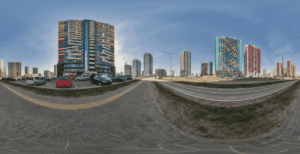
Understanding a building is rarely about how good it looks in a picture. Most buildings look fine in photos. What people actually struggle with is understanding how the building works as a whole. Where you enter, how spaces connect, how long it takes to move from one area to another, and whether the inside feels as expected when compared to the outside. These are simple questions, but they are surprisingly hard to answer through drawings, renders, or selected photographs.
This is where 360° image-based architectural tours become useful. They don’t try to explain design ideas or sell an experience. They simply let someone look around a real building and move through it visually, both inside and outside, without being physically present. That small shift—from being shown something to being allowed to explore—changes how people understand buildings.
Why Looking at Buildings Is Harder Than It Seems
When people see a floor plan, they often pretend to understand it. They might follow along during a discussion, but internally they’re guessing. Renders can look convincing, but they’re idealised. The Lighting is perfect. Spaces feel larger than they usually are. And photos only show what someone chose to frame.
None of these show continuity. They don’t show how exterior and interior relate to each other. They don’t show what happens between one room and the next. And they don’t show scale in a way most people naturally understand.
A 360° image tour fills this gap by showing the building exactly as it exists, one position at a time. There’s no attempt to guide emotion or highlight only the “best” parts. You’re simply placed inside the building and allowed to look around.
What a 360° Building Tour Actually Is
A 360° architectural tour is built from real panoramic images captured at different points inside and outside a building. Each image represents a place where a person could realistically stand. These images are then linked together so the viewer can move between them.
There’s no animation pretending to be a walkthrough. You’re not watching a camera glide through walls. You stop. You look around. You decide where to go next.
That control is what makes the difference. People move at different speeds. Some want to rush through. Others want to pause and inspect details. A 360° tour allows both, without forcing a fixed path.
Exterior and Interior Seen as One Experience
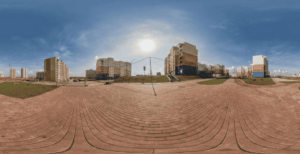
One of the biggest advantages of exploring buildings through 360° images is that exterior and interior don’t feel like separate presentations. In real life, you approach a building before you enter it. You notice scale, orientation, and surroundings. Those impressions affect how the interior feels.
A good 360° building tour starts outside. It shows how the building sits in its context. The approach. The entrance. The transition from outside to inside. Only after that does it move deeper into interior spaces.
This continuity matters. A lobby makes more sense when you understand where you came from. Natural light makes more sense when you’ve seen the building’s orientation. Without this connection, interiors often feel abstract.
How People Actually Use These Tours
Most people don’t use 360° architectural tours for entertainment. They use them to answer practical questions.
Clients use them to understand what they’re approving. Designers use them to review their own work. Consultants use them to familiarise themselves with spaces before meetings. Students use them to study real buildings they can’t visit.
What’s common across all these uses is distance. Either physical distance or time constraints. The tour becomes a way to reduce uncertainty before decisions are made.
What Viewers Tend to Focus On
Interestingly, people don’t focus on design concepts when using these tours. They focus on everyday experience.
They notice:
- Whether spaces feel tight or open
- How easy it looks to move through the building
- How light changes from one area to another
- Where circulation feels clear or confusing
- How interior spaces relate back to the exterior
These observations are practical, not theoretical. And they often lead to better conversations than abstract design discussions.
Choosing What to Include in a Tour
A 360° building tour does not need to show every single room. In fact, trying to show everything usually makes the tour less useful.
Most effective tours focus on:
- The building approach and exterior views
- Entry points and transition spaces
- Primary functional rooms
- Corridors, stairs, and movement paths
- Key interior zones that define the layout
Storage rooms, service areas, or secondary spaces are included only if they help someone understand how the building works. The goal isn’t documentation for records. It’s clarity for people viewing it.
How These Tours Are Created in Practice
The process is fairly straightforward, but it requires planning. Before any images are captured, someone decides what the viewer should understand by the end of the tour. That decision affects camera placement, spacing, and sequence.
Images are taken at normal eye level, from positions where a person would naturally stop and look. Extreme angles are avoided. Camera placement matters more than camera quality. Poor placement can distort how a space feels.
Once the images are captured, they’re linked together in a logical order. Movement should feel natural, not random. The viewer should never feel lost or unsure where to go next. Sometimes simple labels are added. Sometimes nothing is added at all. Over-explaining often does more harm than good.
What These Tours Do Well
360° architectural tours are very good at showing space honestly. They show real proportions. Real connections. Real conditions.
They help:
- Reduce misunderstandings early
- Save time during discussions
- Minimise unnecessary site visits
- Support clearer decision-making
- Give non-technical viewers confidence
They work especially well when people need to understand a building before it’s convenient to visit in person.
What They Don’t Do
These tours don’t replace physical experience. You can’t feel materials. You can’t hear sound. You can’t sense temperature, airflow, or smell.
They also show the building as it was at the moment of capture. Any changes after that won’t be reflected until the tour is updated. Understanding these limits is important. When treated as a support tool rather than a replacement, 360° tours are far more effective.
Who Benefits the Most
Anyone who needs spatial understanding without immediate access benefits from these tours:
- Clients and stakeholders
- Architects and designers
- Consultants and reviewers
- Developers
- Students and educators
If someone needs to understand how a building actually works, not just how it looks on paper, a 360° image tour helps.
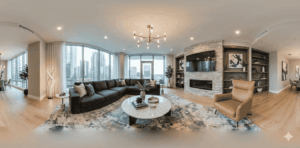
Exploring buildings through 360° images doesn’t try to simplify architecture or dress it up. It just makes space visible in a way most people naturally understand.
There’s no pressure to agree with a design. No need to interpret drawings. People look, move, pause, and form their own opinions. That leads to clearer feedback, better questions, and fewer assumptions. In many cases, that simple clarity is enough.