
Most people don’t stay away from museums because they don’t understand them. Usually it’s simpler than that. Museums take time. They also need patience, which many people don’t have when they visit.
People are often tired or trying to rush through the visit. With noise, movement, and other visitors, most labels aren’t read properly. Paintings are seen for a few seconds. Objects that are supposed to explain something important don’t really get noticed.
There’s also the issue of location. Many museums and galleries are far from where people live. Some are in different cities. Some are in different countries. Going there isn’t always possible. And when someone does manage to visit, crowds, fixed visiting hours, and physical tiredness affect how much attention they can give to the exhibits.
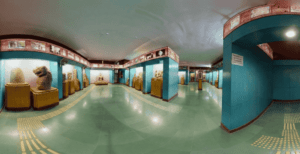
Virtual museum and 360° art gallery tours emerged quietly as a way to remove those barriers. Not by simplifying culture, and not by turning museums into entertainment, but by giving people space to look properly. A virtual tour doesn’t rush you. It doesn’t decide what you should focus on. It simply places you inside the exhibition and lets you take your time.
What a Virtual Museum Tour Actually Is
At its simplest, a virtual museum tour is a sequence of real, connected panoramic images captured inside galleries, halls, and exhibition spaces. Nothing is imagined. Nothing is staged beyond how the space already exists.
You are not watching a guided video. You are standing inside the museum digitally, choosing where to look and where to move next.
That control changes how people engage. Viewers linger. They return to the same object more than once. They look at surrounding details instead of only the main display. The experience becomes personal rather than instructional.
This is why museums use virtual tours not only for visitors, but also for documentation, education, and long-term reference.
Why Traditional Online Museum Content Often Feels Incomplete
Most museum websites rely on selected photographs and written descriptions. While informative, they fragment the experience. A sculpture appears without its surrounding space. A painting is shown without context. An artifact is explained, but its placement within the exhibition is lost.
In physical museums, context matters. Objects relate to one another. Lighting guides attention. Movement through space shapes understanding.
Virtual tours restore that missing layer. Instead of showing isolated highlights, they show how everything fits together. Viewers don’t need to imagine relationships between objects. They see them directly. That difference reduces misunderstanding and makes learning feel more natural.
What People Pay Attention To Inside a Virtual Museum Tour
Interestingly, visitors rarely focus on academic classifications or curatorial theory. They focus on human details.
They notice:
- How close they can get to an artifact
- How much space surrounds a painting
- Whether an exhibition feels dense or open
- How one section leads into the next
- Where they naturally slow down
These are the same observations people make during physical visits. That’s why feedback from virtual tours often feels thoughtful rather than abstract.
360° Art Gallery Tours and Artistic Intent
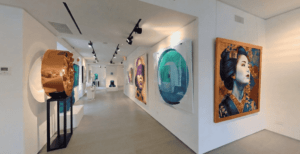
For art galleries, the challenge is not access to information—it’s preserving intent. Art is not only about what is displayed, but how it is displayed.
A 360° gallery tour allows viewers to understand spacing, scale, and arrangement. They can step back to see multiple works together or move closer to study a single piece. Sculptures are no longer limited to one angle. Installations can be experienced as environments rather than flat images.
This matters to artists and curators because the meaning of an exhibition often lies in these relationships, not just in individual works.
Which Parts of a Museum Are Usually Shown
A virtual museum tour does not need to include every corridor and storage room. In fact, restraint improves clarity.
Most tours focus on:
- Main exhibition halls
- Permanent collections
- Key artifacts or artworks
- Transitional spaces that guide movement
- Special or temporary exhibitions
Behind-the-scenes areas are included only when they serve a clear educational purpose. The goal is not completeness. It is understanding.
How Virtual Museum Tours Are Created
The process begins with intention. Someone must decide what the viewer should understand after exploring the tour. That decision shapes everything else.
Next comes image capture. Camera placement is crucial. Images are usually taken at natural eye level, with consistent spacing, so movement feels realistic. Poor placement can distort scale and misrepresent space.
Once the images are captured, they are linked in a logical walking order. Jumping abruptly between areas breaks immersion. Smooth transitions preserve the feeling of presence.
Text labels or audio notes may be added, but sparingly. Museums work best when objects speak first. Explanations should support, not dominate. Finally, the tour is tested from a visitor’s point of view. Confusing navigation is adjusted. Unclear areas are refined.
How Museums and Cultural Institutions Actually Use These Tours
In practice, virtual museum tours are rarely standalone experiences. They support broader goals.
Museums use them to:
- Reach audiences who cannot visit physically
- Support school and university education
- Archive exhibitions after they close
- Prepare visitors before in-person visits
- Extend the life of temporary exhibitions
For many institutions, virtual tours are less about marketing and more about responsibility—sharing culture without limiting who gets access to it.
What Virtual Museum Tours Do Well — and Where They Stop
Virtual tours excel at showing space, layout, and visual relationships. They allow slow observation and repeat visits.
What they cannot do is replace physical sensation. You cannot feel texture, sense temperature, or experience sound the same way. And the tour reflects the museum exactly as it appeared on the day it was captured—nothing more.
But as tools for observation and understanding, they are honest. They replace assumptions with direct viewing, which is often enough.
Who Benefits the Most From Virtual Museum and Gallery Tours
These tours are useful for anyone who wants to understand culture without pressure. That includes:
- Students and educators
- Researchers and historians
- Art lovers
- Curators and planners
- Visitors with accessibility needs
- People exploring museums for the first time
If learning improves when you can slow down, virtual tours help.
Virtual museum and 360° art gallery tours do not try to explain culture loudly or in a rushed way. Instead, they offer a calmer experience by giving people the space to look carefully and without interruption. This allows heritage to be understood at its own pace. In places where meaning comes from slow and careful observation, this kind of access is not a shortcut but a natural extension of the museum experience itself.