
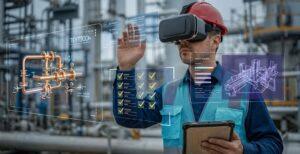
The energy and utilities sector is highly complex and risk-intensive, where precision is critical. Because even the smallest error in environments like power plants, substations, or oil rigs can lead to serious outcomes.
Training, therefore, is not just important—it is critical.
Despite their importance, traditional training methods often fail to fully prepare workers for real-world hazards—this is where VR training steps in to transform the experience.
By delivering immersive and highly realistic simulations, VR is transforming how energy and utility professionals train, develop skills, and perform in high-risk environments.
What is VR training in energy & utilities?
VR training uses realistic virtual environments to replicate real-life situations.
- Power plants
• Electrical substations
• Oil and gas facilities
• Wind and solar energy sites
• Field service locations
Using VR headsets, employees can step into lifelike environments, work with tools and systems, Using VR headsets, employees can step into lifelike environments, work with tools and systems,
Why the Industry Needs VR Training
Traditional training methods—like classroom sessions, manuals, and basic physical simulations—often come with limitations. They offer limited exposure to real-world risks, can be costly to set up, may involve safety concerns during live practice, and often lack consistency across training sessions. VR training overcomes these challenges by providing a safe, controlled, and repeatable environment where employees can learn effectively and confidently.
Key Components of VR Training Systems
1. Immersive Hardware: With VR headsets and controllers, users can naturally interact with virtual environments.
2. Simulation Software: The software simulates realistic environments such as substations and oil rigs, including step-by-step workflows and procedures.
3. Scenario-Based Learning: Training modules are designed to reflect real-world situations, including equipment failures, emergency shutdowns, electrical hazards, and routine maintenance procedures, allowing employees to gain practical, hands-on experience in handling critical scenarios.
4. Performance Analytics: Advanced VR systems capture key performance metrics such as precision, reaction time, and safety compliance.
How VR Training Works
The training process is simple yet highly effective:
Step 1: Select a training scenario.
Step 2: Enter the virtual environment using VR equipment.
Step 3: Perform tasks and respond to situations
Step 4: Receive feedback and performance analysis
Step 5: Repeat for improvement
This approach ensures continuous skill development and confidence building.
Real-World Use Cases
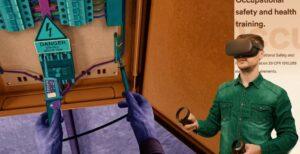
1. Electrical Safety Training
Employees can safely learn how to:
- Handle high-voltage equipment
• Prevent arc flash incidents
• Follow safety protocols
• Use protective equipment properly
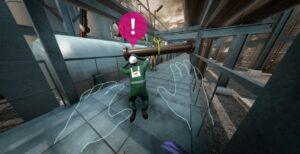
2. Oil & Gas Operations
VR is used for:
- Rig safety training
• Leak detection and response
• Hazard management
• Emergency evacuation drills
3. Power Plant Training
Workers can practice:
- Equipment operation
• Maintenance procedures
• Fault identification
• System troubleshooting
4. Renewable Energy Training
Technicians can train in:
- Wind turbine maintenance
• Solar installation procedures
• Site safety practices
• Equipment handling
5. Field Service Training
VR helps field workers prepare for:
- Remote site operations
• Equipment repairs
• Risk assessments
• On-site troubleshooting
Benefits of VR Training
Safer Training Environment: VR ensures that workers follow strict safety and regulatory standards.
Improved Compliance: VR ensures that workers follow strict safety and regulatory standards.
Faster Learning & Retention: Hands-on immersive learning improves understanding and memory retention.
Cost Savings: Reduces expenses related to physical setups, travel, and equipment usage.
Consistent Training: Delivers standardized training across multiple teams and locations.
Better Performance: Well-trained employees are more accurate in their work and perform tasks with greater efficiency.
Challenges to Consider
While VR training offers significant advantages, organizations should still take a few factors into account, such as initial investment, the need for customized content, and ongoing technical support. That said, flexible rental options make it much easier for companies to adopt VR training without the burden of large upfront costs.
The Future of VR in Energy & Utilities
The use of VR in the energy and utilities sector is growing quickly, driven by advancements like AI-powered simulations, real-time performance feedback, collaborative multi-user environments, and integration with IoT and real-world data. As these technologies continue to evolve, VR is set to become a standard tool for training and workforce development across the industry.
In an industry where safety and accuracy are essential, effective training is a must. VR training offers a smarter and safer way to prepare employees for real-world challenges, helping organizations not only enhance their training programs but also reduce risks, improve efficiency, and build a more capable, future-ready workforce