
Most advertising does not work the way brands want it to — people scroll past it, skip it after five seconds, and develop a trained blindness to banners and billboards that neuroscience has documented extensively and that any honest marketing director will acknowledge privately even when their budget allocation does not reflect it. The fundamental problem with conventional advertising is that it asks people to receive information about a brand rather than experience it—and receiving information is a genuinely weak mechanism for building the kind of emotional connection that drives purchasing decisions.
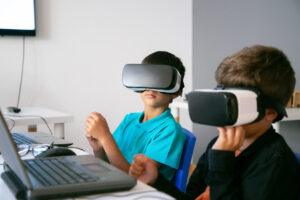
VR brand experiences work on a completely different principle. They do not tell people about a brand — they put people inside it, inside its world, its story, its product, its values — and let the experience create the emotional connection directly rather than through the intermediary of information.
The result is not just more engaging than conventional advertising — it is categorically different in what it produces in the person who experiences it.
What a VR Brand Experience Agency Actually Does
A VR brand experience agency creates immersive brand experiences for deployment at retail environments, trade shows, product launches, corporate events, and marketing activations. The agency handles the full production and deployment — concept development, content creation using professional equipment we stock, headset deployment, on-site management, and post-event reporting.
The experiences themselves vary significantly by brand objective. A car manufacturer that wants potential buyers to experience driving a new model before it is available for test drives creates a VR driving experience that activates the emotional response of being behind the wheel—the sound, the speed, and the visual environment — in ways that a brochure or a video advertisement simply cannot replicate. A travel brand that wants to convert browsing customers into booking customers creates a VR destination experience that delivers genuine presence in the locations it is selling. A food brand that wants to build connection between consumers and its production story creates an immersive farm-to-table journey that makes the brand’s values tangible rather than stated.
Each of these experiences does something that conventional advertising cannot — it creates a genuine memory. People remember what they experienced, not what they were told. A brand experience that someone genuinely remembers three weeks after the event has delivered value that no billboard or digital ad can replicate regardless of budget.
The Markets Worth Prioritising
Corporate events and product launches are the most immediately accessible revenue sources. Companies spending significant budgets on annual parties, product introductions, and dealer or distributor conferences are looking for experiences that create genuine impact rather than forgettable entertainment. A VR brand experience at a product launch gives attendees something to talk about, something to photograph, and a genuine emotional memory associated with the brand and product being launched.
Retail brand activations are growing rapidly as physical retail adapts to a world where transactional shopping has largely moved online. The physical retail that survives and thrives is the kind that offers genuine experiences — and VR brand activations are among the most compelling currently available. A VR station in a car dealership, a flagship fashion store, or a consumer electronics retail environment creates dwell time, generates social media content, and builds the emotional engagement that drives purchase decisions.
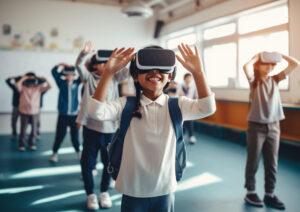
Trade shows and exhibitions are natural environments for VR brand experiences because the competition for attention is intense and the audience is specifically primed to engage with new things. A VR experience at an exhibition stand draws crowds in ways that conventional display materials cannot and creates genuine conversation rather than polite disinterest.
The Equipment and the Starting Model
Brand activation projects are perfectly suited to the rental model. Activations run for defined periods — a product launch runs for one day, a retail activation runs for four weeks, a trade show exhibition runs for three days. Owning a large headset fleet for deployments that are spaced out across the calendar means carrying capital cost on idle equipment between bookings.
Renting from us scales your equipment precisely to each activation. You know exactly what each deployment needs, you factor the rental cost directly into your activation pricing, and every deployment is profitable rather than subsidising idle inventory between bookings. As your activation volume reaches the point where cumulative rental costs exceed purchase costs over a defined period — a calculation we can help you run for your specific booking pattern — purchasing your own base fleet makes financial sense.
The DJI Mini 3 is central to the content production side of brand experiences. Aerial footage creates the cinematic establishing context that makes brand VR experiences feel genuinely produced rather than hastily assembled. The production quality difference between content made with professional equipment and content assembled without it — evident in the aerial footage, the ground-level 360-degree capture, and the 3D elements combined — is immediately apparent to every brand client.
Building the Agency Relationships That Drive Consistent Revenue
The most important strategic move for a VR brand experience agency is not winning individual clients — it is building relationships with marketing and event agencies that represent multiple clients simultaneously.
A marketing agency that manages brand activations for ten consumer brands is a single relationship that potentially unlocks ten clients. An event management company that produces corporate events for twenty companies is a single relationship that potentially generates twenty bookings. These agency relationships are worth significantly more than equivalent direct brand relationships because the pipeline they generate is continuous rather than project-specific.
Approach these relationships with a demonstration rather than a pitch. Every marketing agency creative director who experiences a genuinely well-produced VR brand activation understands immediately what it can do for their clients. The experience makes the argument better than any capability presentation could.
The Social Media Dimension
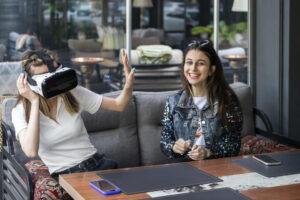
VR brand experiences are inherently shareable in ways that most brand activation formats are not. People post videos of their friends and colleagues experiencing VR because the reactions — the genuine surprise, the visible delight, the involuntary physical responses to immersive content — are entertaining to watch even for people who are not inside the experience.
This social sharing dimension gives VR brand experiences a marketing reach that extends significantly beyond the people who physically experience them. An activation that generates genuine social media content from attendees delivers media value that multiplies the activation investment. Build the social sharing data into your client reporting — document the content generated by each activation and include the reach figures in your ROI calculation. Brand clients who can see the social media amplification their activation generated have a concrete metric that justifies the investment to their internal stakeholders.
VR brand experiences are not a future marketing format waiting to become mainstream. They are a present capability that brands with genuine marketing sophistication are already deploying and that brands in most Indian markets are still discovering. The agency that establishes genuine production capability and a strong agency network in a given market before the format becomes mainstream builds a position that competitors arriving later will find genuinely difficult to displace.
We have the equipment — for rent during the establishment phase and for purchase when your volume justifies it. The creativity, the agency relationships, and the client roster are yours to build.