
The History Class That Finally Makes You Feel Like You Were There
There is a specific kind of frustration that history teachers have carried for generations—the frustration of knowing that the events they are describing were genuinely dramatic, genuinely consequential, and genuinely worth caring about and watching students receive that knowledge as a sequence of dates and names to be memorized for an examination and largely forgotten within weeks.
The problem is not the subject matter. History is inherently compelling—it involves human beings making decisions under pressure, societies colliding and transforming, and ideas spreading and consequences unfolding across time in ways that directly produced the world we currently inhabit. The problem is the medium through which it has been delivered. A textbook paragraph about the siege of a medieval city cannot convey the siege. A classroom lecture about the tension of a diplomatic crisis cannot convey the tension. A static image of a historical environment cannot convey what it meant to inhabit that environment.
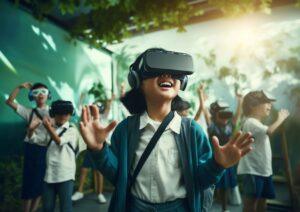
VR-powered historical learning addresses this limitation at its root—not by improving the textbook, not by making the lecture more engaging, but by replacing the descriptive medium with an experiential one. Instead of reading about historical events, learners step inside them. Instead of processing information about the past, they experience a simulation of the past that activates the full range of sensory and emotional engagement that genuine understanding requires.
This is not a technological upgrade to existing teaching methods. It is a fundamentally different approach to how historical knowledge is developed in learners’ minds.
Turning History Into Something You Do Rather Than Something You Receive
The specific mechanism through which VR historical learning works is the conversion of the learner’s role from passive recipient to active participant. In a conventional history lesson, the learner receives information about what happened. In a VR historical environment, the learner is placed inside a simulation of what happened and must engage with it actively.
The practical design of well-executed VR historical experiences reflects this active participation principle throughout.
Learners are placed inside virtual environments that replicate historical settings with genuine visual and spatial fidelity—the architecture, the clothing, and the physical scale of historical spaces that no classroom can replicate and that no photograph fully communicates. They interact with elements of the environment rather than observing them from a distance. They face situations that require decisions based on the historical context they are inhabiting rather than knowledge they have memorized.
The escape-room structure that many VR historical experiences use is not an arbitrary game mechanic — it is a pedagogically grounded design choice that creates the specific conditions under which learning is most effective. The sense of genuine challenge, the need to connect pieces of information to progress, the feedback of immediate consequence when a wrong choice is made — these are the conditions that activate genuine cognitive engagement rather than passive reception.
The learner who must solve a problem about grain distribution in an ancient civilization to progress through a simulation has engaged with the agricultural economics of that civilization at a depth that reading about agricultural economics in a textbook does not create. The knowledge is developed through use rather than through reception, and knowledge developed through use is retained differently and applied more effectively than knowledge received and memorized.
Emotional Engagement and Empathy — The Dimension Traditional Education Misses
Historical education has always struggled with a specific and significant gap—the gap between intellectual understanding of historical events and genuine emotional comprehension of what those events meant for the people who lived through them.
The dates of World War One can be memorized. The casualty statistics can be studied. The political causes can be analyzed. And none of this intellectual engagement fully communicates what it meant to be a person standing in the situation that those dates and statistics describe.
VR historical learning addresses this gap through the specific mechanism of perspective—placing the learner inside the physical and psychological situation of historical actors rather than outside it looking in. The learner who experiences the tension of a critical historical moment from within a simulation of that moment develops emotional understanding alongside intellectual understanding. They understand not just what happened but how it felt to be in the situation where it was happening.
This emotional dimension of historical learning is not merely a motivational bonus. It is a genuine component of historical understanding — the kind that produces empathy, that builds the perspective-taking capacity that historical education is supposed to develop, and that connects the distant past to the living present in ways that purely intellectual historical understanding rarely achieves.
The learner who has experienced the physical confinement of a historical siege understands siege warfare differently from the learner who has read about it. The difference is not in the facts they possess but in the understanding those facts are connected to.
Contextual Learning Versus Isolated Information
One of the consistent failures of conventional historical education is the delivery of historical facts as isolated items—dates, names, and events—rather than as elements of connected context where causes produce effects and decisions create consequences.
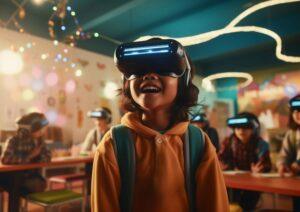
VR historical environments address this failure structurally because the immersive simulation is inherently contextual. The learner does not encounter historical facts in isolation—they encounter them as elements of a living environment where cause and effect are visible, where decisions have consequences, and where the relationship between different historical elements is physically demonstrated rather than abstractly described.
The learner who moves through a virtual marketplace of an ancient trading city encounters the economics, the cultural exchange, the social structure, and the political organization of that civilization as integrated elements of a single coherent environment rather than as separate curriculum topics. The integration that good history teaching works hard to create through narrative and connection happens naturally in an immersive environment because the environment is itself the integrated context.
This contextual learning produces historical understanding that is significantly more transferable and more analytically useful than fact-collection learning — understanding that allows learners to reason about historical situations rather than simply recall information about them.
The Practical Challenges That Need Honest Acknowledgment
The genuine enthusiasm for VR historical learning needs to be grounded in honest acknowledgment of the practical challenges that currently limit its implementation.
The hardware cost of quality VR headsets — the devices that provide the display resolution and tracking capability that genuine historical immersion requires — remains a significant barrier for most educational institutions, particularly government schools and schools in lower-income regions. The per-student cost of providing genuine VR learning experiences at scale is not yet at the level that widespread educational deployment requires.
The content development challenge is equally significant. High-quality VR historical experiences require genuine expertise in both historical scholarship and immersive experience design — a combination that is rare and expensive. The risk of historically inaccurate or culturally insensitive VR historical content is real and requires genuine curatorial oversight that adds cost and complexity to content development.
The physical and pedagogical integration challenge — fitting VR experiences into existing school schedules, physical spaces, and teacher training frameworks — requires institutional investment beyond the technology itself.
These challenges are genuine, but they are not permanent. Hardware costs follow the trajectory that all technology costs follow — downward as scale increases and manufacturing efficiency improves. Content development becomes more efficient as the tools and practitioner community mature. Integration challenges are navigated by the educational institutions that commit to solving them and whose experience becomes the model for those that follow.
What Changes When VR Historical Learning Is Done Well
The outcomes of well-implemented VR historical learning programs are consistently differentiated from conventional history education outcomes on the measures that matter most.
Retention rates for content encountered through genuine immersive experience are significantly higher than retention rates for the same content encountered through text or lecture. The depth of understanding demonstrated in an assessment that requires analysis and application—rather than recall—is measurably improved in students who have engaged with content through immersive experience.
Engagement levels during VR historical learning are objectively higher than engagement levels during conventional historical instruction — the immersive environment maintains attention through the active participation requirement that passive instruction cannot create.
Most significantly, the empathy and perspective-taking outcomes—the capacity to understand historical situations from within the experience of the people who inhabited them—show the most distinctive improvement compared to conventional historical education. These outcomes are the ones that justify history as a subject in the first place. VR historical learning delivers them more reliably than any previous instructional medium has managed.
History is not a collection of past events to be memorized. It is the human story—messy, dramatic, consequential, and deeply relevant to every challenge the present faces. Education that communicates history as a collection of dates and names is education that fails the subject and fails the student simultaneously.
VR historical learning offers the first genuinely scalable mechanism for delivering the experiential understanding of history that the subject deserves and that learners need.
The technology is ready. The evidence is compelling. The students are waiting for the history lesson that finally makes them feel like they were there.