

Google Is Back in Smart Glasses and This Time It Looks Like They Have Actually Got It Right
There is a moment in technology history that everyone working in the industry recognizes—the moment when a product category that failed in its first attempt gets a second chance with the right technology at the right time and becomes one of the defining products of its era.
Google Glass failed in 2013 not because the concept was wrong but because the technology was not ready, the use cases were not developed, the social context was not prepared, and the product design communicated all the wrong things about who smart glasses were for and what they were supposed to do.
Google’s return to smart glasses with Android XR is the second attempt that has been genuinely worth waiting for. Not because Google has simply tried again with better hardware, but because the entire ecosystem of technology, software capability, AI integration, and user expectation has transformed in the twelve years between those two moments. The Android XR glasses are arriving into a world that is ready for them in a way that the world of 2013 was not.
What Android XR Actually Is and Why It Is Different From Everything Before
Android XR is Google’s operating system platform specifically designed for extended reality devices—covering both the fully immersive headset experience of the Samsung XR headset that runs Android XR and the smart glasses form factor that represents the platform’s most ambitious and most socially significant application.
The Android XR glasses are not a wearable display for your phone. They are not a notification system on your face. They are not a camera that happens to be built into eyewear. They are a genuinely new category of computing device — the ambient computing platform that puts Google’s full software capability, Google’s AI integration, and Google’s decades of understanding how people use information throughout their daily lives into the form factor that is most naturally available throughout the day.
The specific qualities that distinguish Android XR glasses from the smart glasses products that preceded them begin with the AI integration. The Gemini AI assistant built into Android XR does not require deliberate invocation in the way that previous voice assistants required—it is contextually aware, it understands what the user is looking at through the glasses’ camera, it understands the user’s ongoing context from the broader Google account ecosystem, and it provides genuinely useful assistance based on this understanding in ways that previous smart glasses assistants could only approximate with deliberately structured commands.
The display capability — the heads-up display overlay that presents information in the user’s field of vision — is implemented in Android XR glasses with the specific quality threshold that previous smart glasses struggled to reach: clear and readable in varied lighting conditions, non-intrusive when not in active use, and genuinely useful rather than impressive but practically limited.
The Use Cases That Android XR Glasses Serve Best
Navigation and Real-World Assistance
The walking navigation use case — the ability to receive turn-by-turn directions as an overlay in the visual field rather than requiring attention to be divided between the environment and a phone screen — is the everyday utility application that most directly demonstrates Android XR’s value for ordinary daily life.
For Indian cities specifically, where navigating dense urban environments while managing a phone creates real friction and real safety considerations, the glasses-based navigation that Android XR provides addresses a genuine daily challenge for the millions of urban Indians who navigate unfamiliar areas regularly.
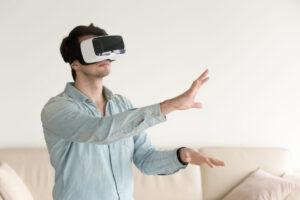
The real-world assistance dimension extends beyond navigation to the broader category of contextual information about the physical world—the restaurant information visible as an overlay when looking at a dining venue, the product information accessible when looking at a product in a shop, and the translation overlay that converts foreign-language signage into the user’s preferred language in real time.
Hands-Free Communication and Productivity
The communication and productivity use case benefits from the open-ear audio and microphone capability that Android XR glasses provide—the hands-free call experience, the voice-dictated message sending, and the AI assistant queries—all without requiring the phone to leave the pocket or the bag.
For professional users whose daily lives involve continuous communication demands while they are in motion—the commute, the meeting transitions, the site visits, the client engagements—the Android XR glasses provide the communication access that makes mobile professional life genuinely more efficient.
AI-Powered Real-World Understanding
The most genuinely novel capability that Android XR glasses introduce — the one that has no equivalent in any previous smart glasses product — is the AI-powered understanding of what the user is looking at and the ability to provide genuinely useful, contextually grounded assistance based on that understanding.
The user who looks at a piece of equipment and asks the AI to explain how it works receives an explanation informed by the AI’s visual understanding of the specific equipment being looked at. The user who looks at a document in a foreign language receives a translation that the AI derives from visual reading rather than requiring deliberate photograph-and-upload interaction. The user who encounters an unfamiliar plant, building, artwork, or product receives information about the specific thing they are looking at rather than information they must find by describing the thing and hoping the description is adequate.
This visual AI assistance is the capability that transforms Android XR glasses from a smart accessory that does specific things well into a genuine ambient intelligence layer over the user’s entire visual experience of the world.
What Android XR Means for India’s Technology Adoption
India’s technology adoption patterns have consistently demonstrated that the right product at the right time penetrates the market faster than international observers typically predict—and Android XR glasses arrive with the specific combination of qualities that Indian technology adoption patterns reward most strongly.
The Android ecosystem integration is the first significant advantage. India’s smartphone market is overwhelmingly Android — the familiarity of the Google ecosystem, the existing investment in Google services and accounts, and the platform knowledge that Android users carry make Android XR adoption significantly less friction-laden than a completely new platform ecosystem would require.
The genuine daily utility without requiring significant behavior change is the second advantage. The Android XR glasses that work with the phone you already carry, the apps you already use, and the services you already depend on—rather than requiring a parallel technology ecosystem to be built alongside—reduce the adoption friction to the level that makes the decision to try them straightforward rather than demanding.
Google’s return to smart glasses with Android XR is not a repeat of the Glass experiment. It is a genuinely different product, built on genuinely better technology, serving genuinely more developed use cases, arriving in a genuinely more receptive market.
The Android XR glasses are not going to be the right product for everyone immediately. The price will matter. The availability in Indian markets will matter. The content and app ecosystem will need time to reach its potential.
But the direction is clear, the technology is ready, and the use cases are real in a way that they were not in 2013.
The ambient computing era is beginning. Android XR glasses are one of its first genuine products.