
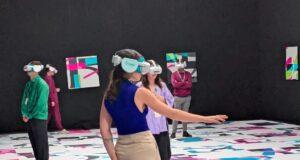
The excavation site that archaeology closed to the public has just been reopened—inside a headset that anyone can wear
There is a fundamental tension at the heart of archaeological work that has existed since the discipline began and that museums have never fully resolved—the tension between the imperative to protect ancient sites and the imperative to share them.
Archaeological excavations produce the most extraordinary visual and spatial experiences available in cultural heritage—the moment when a trench reveals a Roman mosaic floor, still lying where it was placed two thousand years ago. The instant when the burial chamber of a Bronze Age chieftain is entered for the first time in three millennia, the grave goods are arranged exactly as they were left by people who are themselves ancient history. The slow emergence, brush stroke by brush stroke, of the carved face of a deity from beneath two meters of accumulated centuries.
These moments are the moments that justify the years of fieldwork, the funding applications, the site management, and the conservation decisions. They are also the moments that almost nobody outside the excavation team ever sees—because the excavation process that creates them is simultaneously the process that destroys the archaeological context being documented, making it impossible to recreate for public audiences.
Virtual reality changes this irreversibility. The excavation that was closed to the public when it happened can now be reconstructed in digital space from the photographic, video, and spatial documentation that modern fieldwork produces—and experienced by museum visitors in a genuinely immersive three-dimensional presence that no exhibition case or video documentation can approach.
How VR Archaeological Reconstruction Actually Works
The process of creating a VR archaeological excavation experience begins with the documentation practices of the excavation itself—and this is the dimension of VR archaeological reconstruction that the field has most significantly transformed in recent years.
Modern archaeological excavations increasingly employ the documentation tools that make VR reconstruction possible as standard field methodology rather than a specialist addition. Photogrammetric photography — the systematic capture of overlapping photographs from multiple positions that computer processing can assemble into accurate three-dimensional models — creates the spatial data that VR reconstruction requires at a resolution and accuracy that previous documentation methods could not provide.
LIDAR scanning of excavated areas creates the precise three-dimensional spatial record that allows reconstruction to accurately represent the specific volumes, dimensions, and spatial relationships of excavated features—the depth of the burial, the dimensions of the hearth, and the precise spatial arrangement of the grave goods. Ground-penetrating radar and magnetometry survey data reveal the subsurface features that physical excavation will eventually expose—allowing VR reconstructions to represent not just what was found but the full archaeological picture of which found objects were only the visible portion.
The reconstruction process that builds VR experience from this field documentation involves both the accurate representation of the excavation as it occurred and the interpretive reconstruction of how the site appeared in its original period of use—the two experiential layers that make VR archaeological reconstruction both archaeologically honest and genuinely experientially powerful.
The Visitor Experience That No Exhibition Case Can Create
The specific quality of the VR archaeological experience that distinguishes it from every conventional museum treatment of the same material is the spatial presence — the quality of genuinely being in the place where the archaeology happened rather than looking at the objects that the archaeology produced.
The museum visitor who stands in front of a display case containing Iron Age ceramics from an excavation sees the ceramics beautifully presented, with excellent conservation and intelligent interpretation. They do not experience what it means to encounter these objects in the spatial context in which they were found—the way they were arranged relative to each other, their scale within the structure that contained them, and the visual and spatial experience of the environment in which they functioned as living objects rather than museum artifacts.
The museum visitor who enters the VR reconstruction of the same excavation experiences the objects in their spatial context—surrounded by the structure that contained them, understanding their scale and arrangement through genuine spatial presence rather than object study. The ceramics that were everyday household vessels are experienced as household vessels rather than as archaeological specimens.
This contextual presence is the specific quality that creates genuine historical understanding rather than historical information—the difference between knowing that Iron Age people organized their domestic environments in specific ways and genuinely experiencing what one specific Iron Age domestic environment felt and looked like from within it.
The Specific Archaeological Contexts That VR Reconstructs Most Powerfully
Burial Archaeology
Burial sites are among the most sensitive and most inaccessible of all archaeological contexts—the specific ethical requirements of human remains treatment and the destructive necessity of the excavation process both mean that the original context of a burial can never be experienced by any public audience.
VR reconstruction of burial archaeology creates the ethical alternative to physical site access—allowing visitors to experience the spatial reality of how an ancient burial was arranged, what the grave goods looked like in their original positions, and what the burial structure looked like in the moments after excavation revealed it, without any compromise of the ethical obligations that human remains require.

Urban Archaeological Sites
The buried cities, the ancient streets, and the domestic and public spaces of historical urban centers are archaeological contexts where VR reconstruction creates experiences that no amount of above-ground evidence can communicate alone.
Walking through a VR reconstruction of a Harappan street in its contemporary use period—the architecture intact, the spatial organization visible, the urban infrastructure of a four-thousand-year-old planned city comprehensible from within its own scale—creates a historical encounter that no text, no exhibition, and no video documentary can replicate.
Submerged and Inaccessible Sites
Underwater archaeology—the sunken harbors, the flooded settlements, and the maritime archaeological sites that lie beyond recreational diving access—represents archaeological knowledge that is genuinely impossible to share through physical site access of any kind.
VR reconstruction of underwater archaeological sites creates the first publicly accessible experience of these contexts—allowing museum visitors to explore the spatial reality of sites that they could not physically visit regardless of resources or regulatory access in the specific immersive presence that makes the experience genuinely informative rather than merely visual.
The Educational Impact That Museum Directors Are Documenting
The museums that have implemented VR archaeological experiences are documenting specific and significant improvements in visitor educational outcomes that conventional exhibition design has not achieved for the same material.
Content retention for material experienced through VR immersive reconstruction shows measurable improvement over the same content presented through conventional exhibition formats—the spatial memory that VR creates for archaeological context is more durable than the declarative memory that reading interpretation panels creates.
Visitor engagement with the physical collection associated with VR-reconstructed excavations increases substantially—visitors who have experienced the VR excavation context approach the physical artifacts from that context with genuinely informed curiosity rather than the generalized interest that conventional exhibition design generates. They have questions about specific objects because they have experienced the context in which those objects functioned.
Young visitor engagement with archaeological content specifically shows the most significant improvement—the generation that has grown up with digital spatial environments responds to VR archaeological reconstruction with an instinctive engagement that no conventional museum format for the same material has consistently achieved.
The Future of VR Archaeological Experience in Indian Museums
India’s archaeological heritage is among the most extraordinary in the world—the Harappan cities, the ancient Buddhist monasteries, the medieval temples and fortifications, the prehistoric rock art, and the maritime archaeology of India’s ancient trading coast. The museums and institutions charged with sharing this heritage have an extraordinary opportunity to lead the global development of VR archaeological experiences.
The specific advantages that Indian institutions bring to VR archaeological development — the extraordinary depth and diversity of the archaeological record, the growing technical expertise in both VR development and archaeological documentation methodology, and the large and digitally engaged visitor base that VR museum experiences most powerfully serve — create the conditions for Indian museums to become the global leaders in this specific form of cultural technology application.
The archaeological excavation that happened once, in a specific place, at a specific moment in the long relationship between human beings and the earth they inhabit—this excavation can now be experienced by anyone, anywhere, in genuine, three-dimensional immersive presence that no previous technology made possible.
VR archaeological reconstruction is not a substitute for the physical museum. It is the capability that extends the museum’s reach to the experiences that physical exhibitions can never provide—the spatial context, the genuine presence, and the encounter with the ancient world as it was rather than as its surviving fragments suggest it might have been.