
The Guide That Treats Bulk VR Procurement as the Serious Business Decision It Is
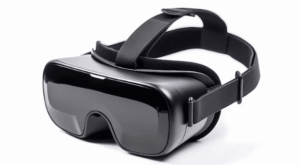
Bulk VR headset procurement in India in 2026 is a genuinely significant business decision—not because VR headsets are particularly mysterious or difficult to understand as technology but because the gap between a bulk procurement that serves the intended purpose effectively and a bulk procurement that creates more problems than it solves is wider than most buyers recognize before their first experience with it.
The organizations making bulk VR headset purchases in India in 2026 are genuinely diverse—educational institutions building immersive learning infrastructure, corporate training departments building enterprise VR training capability, location-based entertainment businesses equipping VR gaming and experience venues, healthcare organizations deploying clinical training simulations, and real estate and construction companies building visualization and design review infrastructure.
Each of these buyer categories has specific requirements, specific deployment environments, and specific use cases that determine what good procurement looks like for them. A guide that treats them as a uniform buyer category is a guide that is not actually useful to any of them. This guide attempts to be genuinely useful.
Defining Your Use Case Before Everything Else
The first and most critical step in any bulk VR headset procurement is the precise definition of the use case the headsets are being purchased for—not at the general level of VR training or VR entertainment but at the specific level of what the headsets will be doing, in what physical environment, with what user population, managed by what technical infrastructure, for what measurable outcome.
This level of specificity determines which headset is appropriate for the procurement. The headset that is correct for a corporate soft skills training program is different from the headset that is correct for a manufacturing technical training program, which is different from the headset that is correct for a VR gaming venue, which is different from the headset that is correct for a school immersive learning program.
The differences are not trivial. Processing power requirements differ by use case. Content compatibility differs by use case. Physical durability requirements differ by deployment environment. Hygiene management requirements differ by user population. Device management scale requirements differ by institutional context.
VRAshwa’s procurement consultation process begins with this use case definition—before any headset recommendation is made, before any pricing is discussed—because the procurement decision that does not start from a precise use case definition consistently produces headsets that are inadequate, excessive, or mismatched for what the buyer actually needs.
The Technical Specifications That Actually Matter for Bulk Deployment
Not all VR headset specifications are equally relevant to bulk institutional deployment. Understanding which specifications drive genuine use case performance and which are primarily marketing differentiators determines whether bulk procurement decisions are made on the basis of real purchasing criteria or impressive-sounding numbers.
Display resolution matters genuinely for content types that require fine visual detail—text reading, architectural visualization, and precision training content—and matters less for content types that primarily involve spatial awareness and physical interaction. Buying high resolution for a use case that does not require it adds cost without adding value.
Processing power matters for the complexity of the VR content being run and for the smoothness of the experience at the required performance level. Underpowered headsets for demanding content is a procurement mistake with immediate and obvious consequences. Overpowered headsets for simple content is a procurement mistake that wastes budget.
Battery life matters for deployment patterns where headsets are used for extended sessions without practical charging windows. A headset with three-hour battery life is adequate for training programs with one-hour sessions and a rotation of headsets allowing charging between sessions. It is inadequate for a VR gaming venue where headsets might be in continuous use across multi-hour operating periods.
Field of view, refresh rate, and tracking system quality are the specifications that most directly affect the presence quality and comfort of the VR experience. For use cases where presence quality is the primary value driver, these specifications deserve close attention. For use cases where VR is primarily a delivery mechanism for content that does not require genuine presence immersion, they are secondary considerations.
Device Management at Scale — The Operational Reality Nobody Tells You About
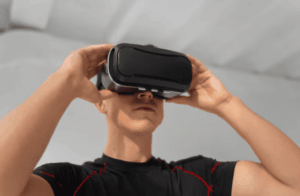
The operational reality of managing a fleet of VR headsets at an institutional scale is the dimension of bulk VR procurement that most first-time buyers are least prepared for—and that most procurement discussions underemphasize because they are less exciting than the technology specifications.
Device management at scale — maintaining consistent software versions across a fleet, managing content deployment and updates, monitoring device health and usage, handling authentication and access control, replacing and repairing failed units — requires either dedicated technical staff capability or a managed service arrangement that provides these functions.
The organization that purchases fifty VR headsets without planning for how those fifty headsets will be managed across their operational lifetime will discover the device management challenge through experience rather than preparation. The discovery is invariably more expensive and more operationally disruptive than addressing it in the procurement planning stage.
VRAshwa’s bulk procurement offering includes device management support—the technical assistance, the management platform access, and the ongoing service capability that makes fleet management practically viable for organizations whose core business is not VR technology management.
Hygiene and Physical Durability for High-Turnover Environments
Bulk VR deployment in environments with high user turnover—the school where hundreds of students use the headsets across a week, the VR venue where dozens of different users use the same headset in a single day—creates hygiene and physical durability requirements that individual device ownership does not.
The headset that is used by one person in their home requires basic care. The headset that is used by thirty different people in a day, some of whom handle it roughly, in an environment where it may be dropped, requires a different approach to both the device specification and the maintenance protocol.
Replaceable foam padding, easily cleaned surfaces, protective carrying cases, and the physical robustness to withstand the handling patterns of high-turnover deployment should be explicit procurement requirements for high-turnover environments rather than afterthoughts.
VRAshwa’s institutional supply includes hygiene kit accessories and protective equipment appropriate for the deployment environment—because bulk procurement that does not account for hygiene and durability creates ongoing maintenance costs that erode the procurement’s value.
Bulk VR headset procurement done well is a genuine business capability investment that delivers measurable returns in training quality, educational outcomes, entertainment revenue, or professional productivity depending on the use case.
Done poorly, it is an expensive collection of technology that does not serve the purpose it was purchased for.
Define the use case precisely. Match the specification to the genuine requirements. Plan for device management. Account for hygiene and durability.
VRAshwa’s procurement consultation is available to help organizations do this correctly.
The headsets that are right for your use case, at the scale you need, with the support to make them work — that is the procurement worth making.