
There’s a specific kind of underestimation that happens to Odisha in almost every national conversation, and it gets old pretty quickly if you actually know the state.
People hear Odisha and think temples, tribal culture, maybe the Puri beach. All of that is real and genuinely worth knowing about. But somewhere in that association, the modern Odisha—the one with a rapidly growing economy, a young population that is increasingly urban, and cities that are developing at a pace most outsiders haven’t noticed yet—gets completely missed.
That missed perception is, for anyone paying attention, a straight-up opportunity.
Let’s Start With What Odisha Actually Is Right Now
Bhubaneswar is not the city it was ten years ago. Full stop.
It has been deliberately developed as a smart city, has attracted significant investment across multiple sectors, and has a young professional and student population that has grown substantially. The city has real infrastructure, real purchasing power in its younger demographics, and a genuine appetite for experiences that go beyond what currently exists there.
Cuttack sits right next to it—older, more chaotic, more commercially dense, and with its own distinct crowd that often gets overlooked because Bhubaneswar takes all the attention. Together these two cities form an urban cluster that punches well above its weight in terms of potential customer base.
Then there’s Rourkela in the north—a steel city with an IIT, a young educated population, and entertainment options that are genuinely thin relative to the kind of crowd living there. An IIT campus alone generates a specific type of resident who is tech-aware, experience-hungry, and chronically bored of limited local options.
Sambalpur, Berhampur, Brahmapur—each of these cities has its own growing young population that the entertainment industry has largely decided doesn’t exist yet.
Odisha’s Young Population is the Part Nobody Talks About
Here is a number worth sitting with — Odisha has one of the younger median age profiles among Indian states. A significant proportion of the population is under thirty-five and a meaningful chunk of that group is increasingly urban, increasingly educated, and increasingly aware of what lifestyle and entertainment options look like in cities beyond their own.
That awareness without access is a very specific kind of frustration. Young people in Bhubaneswar have seen VR gaming cafes in content they follow online. They’ve watched friends who moved to Bangalore or Hyderabad post about trying VR. They know the experience exists. They just can’t access it locally without travelling somewhere else.
That frustration is not going to sit there quietly forever. Someone will address it. The only question is who and when.
The IIT Factor in Rourkela
Rourkela deserves its own paragraph because it’s genuinely underappreciated as a location.
IIT Rourkela sits in a steel city in northern Odisha and produces exactly the kind of crowd that a VR gaming cafe is built for. Tech-literate, genuinely curious about new experiences, socially active within a tight campus community, and — this part matters — connected to networks that extend well beyond the city itself.
A positive experience at a VR cafe among IIT students doesn’t just stay in Rourkela. It gets mentioned in group chats with friends at other IITs, shared online, discussed in conversations that reach people in cities across the country. The word of mouth radius of a well-connected student population is significantly larger than the physical radius of the city they’re studying in.
Getting your first reviews from a technically aware, socially connected crowd like an IIT student base is not a small thing. Those early voices carry weight.
Something Specific About Odia Culture
Odisha has a cultural personality that doesn’t get discussed enough in business contexts, and it’s worth understanding before walking in.
This is a state with deep roots in craft, art, and community celebration. Durga Puja here is not just a festival — it’s a months-long community project that entire neighbourhoods invest in together. The Rath Yatra in Puri is one of the largest human gatherings anywhere in the world. These are not passive cultural events — they are participatory, communal, and deeply felt.
What this tells you about Odia social behaviour is that people here are genuinely comfortable with shared experiences. Coming together around something, being part of a collective moment, enjoying something alongside other people rather than alone — these are deeply natural instincts here.
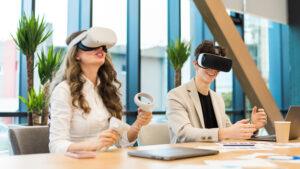
A VR gaming cafe is a shared experience business at its core. One person plays while others watch, react, laugh, and wait for their turn. That communal energy is not something you have to teach Odia customers — it’s already built into how they naturally spend time together.
The evening pattern here is specific.
Bhubaneswar has developed a genuine evening culture over the last decade that surprises people who knew the city earlier. Areas like Saheed Nagar, Patia, and the stretches near Infocity have consistent evening foot traffic from young professionals and students who are out and moving and open to something interesting.
The climate in Odisha also creates a specific pattern—the heat and humidity of the day make indoor, air-conditioned spaces genuinely attractive in the evenings rather than just convenient. Walking into a cool, well-designed VR cafe when it’s warm and sticky outside isn’t a neutral experience — it’s immediately pleasant before the headset even goes on.
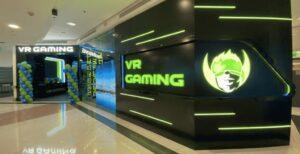
Use that. Keep the space genuinely comfortable. Make it visually inviting from outside. In Bhubaneswar’s evening crowd, visible activity inside a space is often all the convincing people need to walk in off the street.
Starting Right Without Overcomplicating It
Odisha does not need an elaborate, over-designed flagship location to get this right. What it needs is a genuinely good experience delivered consistently in the right location.
Five or six solid VR stations. Patient staff who treat first-timers like the majority they actually are rather than as an inconvenience. A game library that has enough variety to keep repeat visitors finding something new. Pricing that reflects the local economic reality without selling the experience short.
The Bhubaneswar-Cuttack corridor is the obvious starting point purely on population density and foot traffic potential. From there, Rourkela makes sense as a second location for the IIT and industrial worker demographic. Sambalpur and Berhampur follow naturally as the business finds its rhythm.

Why The Timing Argument is Actually Urgent Here
Odisha is on an investment and development trajectory that is pulling it closer to the national mainstream faster than most people are tracking. The Smart City project in Bhubaneswar is real and ongoing. Industrial investment is coming into multiple parts of the state. Infrastructure is improving in ways that historically precede significant jumps in consumer spending.
The window between a market developing and a market becoming saturated is always shorter than it looks from the outside. In Odisha that window is open right now in a way that it probably won’t be in three or four years when the obvious investors finally start paying attention.
Entertainment businesses that establish themselves during this window don’t just get early customers. They get to become familiar, trusted, and habitual before any competition arrives to complicate things.
Odisha has been patient for a long time while the rest of the country caught up to it. This time, don’t wait for it to come to you.