
Manipur does not ask for your attention. It has never been that kind of place. It exists quietly and confidently in the northeastern corner of the country, producing extraordinary people — athletes, artists, filmmakers, dancers — who go out and distinguish themselves on national and international stages while the state itself remains largely invisible in mainstream Indian business conversations.
That invisibility is frustrating if you are from Manipur. It is an opportunity if you are paying attention from the outside.
Imphal Is More Than People Picture
The first thing worth establishing is what Imphal actually is as a city in 2026. It is the capital of a state that has been through genuine difficulty — conflict, economic disruption, infrastructure challenges that would have broken the spirit of communities less resilient than Manipur’s. That difficulty is real and should not be minimised. But it exists alongside something else that is equally real and considerably less discussed — a young population that has come through difficulty with a hunger for normalcy, for progress, for the kind of ordinary pleasures that their peers in calmer states take completely for granted.
Young people in Imphal want to go out. They want somewhere worth spending a Friday evening. They want experiences that feel contemporary and exciting rather than makeshift and apologetic. They want what every young person in every Indian city wants — a life that reflects where the world is going rather than where it has been stuck.
The Sporting Culture Changes Everything
Manipur produces athletes at a rate that is statistically impossible to explain through population size alone.
Mary Kom, Mirabai Chanu. A list of national and international champions across boxing, weightlifting, football, polo — disciplines as varied as the communities producing them — that extends far beyond what any comparable population base should reasonably generate.
This sporting culture is not separate from the VR gaming cafe opportunity. It is central to it.
Communities with deep competitive sporting traditions produce young people who are physically confident, competitively oriented, and genuinely energised by the idea of challenge and performance. The transition from physical sport to immersive gaming — particularly VR gaming with its physical engagement component — is natural in a way that it simply isn’t in communities without that sporting foundation.
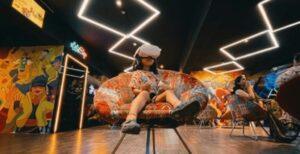
VR boxing, VR sports simulations, competitive VR experiences that pit players against each other — these are not peripheral offerings in a Manipur context. They are the core of what will make a VR cafe feel genuinely exciting rather than merely novel to the young people walking through the door.
Design the game library around this. Lean into competitive, physically engaging VR experiences that speak directly to a sporting culture that already knows what it means to push your body and mind toward something difficult.
The Meitei, Naga, Kuki Communities and Building Trust Across Them
Manipur’s social landscape is complex in ways that any business operating here needs to understand with genuine seriousness rather than superficial acknowledgment.
The state has multiple communities — Meitei in the valley, Naga and Kuki in the hills — with distinct cultural identities and histories of tension between them that are real and ongoing. A business that walks into this complexity without understanding it will make mistakes that damage its credibility in ways that are difficult to recover from.
The practical implication for a VR cafe is straightforward but important. A space that is genuinely welcoming to people from across Manipur’s communities — not performatively, not with signage, but through the actual behaviour of its staff and the actual atmosphere of its environment — occupies a rare and valuable position.
Shared leisure spaces where people from different communities come together around a common experience are genuinely uncommon in Manipur. A VR cafe that becomes one of those rare spaces earns a kind of social significance that goes beyond its commercial function.

The Film Culture Nobody Talks About
Manipuri cinema has a history and a present that most of mainland India knows nothing about.
The state has been producing films in the Meitei language since the 1970s and the industry — small by Bollywood standards, significant by every other measure — has generated genuine filmmakers and a genuine audience that takes its own cinema seriously. More recently, young Manipuri filmmakers have been finding national and international recognition through festivals and streaming platforms.
This creative film culture signals something commercially useful — Manipur has a population oriented toward visual storytelling and immersive narrative experiences, toward the pleasure of being transported into a different reality through a screen.
VR is a natural extension of that orientation. The appetite for visual immersion already exists. The technology to deliver it at a more direct and personal level than a cinema screen is what is missing.
A VR cafe in Imphal is not introducing an alien concept to an unreceptive audience. It is offering a new delivery mechanism to people who have already demonstrated their appetite for exactly this kind of experience.
Loktak Lake and What Surrounds It
Manipur has genuine natural beauty that draws visitors — Loktak Lake with its floating phumdis, Keibul Lamjao National Park, the Kangla Fort in the heart of Imphal. These are real attractions that pull a visitor flow into the state throughout the year.
Most of those visitors are domestic — travellers from across India who have discovered Manipur as an alternative to more crowded northeastern destinations. They arrive with open minds and a genuine curiosity about what the state has to offer beyond its obvious attractions.
A VR cafe in central Imphal sits in the path of this visitor flow without needing to do anything special to access it. Visitors with a free afternoon in the city between sightseeing are exactly the kind of spontaneous walk-in customer that early stage businesses depend on while their local regular crowd is still developing.
The Practical Shape of This
Imphal is the only starting point that makes sense given the state’s population distribution and commercial concentration.
Four stations. The equipment reliability argument that has appeared throughout this series applies here with particular force — Manipur’s geography makes technical support logistics genuinely complicated and quality hardware that works consistently is not optional, it is the foundation everything rests on.
Location in the commercial areas of Imphal that young people actually use — near the Khwairamband Keithel area, near the educational institutions, visible and accessible rather than hidden away — matters more in a city of Imphal’s size than it would in a larger urban centre where people will travel specifically to find something.
Pricing that genuinely reflects the economic reality of Imphal’s young residents. Not cheap — cheap signals low quality and Manipur’s consumers are sharp enough to read that signal correctly. Accessible. Fair. The kind of pricing that makes a return visit an easy decision rather than a budgetary calculation.
Manipur has given India more than it has received back in most measurable ways for most of its time as a state.
Its athletes win medals for a nation that barely knows their names before the podium moment. Its artists create work that circulates internationally while the state itself remains peripheral in national imagination. Its people navigate difficulties that would generate national conversation if they happened somewhere more visible.
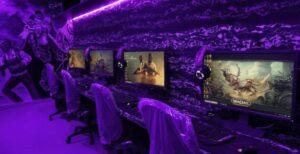
A genuinely good VR gaming cafe in Imphal is not a grand gesture of reciprocity. It is just a business doing what businesses should do — seeing a real market, serving it properly, and treating the people in it as the serious, deserving customers they actually are.