
There is a specific kind of energy in Nagaland that hits you before you have fully processed where you are.
It is not the energy of a place rushing to become something else. It is the energy of a place that is absolutely certain of what it already is — and is now curious about what comes next. That combination of deep-rootedness and genuine forward curiosity is rarer than it sounds. Most places either cling to identity at the expense of progress or pursue progress at the expense of identity. Nagaland somehow holds both simultaneously without the tension tearing anything apart.
That balance is not just culturally interesting. It is commercially significant in ways that most people thinking about business opportunities in the Northeast have not yet figured out.
Kohima and Dimapur Are Two Completely Different Conversations
Most people treat Nagaland as a single market. That is the first mistake.
Kohima is the capital — hilly, dramatic, historically significant in ways that go far beyond its size, and home to a population that carries a particular pride in its identity as the seat of Naga culture and governance. It is not a commercial powerhouse. It is something more interesting than that — a city with genuine intellectual and cultural energy, a university presence, government institutions, and a young crowd that is deeply aware of the outside world while remaining firmly anchored in its own context.
Dimapur is the commercial reality. It is Nagaland’s largest city, its business hub, its gateway to the outside — sitting in the plains rather than the hills, connected to the national rail network, functioning as the entry point for goods, people, and ideas flowing in and out of the state. The energy in Dimapur is faster, more commercial, more mixed. It pulls people from across Nagaland who come for trade, services, education, and increasingly for leisure.
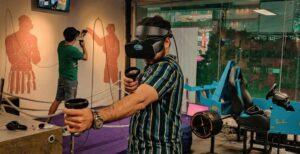
A VR gaming cafe needs to understand both cities on their own terms rather than treating them as interchangeable versions of the same opportunity.
Dimapur is where you start. The commercial logic is straightforward — larger population, better connectivity, consistent foot traffic, more diverse demographic mix. But Kohima is where you build the cultural credibility that makes a business genuinely trusted across the state rather than merely tolerated in one city.
The Hornbill Factor
If you know one thing about Nagaland from the outside it is probably the Hornbill Festival.
Every December Kisama Heritage Village near Kohima hosts what has become one of the most celebrated cultural festivals in the entire country. Tribes from across Nagaland come together for ten days in a gathering that is simultaneously a proud assertion of Naga identity and a genuinely open invitation to the outside world to witness it.
The crowd this festival pulls is specific and valuable — culturally curious domestic tourists, international visitors, journalists, artists, researchers, young Indians from across the country who have heard about it and made the trip specifically because it represents something authentic in a world increasingly short of authenticity.
A VR cafe operating in Dimapur during Hornbill season with a satellite presence or pop-up activation near Kisama is not chasing tourists as a primary business strategy. It is using a concentrated moment of heightened visitor energy to introduce itself to an audience that is already primed for novel experiences.
The people who come to Hornbill are not looking for ordinary things. They came this far specifically because ordinary wasn’t good enough. A VR experience in that context lands differently than it would in a shopping mall in a metro city. It becomes part of the memory of a trip that was already exceptional.

Naga Youth Culture Is the Engine
Here is what the outside world consistently underestimates about young Nagaland.
This is one of the most musically and creatively vibrant youth cultures in the entire country. Bands, artists, designers, filmmakers — Nagaland produces creative talent at a rate that is genuinely disproportionate to its population. Naga rock music has its own scene, its own festivals, its own following that extends well beyond the state’s borders.
This creative energy is not separate from the VR gaming cafe opportunity. It is the core of it.
Young people who are already oriented toward creative experience, toward immersive artistic engagement, toward the pleasure of being transported somewhere through sound and sensation — these people do not need to be convinced that VR is worth trying. They are already living in the mental universe where that kind of experience makes complete sense.
The VR cafe is not an alien concept landing in unfamiliar territory. It is a natural next step for a youth culture that has already been seeking immersive experiences through every channel available to it.
The Church Network Is a Social Infrastructure
Christianity is the dominant religion in Nagaland and the church is not simply a place of worship here — it is a genuine social infrastructure that organises community life in ways that have no real equivalent in most other Indian states.
Youth fellowships attached to churches are active, organised, and socially influential. They plan events, they coordinate outings, they function as decision-making bodies for how groups of young people spend their leisure time collectively.
This social infrastructure is either working for your business or it is not. There is no neutral relationship with it.
A VR cafe that earns genuine goodwill within Dimapur and Kohima’s church youth networks has access to organised, loyal, word-of-mouth-efficient groups of young people who make plans collectively and follow through on them. The endorsement of a respected youth fellowship is worth more in practical customer terms than any social media campaign targeting the same demographic individually.
Getting there requires genuine community engagement — not transactional sponsorship of events but actual relationship building with the organisations and people who anchor youth social life in the state. It takes longer than buying an advertisement. It delivers more than an advertisement ever could.
Understand the Weekly Rhythm Before You Plan Your Operations
Nagaland observes Sunday as a genuine day of rest in ways that are more complete than most Indian states. Sunday mornings are church. This is structural and consistent across the state regardless of denomination.
But the afternoon picture is different.
Post-church Sunday afternoons in Dimapur and Kohima generate a specific social energy — families and friend groups looking for somewhere worth spending the remaining daylight hours, young people freshly out of morning commitments and ready for something engaging and fun.
This is your single highest-potential window of the week and it requires your best staffing, your most reliable equipment, and your most welcoming atmosphere. If you get Sunday afternoons right consistently, the rest of the week builds around that foundation.
Saturday evenings are close behind. The combination of these two windows generates a rhythm that most of your weekly revenue will flow through, especially in the early months before weekday habits develop organically from your growing regular crowd.
The Setup That Makes Sense Here
Location near the commercial centre rather than tucked away in a residential area — visibility in Dimapur’s commercial districts generates the spontaneous walk-in traffic that early-stage businesses depend on before word of mouth fully kicks in.
Five stations. Quality above quantity in a state where the nearest technical support requires real travel. Equipment that works every single time is not optional — it is the foundation everything else rests on.
Local staff who are genuinely part of Naga youth culture rather than outsiders hired to manage an operation. This distinction is felt immediately by customers and it determines whether the space feels like it belongs here or merely exists here. The difference between belonging and existing is the whole ballgame in Nagaland.

The Last Honest Thing
Nagaland has a saying that its warriors never retreat.
That cultural stubbornness — the refusal to back down from something once committed — runs through everything here. It shows up in how people defend their identity, how they approach challenges, and interestingly how they support businesses that have earned their loyalty.
Earn that loyalty properly and Nagaland does not give it back. That is the most valuable thing any business anywhere can hope to find.