
The New Category of Drone Technology That Is Making the Aerial 360° Experience Available to Everyone
Something genuinely new has arrived in the consumer drone market, and it is worth understanding carefully before the industry’s usual cycle of hype and disappointment obscures what is actually significant about it.
Consumer drones with 360° cameras integrated alongside immersive viewing goggles — the complete aerial 360° experience system available at consumer price points, designed for the person who wants to experience the aerial perspective rather than simply capture aerial footage — represent a genuinely new product category rather than an iteration of existing drone products.
The distinction is worth establishing clearly before examining what these systems actually do, because the distinction is what makes this category interesting rather than simply another specification upgrade in the ongoing drone improvement cycle.
What Makes This Category Genuinely New
Conventional drones with cameras capture what the camera is pointed at from the drone’s position in the air. The operator sees the footage through a screen—a phone, a controller screen, or a monitor. The footage is reviewed after the flight or watched in real time on a flat display. The operator is on the ground watching a screen that shows what the drone is seeing.
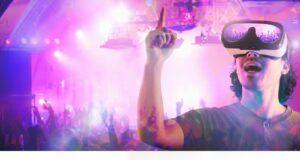
360° camera drones with immersive viewing goggles change this relationship fundamentally. The operator is not watching a screen showing what the drone sees. The operator is seeing what the drone sees—spatially, immersively, from inside the perspective of the drone’s position in the air. The visual experience is not of a screen showing the aerial view. It is about being at the drone’s altitude, looking in the direction the head is turned, and experiencing the complete 360° environment that surrounds the drone’s position.
This is the distinction that makes the category genuinely new. Previous drone viewing systems brought the drone’s footage down to the ground and showed it on a screen. This category brings the operator’s sensory perspective up to the drone’s altitude and positions it in the aerial environment.
The experience of these two approaches is categorically different. The screen shows the aerial view. The goggles place you in it.
The Specific Qualities That Make This Experience Compelling
The immersive aerial experience that 360° camera drones with goggles provide activates specific responses that flat-screen drone viewing does not—responses that explain why users who have experienced these systems consistently describe them as fundamentally different from conventional drone operation rather than simply better.
The height response is the most immediately striking quality. The brain’s spatial processing systems respond to the visual information of being at altitude—looking down at the ground from a drone’s typical operating altitude—as a genuine height experience. The same neural systems that process the visual information of standing on a rooftop or looking down from a cliff are activated by the immersive aerial 360° view. This response is immediate, involuntary, and consistently reported by first-time users as the quality that most distinguishes the experience from anything they expected.
The spatial freedom of 360° aerial viewing—the ability to look in any direction from the drone’s position by turning the head, the complete sphere of the aerial environment accessible without any action beyond the natural movement of looking—creates a quality of aerial exploration that directional drone cameras fundamentally cannot provide. The conventional drone operator points the camera in the direction they want to see. The 360° goggle user turns their head, and the view responds. The difference in the naturalness and the completeness of the aerial exploration experience is immediately and significantly felt.
The sense of genuine presence at altitude — the combination of correct spatial scale, genuine spatial perspective, and the real-time responsiveness of the view to head movement that together activate the presence response — is what experienced users consistently identify as the quality that makes these systems genuinely different from anything the consumer technology market previously offered.
The Use Cases That These Systems Serve Best
The consumer 360° drone with goggles creates specific value in use cases that the technology’s particular combination of capabilities addresses uniquely well.
Aerial exploration and site surveying in professional and semi-professional contexts benefit from the operator’s ability to look around the aerial environment naturally while the drone hovers in position. The real estate professional conducting a preliminary site survey can look in all directions from the drone’s position, understanding the site’s relationship to its surroundings in a genuinely spatial way that reviewing directional footage later cannot replicate. The architect assessing a development site’s relationship to neighboring structures and landscape can explore the aerial environment naturally, gathering the spatial understanding that the project requires.
Immersive aerial documentation for creative and journalistic purposes benefits from the operator’s ability to identify and capture the most visually significant perspectives from the drone’s position through natural head movement exploration rather than deliberate camera-pointing decisions. The travel creator, the documentary filmmaker, and the photojournalist who wants to understand what an aerial position in a location looks like in all directions before committing to the specific captures the project requires use the 360° goggle view as a scouting tool that directional cameras cannot replicate.
Recreation and personal exploration — the growing category of drone use that is primarily about the experience of the aerial perspective rather than the production of footage — is arguably where the 360° goggle system creates the most immediately compelling consumer value proposition. The experience of being above a landscape that is personally significant—above a family home, above a familiar city, above a natural environment that is personally meaningful—in genuine spatial 360° immersion is an experience category that no previous consumer technology has made accessible.
The Technical Challenges That Remain
The honest assessment of where consumer 360° camera drones with goggle systems are in 2026 includes acknowledging the technical challenges that remain between the current state of these products and the fully realized version of what they are working toward.
Latency remains the most significant technical challenge. The time between the drone’s camera capturing the visual information and that information being displayed in the operator’s goggles—the end-to-end latency of the system—determines whether the head-movement-to-view-response relationship feels natural and presence-creating or delayed and presence-breaking. Current consumer systems have made significant progress on this latency challenge, but the best implementations still have some residual latency that users notice during head movements in the initial experience.
Resolution and image quality in 360° systems involve the inherent challenge that the complete spherical image is projected onto the display surface of the goggles, with the specific portion in the operator’s direct view representing a relatively small fraction of the complete 360° capture. The resolution that the direct view delivers depends on both the total capture resolution and the rendering efficiency of the system—and at consumer price points, the balance between these factors is still being optimized toward the quality that the premium experience versions of these systems already deliver.
Consumer 360° camera drones with immersive goggles are the product category that makes the aerial perspective genuinely experiential rather than documentary—the technology that takes the aerial view from something you watch to something you inhabit.
The technical challenges that remain are real, and they will be addressed by the next generation of these products. The experience that current systems deliver — even with these remaining challenges — is distinctive enough from anything previously available to the consumer market that it creates a genuinely new category of accessible aerial experience.
The aerial world has always been up there. This technology finally lets everyone be in it.