
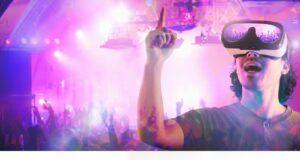
Meta’s Goo Goo Dolls VR Concert Proves What the Live Music Industry Has Been Too Slow to Acknowledge
There is a specific quality to a great live concert that recorded music has never been able to fully capture and that even the best live recording has always fallen short of conveying.
It is not the songs. The songs are on the album, better produced, more perfectly performed, and available at any moment on any streaming platform. It is not the lights or the production design — these can be photographed and filmed adequately. It is the specific quality of being in the room when it happens—the physical presence of the sound, the shared energy of the crowd, and the sense of being part of a collective experience that is happening to everyone present simultaneously and that no other format can replicate.
This is the quality that VR live music finally comes closer to delivering than any previous technology—and Meta’s virtual concert featuring the Goo Goo Dolls is the experience that makes this argument most convincingly to anyone who has not yet encountered VR live music at its best.
What the Goo Goo Dolls VR Concert Actually Delivers
The experience works for reasons that deserve direct examination rather than general enthusiasm—because understanding specifically why it works explains both what VR live music is genuinely capable of and what it requires to achieve its potential.
The spatial audio is the first and most immediately significant quality. In a conventional concert recording, the sound reaches your ears from the speakers playing the recording — from wherever those speakers are positioned in your physical environment. In the VR concert experience, the sound comes from the stage — from the specific position in the virtual space where the band is performing, with the crowd noise coming from the spatial positions around you where the crowd is visible in the 360° environment.
This spatial relationship between sound and visual position is what activates the presence response in the brain — the neural processing that registers you as being in the space where the sound originates rather than in your living room listening to a recording. It is the single quality that distinguishes genuine VR concert presence from watching a concert on a large screen.
The second quality is the freedom of perspective. A filmed concert presents what the director chose to show—the camera angles selected in the production process and the moments included and excluded in the edit. The VR concert environment presents the complete 360° space around the attendee. You can watch the stage. You can look at the crowd around you. You can look at the venue structure above. The choices about where to direct your attention are yours rather than the director’s.
The third quality is the crowd. Virtual attendance in a shared VR environment alongside other real attendees—seeing their avatar presence in the shared space, experiencing the collective energy of a group of people who are all experiencing the same music in the same virtual place simultaneously—recreates a dimension of live concert experience that watching a screen alone cannot approach.
Why Live Music Specifically Benefits From VR More Than Other Entertainment
Live music is not uniquely suited to VR because it is the most complex entertainment form or the most technically demanding one to render. It is suited to VR specifically because the quality that makes live music valuable—the thing that makes people buy expensive tickets, travel to venues, and stand in crowded spaces—is precisely the quality that VR technology most directly addresses.
Other entertainment forms lose less when moved to a screen. A film is designed to be experienced on a screen. A documentary is designed to be watched. The transition from cinema to home screen involves a quality reduction but not a fundamental transformation of the experience category.
Live music is designed to be attended. The difference between the live experience and the recorded experience is not a quality reduction along a single dimension—it is a categorical difference between presence and observation. The VR concert experience moves the concert attendee from observation back toward presence in a way that no previous home entertainment technology has achieved.
The specific emotional dimensions of a live music experience that VR recreates effectively include the following:
The collective dimension — the sense of experiencing something alongside other people who are having the same experience simultaneously — is recreated in VR concert environments where real attendees share the virtual space in real time. The feeling of being part of an audience rather than a solo viewer changes the emotional character of the music experience in ways that are immediately felt.
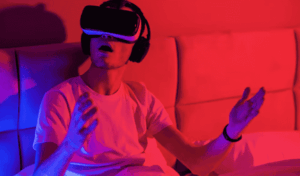
The scale dimension—the physical scale of live performance, the size of the stage, and the visual sweep of a full concert venue—is communicated in VR through genuine spatial perspective in a way that flat screens fundamentally cannot replicate. Standing in the VR concert space and looking at the stage from the audience position conveys the physical scale of the performance environment in a way that places you in the room rather than in front of a representation of the room.
The temporal dimension — the sense of being present at something that is happening now, in real time, that will not happen in exactly this way again — is recreated in live VR concert events in a way that recordings of those events do not replicate. The live VR concert is an event that is happening right now. The attendee is present at it. The recording of the same event is an artifact of something that happened.
The Implications for the Live Music Industry
The live music industry in India is at a genuinely interesting moment in its relationship with VR—aware of the technology’s potential, cautious about the investment required, uncertain about the audience readiness, and watching international developments like Meta’s Goo Goo Dolls concert for evidence of what VR concert experiences can achieve at scale.
The evidence from Meta’s experience is specific and relevant to the Indian context.
VR concerts extend the reach of live music to audiences who cannot attend physical concerts—the geography constraint in a country as large and as unevenly distributed in concert infrastructure as India, the economic constraint that premium concert tickets create, and the physical accessibility constraint that live venues create for specific audience populations. VR concert formats address all of these constraints while delivering an experience quality that approaches physical attendance in the dimensions that matter most.
The revenue implications of genuinely successful VR concert formats are significant for artists, promoters, and platform operators. The VR concert audience is not bounded by venue capacity. A physical concert in Delhi or Mumbai has a fixed capacity that limits revenue regardless of demand. A VR concert event has the potential to serve the completely interested audience regardless of where they are located—a genuinely new economic model for live music that VR technology enables.
What Needs to Improve for VR Live Music to Reach Its Full Potential
The honest assessment of where VR live music is right now includes acknowledgment of the gaps that remain between the experience and the physical concert it is working toward replicating.
The avatar representation of other attendees is the most immediately visible gap—the virtual crowd that surrounds the attendee in a VR concert environment is a collection of avatars rather than the genuinely human visual presence of a physical crowd, and the emotional impact of a collective concert experience is reduced by this representational approximation compared to the genuine human visual presence of a physical concert crowd.
The haptic dimension—the physical sensation of bass frequencies in a live concert environment and the physical presence of sound pressure at live performance levels—is absent from current VR concert experiences, and it is a dimension of live music experience that contributes to the emotional impact in ways that are difficult to replicate without a genuine physical sound environment.
The social spontaneity of live concerts—the conversation with the stranger next to you, the shared reaction to an unexpected song choice, and the organic community of people who happen to be in the same place for the same music—is approximated but not fully achieved in current VR concert social environments.
These gaps are real, and they are worth acknowledging honestly alongside the genuine achievements that VR concert experiences like Meta’s Goo Goo Dolls event demonstrate. The trajectory is clear and the progress is genuine—each generation of VR concert technology closes these gaps further.
Meta’s Goo Goo Dolls VR concert is not proof that VR has solved the live music problem. It is proof that VR is the technology that will eventually solve it—that the combination of spatial audio, 360° visual presence, and shared real-time attendance is the right combination of capabilities for the specific challenge of bringing live music presence to audiences that physical venues cannot reach.
The live music industry that understands this early and builds for this reality will be the industry that is positioned correctly when VR concert technology reaches the quality threshold that makes virtual attendance the first choice rather than the consolation option for audiences who cannot attend in person.
That threshold is closer than it was. Experiences like Meta’s Goo Goo Dolls concert are evidence of the progress. The destination is the live music experience that travels to the audience rather than requiring the audience to travel to it.