
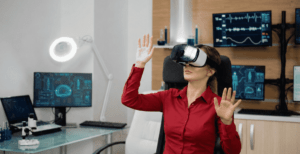
Hospitals are strange places. Most people only see them when they have to—waiting rooms, long hallways, a few nurses or doctors passing by. Rarely does anyone get to see what goes on behind the scenes. Labs, ICU rooms, diagnostic machines… it all stays hidden.
Free 360 medical facility tours try to fix that. They don’t make anyone a doctor overnight. They don’t even try. They just show how things really are, and that can be surprisingly useful.
A 360 tour is different from a video. You can look around, zoom in, focus on whatever catches your eye. A reception area, for instance, is more than a desk and chairs. There are pamphlets stacked here and there, some seating for visitors, and small things like a hand sanitizer station that suddenly makes sense when seen. People don’t usually notice these details, but in the tour, they’re obvious.
Exploring the Patient Wards
Patient wards are tricky to imagine if all you’ve done is read about them. Beds, machines, chairs—books never capture the feeling. In a 360 tour, the spacing becomes clear. The beds might look close together, but there’s room for staff to move around.
Monitors sit beside each bed, sometimes in positions that look odd at first glance but make sense once observed. The curtains separating patients, the placement of bins, little tables… it all starts to click visually, even if just by watching.
Sometimes it feels repetitive: the beds, the monitors, and the same machines appear in every room. But that repetition helps understanding. You start noticing patterns. How nurses might move through the ward. How equipment is set up for efficiency. Small things, like the angle of a monitor or a tray on a counter, suddenly matter.
Labs and Equipment
Laboratories are even more confusing on paper. Machines with blinking lights, racks of samples, tubes everywhere. Descriptions never do them justice.
Seeing a lab in 360, though, makes the space understandable. Racks are organized, machines are positioned for workflow, and labels on bottles are visible. Even minor items—gloves, test tubes, cleaning materials—stand out. It gives context to something that would otherwise feel abstract.
Imaging rooms, like X-ray or MRI, are also easier to understand. Warning signs, headsets for patients, placement of machines—it all becomes clear. You notice the flow, how patients might move from one area to another, and even the little things that make a big difference in operations.
Advantages of 360 Medical Tours
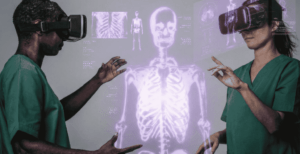
Textbooks and guides can only do so much. A diagram or a paragraph can explain where an ICU is or what an MRI machine does, but it doesn’t show scale, space, or context. 360 tours fill that gap. They help learners understand the layout, the logic behind room arrangements, and the workflow in hospitals.
They’re free, too. Most training software or guided hospital tours cost money or require special permissions. These tours remove that barrier. All that’s needed is a device with internet access. That makes it possible for students, volunteers, and anyone curious to explore spaces that might otherwise remain off-limits.
Quiet Learning
Not everyone is comfortable asking questions. Some people feel shy or worry about seeming slow. 360 tours solve that problem. Users can pause, zoom in, go back, and explore at their own pace. Nobody is watching and judging. They can take their time noticing details and forming understanding naturally.
Even repeated observation is helpful. Going back to a room or machine multiple times might feel redundant, but each time, something new becomes apparent. Little things that seem irrelevant at first—like a sink in the corner, the spacing of a tray, the position of a light—start to make sense after a few looks.
Making Complicated Spaces Understandable
Hospitals are complicated. Every room has a purpose, and every machine has a function. Sterilization areas, ICUs, and labs—they all follow precise rules. Reading about them never fully conveys this. Seeing them in 360, though, shows how everything fits together.
Observing an operating room, for example, highlights why machines are placed a certain way, why monitors are angled, why staff move in a particular pattern. Even the positioning of lights and surgical tables becomes meaningful. Watching these spaces without pressure allows understanding to develop naturally.
Training Benefits
Educators can benefit as well. Instead of explaining every detail verbally, one visual from a 360 tour can replace multiple sentences. Students ask better questions because they understand the layout and context. Discussions are more productive, and learning becomes less abstract.
Tours can also be reused. Once a school or program introduces a 360 tour, it can be accessed multiple times. Younger learners focus on awareness. Older learners analyze workflow and protocols. The same content can support different levels of learning over time.
Exposure to Real Workflows
Many students never get to see how hospitals operate until late in their training. Wards, labs, pharmacies, ICUs—they remain theoretical until observed. 360 tours provide that exposure early. Users can see how equipment is used, how staff coordinate, and why hygiene and safety protocols exist.
Even departments like maternity, emergency, and radiology can be explored virtually. Observing the arrangement of equipment, patient flow, and staff movement helps learners. This allows them to connect textbook knowledge to real-life practice.
Learning at Your Own Pace
One of the things people notice about 360 medical tours is that there’s no rush. A machine might look confusing the first time, or a part of a room might not make sense right away—and that’s totally fine.
Anyone can just click around again, look at the same area, or focus on something small for a while. Sometimes people go back just to make sure they saw everything, and sometimes they notice things they missed before, like a tray tucked in the corner or a monitor angled strangely.
It’s not perfect; it’s not timed, and that’s what makes it feel different from a real hospital visit where someone might be rushing or telling you to move along.
Visual Insight, Not Hands-On Training
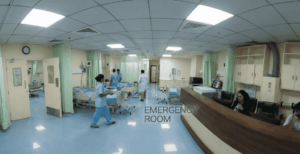
These tours don’t replace real experience. Hospitals can’t be fully learned from a screen—patient care, supervision, and hands-on work are still essential; however, the tours give a kind of visual guide. They show how rooms are set up, how staff might move around, and how machines are arranged.
It helps make sense of the real thing later. Sometimes it’s the small stuff that matters most, like how equipment is positioned for efficiency or how one corridor connects to another. The tours don’t explain it all perfectly, but seeing it makes the real experience less confusing, which is kind of nice.
Free 360 tours also make spaces that feel closed-off or intimidating suddenly approachable. Wards, labs, imaging rooms—all of it can be explored without travel, cost, or asking for permission.
Details that might get overlooked in real life—little monitors, bins, labels, even how lights are set up—can be studied slowly, over and over. It’s not the same as being there, but it’s close enough to get a feel for how everything works together.
Learning doesn’t always need lectures, textbooks, or fancy simulations. Sometimes all it takes is the ability to look around freely, notice what matters, and see the space for what it really is. That small freedom—just to explore at one’s own pace—makes a surprisingly big difference.