

School learning usually sounds good on paper, but in reality it often feels boring. Students sit in one place for hours, listen to explanations, copy notes, and then try to remember everything for exams. Some students manage, many don’t. Not because they are lazy, but because the method doesn’t work for everyone.
This is where free 360 education tours start making sense. They don’t promise miracles or turn learning into a game show; they simply show things the way they actually are. And sometimes, that is enough.
What a 360 Education Tour Actually Feels Like
A 360 education tour is not like watching a YouTube video. You are not stuck with a single camera angle. You can look left, right, up, or down and decide for yourself what to notice.
It feels closer to standing inside a place rather than reading about it. Whether it’s a museum, a factory, a classroom, or a historical site, the feeling is different. You are no longer guessing; you are actually seeing. That small change matters more than people think.
Why Students Get Tired of Normal Lessons
Most textbooks explain things in a straight line. Paragraph after paragraph. For some students, that works. For others, the mind just switches off.
When students cannot picture what they are reading, they lose interest. They start memorizing instead of understanding. Exams end, and most of it disappears from memory. 360 education tours break that pattern. When students see a place, the information sticks naturally.
Free Tours Make the Biggest Difference
Paid tools are great, but many schools cannot afford them. Free 360 education tours remove that problem completely.
A school does not need special equipment. In many cases, a basic phone, tablet, or computer is enough. Internet access, that’s it. This makes learning more equal. Not just for big schools, but for smaller ones too.
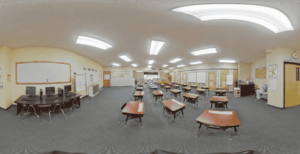
Bringing Places to Students Who Can’t Travel
Real field trips are expensive and complicated. Permissions, transport, safety, and time—everything becomes a problem. Because of this, many students never visit museums, science centers, or real workplaces during their school years. They only read about them.
360 education tours bring those places into the classroom—no travel, no stress, just exploration. And if a student misses something, the tour can be opened again. That never happens in real trips.
Helping Students Who Don’t Speak Much
Not every student likes asking questions in class. Some feel shy, while others fear being judged.
With 360 tours, students can explore quietly. They can look again and again until they understand. No one is watching them, and no one is rushing them. This helps build confidence slowly, without pressure.
Making Abstract Topics Feel Real
Subjects like geography, history, and science often feel abstract. Maps don’t show scale properly. Diagrams look confusing, and descriptions feel distant.
A 360-degree view changes that—mountains feel tall, buildings feel large, and machines feel complex. Once students see these things, explanations start making sense on their own.
Teachers Don’t Have to Over-Explain
Teachers often repeat the same explanation many times. That can be tiring for them too. With a 360 education tour, teachers can show instead of explain. One visual can replace ten sentences.
This saves time and makes class discussions better. Students ask smarter questions because they actually understand what they are seeing.
Early Exposure to Real Life
Many students finish school without knowing how real workplaces function. Factories, labs, farms, offices — all remain concepts.
360 education tours give early exposure. Students see how work actually happens. This helps them connect studies with real life. It also helps them think about future careers in a more realistic way.
Learning Without Fear of Mistakes
One underrated benefit of 360 education tours is that mistakes don’t matter. If a student misunderstands something, they can go back and check again.
There is no embarrassment and no pressure; learning becomes calmer, and calm learning lasts longer.
Long-Term Use for Schools
Once a school starts using 360 education tours, they don’t disappear after one class. The same tour can be used again next year, and the year after that.
Different teachers can use the same content in different ways. Younger students can observe, while older students can analyze, and that flexibility is valuable.

Not a Replacement, Just a Support
360 education tours are not meant to replace teachers, books, or real experiences. They are just support tools. But good support tools can change how learning feels.
Instead of struggling to imagine things, students can see them. Instead of memorizing blindly, they can understand slowly.
Free 360 education tours don’t try to be perfect—and they don’t need to be. Their strength lies in their simplicity.
They make learning more visual, more relaxed, and more real. For many students, that is exactly what has been missing. Education doesn’t always need new rules or harder exams. Sometimes, it just needs a better way to show things.