

Holi is not one fixed experience anymore. It feels different now. Earlier, Holi meant noise, colors everywhere, strangers putting color on your face, and no one really caring about rules. It was messy, sometimes annoying, but it felt alive.
Now when Holi comes, things feel different. Friends are no longer in the same city. Some people don’t want to go out, some are working, and some simply don’t enjoy it the way they used to. The festival still exists, but the way people live has changed.
Sometimes it feels like Holi is happening around you, but you are not really inside it. That feeling makes people look for different ways to stay connected, which is why the idea of using Virtual Reality during Holi does not feel completely strange.
What VR Actually Feels Like
This is not about definitions or technical explanations. VR is simply an experience where you put something on your head and your mind shifts for a while. You stop looking at your room and start looking at another place.
It doesn’t feel 100% real, and it doesn’t need to. Even that 50–60% feeling is enough to change your mood. During Holi, mood matters more than anything else.
When inside the experience, there is no need to question how it works; what is seen is simply accepted, and that simple mental shift is what makes VR useful during festivals.
When You Are Far From Home on Holi
A lot of people don’t talk about this, but Holi can feel very empty if you are away from home. You see photos online, people having fun, and you’re just sitting somewhere else, scrolling.
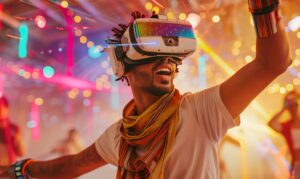
VR can help in a small way here by allowing entry into a virtual Holi space where music is heard, colors are seen, and laughter can be felt around. You spend 10–15 minutes there, and somehow it feels better than doing nothing.
It does not bring home any closer, but it brings the feeling closer; even a short experience can change the mood for the day, and while it does not fix everything, it does reduce the feeling of missing out.
Being With People Without Actually Meeting Them
Video calls are fine, but they don’t feel festive. Everyone is in their own room, just talking. In VR, at least you feel like you are in the same place. You and your friends or family are inside one environment. You can stand next to each other, move around, and just exist together for a while.
It feels less formal than a video call, as there is no need to keep talking all the time to feel connected, and even though it sounds small, that shared space makes a real difference.

For People Who Quietly Avoid Holi
There are many people who don’t say it openly, but they don’t like Holi. Skin problems, breathing issues, anxiety in crowds, bad past experiences—reasons can be anything.
Most of the time, these people are judged with comments like “you’re boring” or “you don’t enjoy festivals,” but VR does not judge anyone; it allows people to join, enjoy a little, and leave quietly, offering a way to experience Holi without explaining themselves, without forced colors, crowds, or pressure.
The Mess and Damage After Holi
Every year it is the same—dirty streets, wasted water, complaints about chemical colors, and fights in some places—but VR does not create these problems; it stays clean, ends the moment the headset is removed, and leaves no next-day mess or complaints from neighbors or authorities.
This does not mean everyone should switch to VR Holi, but for places like schools, offices, or even housing societies, it can be a controlled way to celebrate without chaos.
Holi Has a Meaning That Gets Ignored
Honestly, many people don’t know why Holi is celebrated. They know it’s fun, that’s all.
VR can show stories instead of explaining them in words. There is no need to sit and listen; the experience unfolds visually, making it easier to understand—especially for children—as visuals stay in memory longer than words and make learning feel natural rather than forced, without any heavy teaching, just simple visuals.
Artists and Small Performers
Not everyone gets big stages during Holi. Many singers, dancers, and performers stay local. With VR, they can perform once and people from different places can watch. It’s not perfect, but it’s better than being unseen.
It gives artists more reach without extra cost while offering audiences something different to attend and providing people with a cultural experience to enjoy without going out.
Children and Overprotective Parents
Parents worry a lot now. And honestly, it makes sense. VR lets kids enjoy colors without physical mess or risk. They can play, see bright visuals, and still feel part of Holi. Schools can use it in a calm way instead of complete madness.
Children still feel excited even in a digital setting, parents feel relaxed knowing nothing can go wrong, and both sides feel satisfied.
One Thing That Should Be Clear
VR is not Holi and will never be Holi. Real Holi has smell, noise, irritation, laughter, and randomness—things VR does not have. There is no coming home tired and covered in color or feeling that physical exhaustion, because VR is not trying to replace the festival; it simply exists as an option for those who need it.
Holi is about feeling connected, a connection some people find on the streets while others do not. If VR helps even a few people feel less left out during Holi, then it’s doing something right. It does not need to impress everyone; it only needs to help someone feel included.