
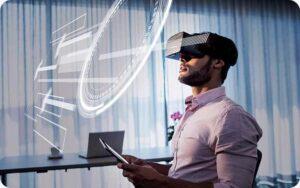
Mixed reality gaming is not virtual reality. It is not augmented reality. It sits in the space between both — a technology that layers digital content onto the physical world in ways that make the two genuinely interact rather than simply coexist. Understanding this distinction before building a business around it is not a minor technical detail. It is the foundation of every decision that follows — how you pitch to customers, what equipment you buy, what kind of spaces you need, and how you differentiate yourself from the VR cafe down the road.
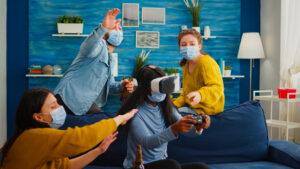
Mixed reality done properly creates experiences that nothing else can replicate. Players are simultaneously in the real world and inside a digital environment. They see their actual hands, their actual surroundings, their actual teammates — and they also see dragons, aliens, puzzles, and challenges layered directly onto that reality. The result is an experience that feels genuinely different from sitting inside a VR headset with the outside world completely blocked out.
Understand the Full Landscape Before Building Anything
Mixed reality gaming businesses exist on a spectrum, and where you position yourself shapes everything about your operation.
At one end is the location-based entertainment model — a physical space where customers come to you, pay for time or sessions, and experience mixed reality gaming in a controlled, purpose-built environment. Think of it as a premium entertainment venue rather than a technology demonstration. The advantage is consistent, predictable foot traffic from a fixed location. The challenge is the fixed overhead of rent, staffing, and equipment regardless of how many customers walk through the door on any given day.
At the other end is the events and experiences model — you take your equipment to venues, festivals, corporate events, and private occasions, setting up temporary mixed reality experiences wherever clients need them. Lower fixed overhead, but more operational complexity, significantly more logistics management, and heavy dependence on consistent event bookings to generate a sustainable revenue stream.
In the middle is the hybrid model — a physical venue that operates as the primary revenue base while an events arm generates additional revenue during periods when the physical venue would otherwise be quieter. This is the model most experienced operators recommend for businesses with genuine growth ambitions because it creates multiple revenue streams that balance each other through different seasonal patterns.
Most successful mixed reality gaming businesses in India right now are either pure location-based entertainment or hybrid operations. The events-only model works but carries significant operational fragility — one slow season or one large cancellation can create a genuine cash flow crisis without a stable physical revenue base underneath.
Decide where you are positioning before spending a single rupee on anything else.
The Technology Landscape — Understanding What You Are Actually Buying
Mixed reality runs on hardware that is genuinely more complex and more expensive than standard VR equipment. Understanding exactly what you are buying and why it matters enormously because the wrong equipment choice at the beginning is expensive to correct and operationally painful to live with.
Microsoft HoloLens 2
The most established enterprise-grade mixed reality headset currently available. It is optical see-through — meaning you see the real world directly through the lenses with digital content overlaid on top — and it has genuine spatial mapping capability that allows digital objects to interact realistically with physical surfaces, walls, floors, and objects in your space.
The HoloLens 2 is genuinely extraordinary technology. It is also expensive — each unit runs into several lakhs — and requires significant technical knowledge to deploy effectively and is primarily designed for enterprise and industrial applications rather than consumer entertainment. The field of view for the digital overlay is narrower than most people expect from marketing materials and this limitation affects the immersive quality of gaming experiences on this platform.
Magic Leap 2
The direct HoloLens competitor with a similar price range and similar capability profile. Magic Leap has invested more deliberately in the entertainment and location-based experience market than Microsoft has, making it slightly more accessible for gaming applications. The field of view improvement over the original Magic Leap is genuine and significant. It still comes with enterprise-grade pricing and complexity.
Meta Quest 3
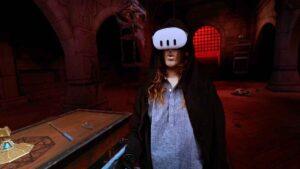
This occupies genuinely interesting middle ground and deserves serious attention from anyone starting a mixed reality gaming business. It is primarily a VR headset but has genuine mixed reality capability through high-resolution colour passthrough cameras — you see the real world through cameras rather than optical lenses, which creates a slightly different visual quality than true optical see-through but at a fraction of the cost of enterprise headsets.
For a gaming business specifically the Quest 3 is compelling for several reasons simultaneously. The hardware cost per unit is dramatically lower than enterprise alternatives. The content library is extensive and constantly growing. The mixed reality capability is genuinely impressive for gaming applications. The device is familiar enough to most customers that the briefing time required before sessions is shorter than for enterprise headsets. And the ecosystem of developers building for the platform is larger than any competitor which means content options will continue improving.
For most people starting a mixed reality gaming business in India right now, the Meta Quest 3 is the most financially viable and experientially compelling starting platform. Enterprise headsets make genuine sense as the business matures and moves into corporate training applications alongside consumer entertainment — but starting with Quest 3 and building toward enterprise hardware as revenue justifies it is a more intelligent financial sequence than the reverse.
Nreal Air and Lightweight AR Glasses
These represent the lighter end of the mixed reality spectrum — primarily augmented reality for content viewing rather than immersive gaming experiences. Less relevant for a gaming business currently but worth monitoring as the technology evolves because the form factor advantages of lightweight glasses over headsets will matter significantly for certain application categories.
Tracking Systems
Beyond the headsets themselves mixed reality gaming often requires additional tracking infrastructure — systems that track player position and movement within the play space to enable physical movement to translate meaningfully into the mixed reality experience. Options range from inside-out tracking built into the headsets themselves to external tracking systems mounted in the play space that provide more precise and reliable positional data.
For a starting operation, the inside-out tracking in modern headsets like the Quest 3 is adequate for most gaming applications. As you develop more physically demanding experiences or scale to larger play areas external tracking systems become increasingly worthwhile.
Build Your Concept Around an Experience, Not a Technology
The businesses that fail in this space almost always fail for the same reason — they lead with the technology rather than the experience. They walk into investor meetings, customer conversations, and marketing materials talking about mixed reality as if the technology itself is the product.
Customers do not come to your business because they want to try mixed reality. They come because they want to have a genuinely extraordinary time with people they care about. The technology is the delivery mechanism for that experience — invisible when it is working properly and only noticed when it is not.
Every decision about what you build should start from the question of what experience you want customers to have and work backward to the technology that delivers it most effectively.
The main mixed reality gaming experience categories that work commercially right now:
Cooperative Puzzle Experiences — Small groups of two to six players work together to solve challenges in a mixed reality environment. Digital clues, objects, and characters overlay the physical play space. Players communicate with each other in the real world while interacting with digital content simultaneously. The cooperative social dynamic makes these experiences genuinely enjoyable for groups regardless of individual gaming skill level — which dramatically expands the accessible customer base beyond dedicated gamers.
Competitive Arena Games — Players compete against each other with digital elements layered onto a physical play space. Imagine players physically moving through a room while digital targets, obstacles, and scoring elements appear in their shared mixed reality field. The physical component creates genuine athletic engagement that pure VR cannot replicate.
Narrative Adventure Experiences — A story unfolds across a physical space with digital characters, environments, and objects populating it. Players explore the space, interact with digital content, and progress through a narrative that combines physical and digital elements seamlessly. These experiences tend to command premium pricing because they deliver genuine storytelling alongside gameplay.
Educational and Training Simulations — Gaming mechanics applied to genuine skill development or knowledge acquisition. History lessons that place students inside historical events. Science demonstrations that allow physical interaction with molecular models. Medical training simulations. This category opens the corporate and institutional client base that consumer entertainment alone cannot access.
Free-Roam Multiplayer Experiences — Multiple players simultaneously in a large shared mixed reality environment, moving freely through a physical space while interacting with a shared digital world. Technically the most demanding category but experientially the most impressive and commercially the most differentiated.
The cooperative and competitive arena models are the most commercially viable starting points for a consumer entertainment business because they work naturally with the two to six person groups that most leisure entertainment customers arrive in and they deliver experiences that feel complete and satisfying within the thirty- to sixty-minute session windows that drive per-session economics.
Location Research and Space Design
Location selection for a mixed reality gaming business requires more careful analysis than most entertainment venues because the physical space is genuinely part of the product rather than just the container it is delivered in.
Choosing Your City and Neighbourhood
In Indian cities, the most viable locations for a mixed reality gaming business share several characteristics. Consistent young adult foot traffic — the sixteen to thirty five demographic is your primary consumer base and locations where this demographic naturally congregates perform significantly better than locations chosen purely on rental cost. Commercial and entertainment districts where leisure spending is already normalised — customers who are already in the mental mode of spending on entertainment are significantly easier to convert than customers who need to shift their mindset before they spend. Proximity to educational institutions — college students are early adopters of new entertainment experiences, have social networks that spread word of mouth efficiently, and visit in groups that maximise per-visit revenue.
Visibility from the street or from the main circulation routes of a shopping complex is more commercially valuable than most operators realise in the early months. When potential customers can see what is happening inside — players visibly engaged in something extraordinary, reactions visible through a glass frontage — curiosity becomes your most effective marketing tool.
Space Requirements
Mixed reality gaming is more spatially demanding than standard VR. The interaction between digital content and physical space is the entire point which means the physical space itself is part of the product design.
You need genuinely open floor space with consistent ceiling height and no structural obstructions in the play area. Standard ceiling heights of ten to twelve feet are adequate for most experiences but some free-roam experiences benefit from higher ceilings. The floor surface needs to be consistent and ideally slightly cushioned — players in mixed reality environments sometimes move more physically than they realise and safe flooring reduces both injury risk and your liability exposure.
Lighting control is essential for optical see-through headsets specifically — too much ambient light, particularly strong directional sunlight, significantly degrades the quality of the digital overlay. Adjustable artificial lighting in the play area gives you control over the visual experience quality regardless of time of day or weather conditions.
Minimum viable space for a single mixed reality gaming arena running simultaneous sessions with four to six players is typically four hundred to six hundred square feet of clear play area. This does not include the briefing area where staff explain the experience and fit headsets, the transition zone where players move between the waiting area and play area, equipment storage and charging areas, reception and booking management area, and bathroom facilities.
A complete single-arena operation realistically requires between eight hundred and twelve hundred square feet of total space to function properly — smaller than this creates operational friction that directly affects customer experience quality.
For a multi-arena operation planning two or three simultaneous sessions scale these requirements proportionally but look for efficiencies in shared spaces — a single reception area and briefing space can serve multiple arenas if the session scheduling is managed correctly.
Space Design Principles
The design of the non-playing areas matters more than most operators give it credit for. The waiting area is where customers form their first impressions of the business and where they mentally prepare for the experience ahead. A waiting area that feels well-designed, genuinely interesting, and aligned with the quality of the experience they are about to have primes customers for a better experience before they put the headset on.
Screens showing footage of previous sessions in the waiting area serve two purposes simultaneously — they entertain waiting customers and they generate the kind of visible reaction content that makes other people in the space curious about what is happening.
The briefing area needs to be comfortable, acoustically manageable, and designed for small group communication. Staff explaining complex concepts and fitting unfamiliar equipment need enough space to move around the group and enough quiet to be heard clearly.
The Investment Reality — Honest Numbers
Mixed reality gaming businesses are not cheap to start properly and pretending otherwise does not serve anyone trying to make a genuine business decision.
Equipment Costs
Meta Quest 3 headsets currently retail in India at approximately forty to fifty thousand rupees per unit. A four-headset setup costs approximately two to two and a half lakhs in headsets alone before any accessories.
Accessories per headset — protective cases, replacement facial interfaces, controller grips, charging equipment, cleaning supplies — add approximately ten to fifteen percent to the headset cost.
Additional tracking equipment, if used, adds further cost depending on the system selected.
Enterprise headsets — HoloLens 2 or Magic Leap 2 — multiply the headset cost by a factor of eight to twelve compared to Quest 3 units.
Content Costs
Licensed game content — per title, per location, commercial use licensing fees vary widely but budget fifteen to fifty thousand rupees per title for properly licensed commercial use content, with ongoing annual licence fees for some titles.
Custom content development — if you commission original mixed reality experiences for your venue, development costs for a quality single experience range from five to thirty lakhs depending on complexity, duration, and the development studio involved. This is a significant investment but creates genuine competitive differentiation.
Space Costs
Fit-out costs vary enormously by city, location quality, and design ambition. A functional but not premium fit-out for an 800-square-foot space in a Tier 2 Indian city might run five to ten lakhs. A premium fit-out in a high-visibility location in a metro city could run twenty to forty lakhs or more.
Rental deposits typically require two- to six-month advance rent depending on the landlord and the market.
Working Capital
Beyond setup costs you need working capital to cover operating expenses — rent, salaries, utilities, insurance, consumables — for the period between opening and reaching consistent profitability. Budget for a minimum of six months of operating expenses as working capital before you open.
Realistic Total Investment Range
A properly set up single-arena mixed reality gaming business in an Indian Tier 2 city using Meta Quest 3 headsets and a functional fit-out requires a total investment in the range of twenty-five to fifty lakhs depending on city, location, fit-out quality, and content choices.
A premium setup in a metro city using enterprise headsets with a high-quality fit-out and custom content can require one crore or more.
The most important financial discipline in the setup phase is resisting the temptation to over-invest in space or equipment before validating the market locally. Start with one well-equipped arena done properly rather than three mediocre arenas spread across a large space.
Legal, Regulatory, and Safety Requirements
Mixed reality gaming businesses operate primarily as entertainment venues and the legal framework is broadly similar to any commercial entertainment space with some specific additions.
Business Registration
Private Limited Company is the most appropriate structure for a business of this scale and ambition. It provides limited liability protection that is genuinely important when members of the public are using expensive equipment in your space, makes corporate contracting straightforward for the events and corporate arm, and creates the professional structure that premium pricing requires.
Sole Proprietorship is acceptable for very early exploration but creates personal liability exposure that becomes increasingly uncomfortable as equipment value and customer numbers grow.
GST Registration
Necessary from the beginning for most operations of this scale. The mixed reality gaming business falls under entertainment services for GST classification purposes. Maintain proper GST accounting from your first transaction.
Entertainment Tax
Entertainment tax regulations vary by state and need to be checked specifically for your location. Some states have specific provisions for gaming and entertainment venues. Consult a local CA who understands the entertainment business regulatory environment in your specific state.
Safety Compliance
Safety is genuinely important in a mixed reality gaming venue — not just regulatory formality. Players wearing headsets are navigating physical spaces with reduced awareness of their actual surroundings. The mixed reality experience can cause players to make movements they would not make with full spatial awareness — reaching, stepping, turning sharply — in ways that create genuine physical risk if the play space is not properly designed and managed.
Play area boundaries clearly marked on the floor and ideally with physical barriers that players can feel if they approach them during immersive experiences. Staff supervision during all sessions is non-negotiable — every session needs a staff member monitoring player safety throughout. Weight and height restrictions for equipment use clearly communicated at booking. Age restrictions — children under eight should not use headsets for extended sessions and parental supervision is appropriate for children under twelve.
Emergency procedures posted visibly and practiced by all staff. First aid kit maintained and staff trained in basic first aid. Clear evacuation procedures in the event of fire or other emergency that accounts for the fact that some players may be disoriented from headset use.
Insurance
Equipment insurance covering the replacement cost of your headset fleet is essential — these are expensive items in a space where members of the public are handling them. Public liability insurance covering injury to customers during sessions. Property insurance covering the fit-out and business assets. Employer’s liability if you have staff.
Get quotes from multiple insurers and be completely transparent about the nature of your business — what the equipment is, how customers use it, and what physical activity is involved. Undisclosed material facts in insurance applications can void claims.
Content Strategy
The hardware is the delivery mechanism. The content — the actual experiences running on that hardware — is what customers are paying for. This is where many new mixed reality gaming businesses underinvest and it shows immediately.
Licensed Commercial Content
The Meta Quest platform has an App Lab and commercial licensing program that allows businesses to license games for commercial use. Steam has commercial licensing options for some titles. Specialist location-based entertainment content providers — companies that build experiences specifically for commercial mixed reality venues — offer content with licensing terms explicitly designed for this business model.
Read every licensing agreement carefully. Many popular consumer games explicitly prohibit commercial use and running these games in a paid commercial venue without proper licensing is both legally risky and reputationally damaging if it becomes known. Proper licensing is non-negotiable.
Custom Content Development
Building original mixed reality experiences specifically for your venue is expensive, but creates genuine competitive differentiation. An experience that only exists in your venue is a compelling reason to choose you over any competitor running the same licensed content.
If custom development is part of your plan, budget realistically. A quality original mixed reality gaming experience for four to six players, running thirty to forty-five minutes, built by an experienced development studio, will cost between ten and thirty lakhs depending on complexity. This is a significant investment that requires clear ROI thinking — how many sessions at what price point over what time period does this experience need to generate to justify the development cost.
Content Refresh Calendar
Customers who loved their first visit will not return if the offering is identical six months later. A formal content refresh calendar — introducing at least one new experience per quarter — is an operational discipline that directly drives repeat visit rates. Build this into your budget and your operational planning from the beginning rather than treating it as optional.
Multiplayer and Simultaneous Play
Content that allows multiple players to share the same mixed reality experience simultaneously is significantly more commercially valuable than single-player content because it creates shared social experiences that groups want to repeat together. Prioritise multiplayer content in your portfolio even if per-title licensing costs are higher.
Staffing, Training, and Building Your Team
Mixed reality gaming venues are genuinely staffed businesses. The technology does not run itself and the customer experience absolutely does not manage itself.
What You Need in a Staff Member
The profile that works best in this environment is not generic hospitality background but genuine technical curiosity combined with genuine people skills. Staff who find the technology interesting, who enjoy explaining things clearly to people who are new to an experience, who find genuine satisfaction in watching customers have a great time — these people are significantly better at this job than people who treat it as simply another hospitality shift.
Gaming enthusiasm is a genuine asset. Staff who understand the experiences they are managing, who can make intelligent recommendations about which games suit which groups, and who can troubleshoot minor technical issues without calling for help create a significantly better customer experience than technically adequate but personally disengaged staff.
What Training Needs to Cover
Equipment operation — setting up headsets, adjusting fits for different head sizes, connecting to the system, launching experiences, troubleshooting common issues. Every staff member should be able to manage the entire equipment setup without assistance before their first unsupervised shift.
Customer briefing procedure — how to explain the experience to people who have never tried anything like it, how to manage expectations, how to answer the common questions, how to reassure people who are nervous about trying an unfamiliar technology. A great briefing sets up a great experience. A poor briefing creates confusion that undermines the experience before it starts.
Safety monitoring — what to watch for during sessions, how to intervene if a player is at physical risk, what constitutes a session-stopping safety concern versus a manageable situation.
Emergency procedures — fire evacuation, medical emergency, equipment failure mid-session. Every scenario needs a practiced response.
All new staff should complete a minimum of three to five full sessions as a player themselves before managing sessions for paying customers. Understanding what the customer experience feels like from the inside is not a bonus — it is the foundation of everything else.
Staffing Levels
A single arena operation running back-to-back sessions through peak hours needs a minimum of two staff simultaneously — one managing the active session and one handling reception, booking, and preparing the next group for their briefing. Running with a single staff member creates customer experience gaps that are immediately felt.
For a multi-arena operation or for periods of peak demand scale staffing proportionally. Understaffing an entertainment venue is one of the most reliable ways to generate negative customer experiences and negative word of mouth simultaneously.
Pricing Strategy in Detail
Pricing mixed reality gaming experiences correctly is one of the most commercially important decisions you make and one of the most consistently mishandled in this industry.
The Premium Reality
The experiences you are offering are genuinely premium. The equipment is expensive. The operational costs are significant. The experience is unlike anything else available at a comparable price point in most Indian cities. Price accordingly.
The instinct to underprice in order to attract volume — to make it affordable so that more people come — is understandable and almost always wrong. Underpricing signals low quality to exactly the customers whose spending you most need. It attracts price-sensitive customers who are the most demanding and the least loyal. And it creates a price expectation in your local market that is genuinely painful to raise later.
Session-Based Pricing
Charging per person per session of defined length is the most straightforward and most commonly used model. Thirty-minute sessions and sixty-minute sessions are the standard duration options. Sixty minutes is the sweet spot for most experiences — long enough to deliver genuine value, short enough to maintain intensity throughout.
Per person pricing in the range of three hundred to eight hundred rupees per session is broadly appropriate for Tier 2 Indian cities at the current market development stage. Metro cities can support the upper end of this range and above. Very small cities with no comparable experiences and no consumer reference point may need to start at the lower end and build confidence in the pricing over time.
Group Packages
Groups of four or more should receive a meaningful per-person discount — typically fifteen to twenty-five percent — for booking all slots in a session simultaneously. This simplifies the group booking decision, increases the proportion of sessions running at full capacity, and rewards the customer behaviour — arriving in groups — that maximises your per-session revenue.
Corporate Packages
Corporate clients — companies booking for team building, training, and events — should be priced on a completely different basis from consumer entertainment. Corporate packages typically include session time, dedicated staff, pre-event consultation, and sometimes custom content elements. Pricing for corporate packages should reflect the total value delivered rather than simply multiplying consumer session prices by headcount. Three to five times the consumer per-person rate is a reasonable starting point for corporate package pricing.
Membership Models
Monthly membership packages offering a set number of sessions per month at a discounted per-session rate generate predictable recurring revenue and build the loyal regular customer base that every entertainment business needs to survive seasonal fluctuations. Ten to twenty percent discount on the standard session rate in exchange for monthly commitment is a reasonable membership value proposition.
Birthday and Special Occasion Packages
Birthday packages — including session time, a dedicated space for celebration, and some form of F&B element — command premium pricing because customers are willing to pay significantly more for occasion experiences than for regular leisure activities. Build these packages into your offering from the opening because birthdays and special occasions are consistent revenue regardless of broader demand patterns.
Marketing and Customer Acquisition
The fundamental marketing challenge for a mixed reality gaming business is that most potential customers have no reference point for what you are offering. They have never experienced it. Written descriptions and even photographs do not fully convey what it feels like.
Video Content is Everything
Footage of real people playing — their reactions, their movements, the visible delight of experiencing something genuinely extraordinary — conveys the value proposition more effectively than any written or static marketing. This is the most important marketing asset you have and you should be generating it constantly from your earliest days of operation.
Post this content consistently and in genuinely large volumes on Instagram Reels, YouTube Shorts, and wherever your target demographic spends time online. The algorithm rewards consistent volume and the content self-selects for sharing — people who see their friends or family having an extraordinary experience share it without any prompting.
First Experience Events
Invite local influencers, journalists, college student group leaders, corporate HR managers, and community figures to experience the venue free in exchange for genuine social media posting. Seed the word of mouth network deliberately rather than waiting for it to develop organically.
These events cost you session time and operational resources but generate the initial wave of word of mouth that organic discovery cannot provide at the speed a new business needs.
Corporate Partnership Development
Corporate clients for team building and training events generate both significant revenue per booking and significant marketing reach. A company that brings twenty employees for a team building session has simultaneously generated revenue, introduced twenty potential personal-use customers to your business, and created twenty people who will tell their personal social networks about what they experienced.
Develop a corporate offerings brochure. Identify HR managers and team leaders in local companies as direct outreach targets. Offer a complimentary pilot session for decision-makers who can approve corporate bookings — the experience sells itself once people have tried it.
College and School Tie-ups
Educational institutions regularly look for genuinely interesting activities for student groups — science trips, technology education, rewards for academic performance. Position your venue as an educational experience destination as well as an entertainment one. The mixed reality technology itself is genuinely educational content if framed correctly.
Educational group rates below commercial rates are justified by the volume and the marketing value of having large numbers of young people experience your venue and talk about it in their social networks.
Review Platform Management
Google Maps, Zomato, and other review platforms are how most local customers evaluate unfamiliar leisure experiences before making a booking. Actively encourage satisfied customers to leave reviews immediately after their visit. Respond to every review — positive and negative — professionally and promptly. Your review profile is often the first thing a potential customer sees and it directly affects booking conversion rates.
Day-to-Day Operations
The difference between a mixed reality gaming business that thrives and one that merely survives is almost always operational consistency rather than technology or concept quality.
Equipment Maintenance Protocols
Build a formal equipment maintenance schedule and follow it without exception. Daily cleaning of headsets and controllers after every session using appropriate electronics-safe cleaning materials. Weekly inspection of all equipment for physical damage, connection issues, and performance degradation. Monthly full system checks including firmware updates, content updates, and calibration verification. Quarterly professional servicing for any equipment showing wear or performance issues.
Equipment that fails mid-session creates customer experiences that generate negative word of mouth. Equipment that is maintained religiously fails significantly less often. The twenty minutes spent on daily maintenance saves hours of crisis management and reputation repair.
Session Management Systems
A proper booking system — even a simple one — is essential from day one. Walk-in customers are valuable but a business that cannot manage advance bookings reliably loses the corporate and group booking revenue that disproportionately drives profitability.
Session timing needs to include sufficient changeover time between groups — including equipment cleaning, reconfiguration for the next experience, briefing the incoming group, and collecting payment from the outgoing one. Twenty minutes of changeover time between one-hour sessions is the minimum operational reality. Build this into your session scheduling rather than discovering it creates chaos after opening.
Financial Management
Daily revenue reconciliation. Weekly expense review against budget. Monthly profit and loss analysis. These disciplines are not bureaucratic formality — they are how you know whether your business is actually financially healthy before a problem becomes a crisis.
Use accounting software from day one. Zoho Books, QuickBooks, and Tally all work for this business scale. The discipline of accurate financial records from the beginning saves enormous pain at tax filing time and makes it possible to make genuinely informed business decisions rather than decisions based on the approximate feeling of how things are going.
Corporate and B2B Revenue Development
Consumer entertainment is the visible face of your business but corporate and B2B revenue is often what makes it genuinely profitable rather than merely viable.
Team Building Programs
Corporate team building is a genuine and growing market in India. Companies invest real budgets in activities that build team cohesion, improve communication, and reward performance. Mixed reality gaming delivers all three simultaneously — the cooperative and competitive experiences require genuine teamwork, the shared novelty of the experience creates bonding, and the activity itself is rewarding rather than formulaic.
Develop structured team building programs with defined learning outcomes. HR managers who are approving budgets need to justify the spend in business terms — provide them with language about communication skills development, creative problem solving, and collaborative performance that sits alongside the more obvious fun and engagement benefits.
Corporate Training Applications
Beyond team building, mixed reality has genuine training applications that corporate clients will pay premium rates for. Safety training simulations that allow employees to practice emergency responses in realistic virtual scenarios. Product training that uses three-dimensional mixed reality models to train sales teams or technical staff. Customer service simulations that allow staff to practice difficult scenarios in a safe environment.
These applications require custom content development but command significantly higher per-session rates than consumer entertainment and create ongoing relationships with corporate clients who return for regular training rather than one-off events.
School and College Programs
Educational institutions have budgets for genuinely educational experiences. Science, technology, history, and geography curricula all have natural mixed reality applications — putting students inside the solar system during an astronomy lesson, inside a historical event during a history lesson, inside the human body during a biology lesson.
Develop specific educational program offerings mapped to curriculum requirements and present them to school principals and college department heads as educational resources rather than entertainment options. The framing changes the budget it draws from and the decision-maker you need to convince.
Technology Evolution and Staying Current
Mixed reality technology is evolving faster than almost any other consumer technology category right now. What is impressive today will be ordinary in three years and new capabilities will create new experience possibilities that do not yet exist.
Staying current requires both financial investment — budget for technology refresh every two to three years — and intellectual investment — following the development of the technology closely enough to understand which innovations matter for your specific business and which are interesting but irrelevant.
Apple Vision Pro represents the premium end of the consumer mixed reality market and its eventual price reduction will create new experience possibilities for location-based entertainment businesses. The display quality and mixed reality capability are genuinely extraordinary — the current price point simply makes it impractical for multi-headset commercial deployment.
The general trend in mixed reality hardware is toward lighter form factors, wider fields of view, better passthrough quality, and lower prices. Every generation of hardware improvement expands the experience possibilities available to your business. Plan for technology refresh as a regular capital expense rather than a surprise.
Software Platform Evolution
The software platforms running mixed reality experiences are evolving alongside the hardware. New development tools, new content platforms, and new distribution mechanisms will change the content economics of this business over the next five years. Stay connected to the developer communities building on these platforms — the innovations that will differentiate your business in three years are already being built by developers today.
Scaling to Multiple Locations and Revenue Streams
Once your first location is genuinely profitable and operationally stable — not just busy but genuinely profitable with working capital reserves rather than living week to week — the growth conversation becomes real and deserves serious strategic thought.
Second Location Decision
The decision to open a second location should be driven by proven operational replicability — the ability to document every aspect of the first location’s operation clearly enough that it can be recreated in a new location by a new team. If your first location’s success depends heavily on your personal presence and involvement, then it is not yet replicable.
Before committing to a second location, spend time systematically documenting everything — the equipment setup, the training procedures, the session management protocols, the marketing approach, the financial management systems. This documentation is both the blueprint for the second location and the proof that the first location can continue operating effectively without you.
Franchise Development
Once you have two or three profitable owned locations proving that the concept is replicable, the franchise model becomes viable as an expansion path that does not require your own capital for each new location.
Franchise development is genuinely complex — franchise agreements, franchisee selection, training systems, quality control, ongoing support — and requires professional legal and commercial advice. But the economics of a franchise model that deploys your proven concept through partner capital rather than your own can scale the business at a pace that owned expansion cannot match.
Content as a Revenue Stream
If you have invested in custom content development, the intellectual property you have created has value beyond your own venues. Licensing your original experiences to other mixed reality gaming operators in non-competing geographies creates a revenue stream that requires no additional operational investment beyond the content itself.
This is not a first year consideration but it is a genuine medium-term revenue opportunity for businesses that have made serious content development investments.
The Genuinely Honest Last Word
Mixed reality gaming businesses are among the most exciting things a person can build in India’s entertainment sector right now. The technology is genuinely extraordinary. The experiences it creates are things that customers have never felt before. The market is in its very early stages in most Indian cities which means first movers have the opportunity to define the category in their geography rather than compete for share of an established one.
What this opportunity demands in return is genuine commitment to doing it properly. Not the cheapest possible version of the concept, but a well-executed one. Not the fastest possible launch with the minimum viable setup. A genuine commitment to quality — in the equipment, in the content, in the space design, in the staff training, in the operational consistency, and in the financial discipline required to build something sustainable rather than something that burns brightly for a season and then runs out of the resources needed to keep going.
The businesses that get this right in the next two to three years in India will be operating in categories that are genuinely mainstream five years from now.
What they build in these early years — the brand, the operational systems, the customer relationships, the content library — will compound in value as the market grows around them.