
Before Anything Else — A Word About Equipment Access
One of the biggest walls people hit when they decide to start a drone video company is the equipment question. Professional drones are not cheap. A proper commercial setup with backup batteries, filters, cases, and accessories can run into several lakhs before you have shot a single frame for a paying client.
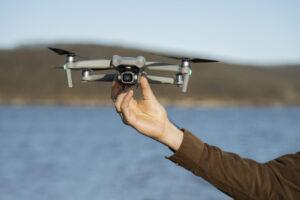
We rent and sell professional drones — including the DJI Mini 3 and GoPro HERO13 Black — to individuals and businesses across India. Whether you are just starting out and want to test the waters before committing to a purchase or you are an established operator who needs a backup unit for a specific project, we have options that fit where you actually are rather than where you would like to be financially.
More on this throughout the guide. For now, know that the equipment question has a practical answer and you do not have to solve it alone.
Decide What Kind of Drone Video Company You Are Building
This is the decision that shapes everything else, and most people skip it entirely because they are too excited about flying to think carefully about business strategy first.
The main markets for drone video companies in India right now are:
Real Estate Videography — Shooting aerial footage of properties for builders, developers, architects, and real estate agents. This is one of the most consistent and accessible markets for a new operator. Demand exists in every city, the shot requirements are relatively standardised, and repeat client relationships are genuinely achievable.
Weddings and Events — Aerial coverage of weddings, corporate events, concerts, and outdoor festivals. High per-project fees, emotionally high-stakes work, and a market that rewards reputation powerfully. One spectacular wedding video that circulates through a family’s social network generates more inquiries than most advertising budgets could.
Corporate and Commercial — Promotional videos, brand films, product launches, marketing content for businesses across industries. Higher budgets, more demanding creative briefs, longer sales cycles, but significantly stronger revenue per project.
Film and Television — Aerial cinematography for productions ranging from independent short films to major streaming content. Requires the most advanced equipment, the deepest experience, and the strongest industry connections. Not a realistic starting point but a genuine long-term destination for operators who build toward it deliberately.
Agriculture and Infrastructure Survey — Crop monitoring, land mapping, construction progress documentation, infrastructure inspection. Requires specialised equipment beyond standard videography drones and technical knowledge that goes beyond creative filmmaking.
Tourism and Destination Content — Creating visual content for tourism boards, hospitality brands, travel agencies, and destination marketing organisations. Involves travel, strong landscape photography instincts, and the ability to tell a place’s story through moving images.
News and Journalism — Shooting aerial footage for media organisations covering events, disasters, and stories requiring aerial perspective. Fast-paced, unpredictable, requires rapid deployment capability.
Pick one primary market to start. Get genuinely good at serving that market before expanding into others. The temptation to be everything to everyone at the beginning is one of the most reliable paths to being nothing to anyone.
Learn to Fly Properly and Do Not Rush This Step
Everything downstream of this step depends on the quality of your flying skills. Equipment quality, editing skill, client relationships — none of it matters if your footage is shaky, your movements are jerky, or your shots lack the cinematic quality that paying clients expect.
Start With a Practice Drone:
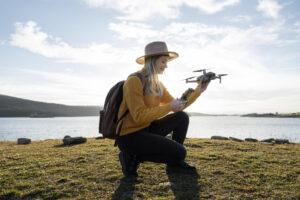
Before you touch professional equipment — whether you own it, rent it from us, or borrow it from someone — spend time flying a small inexpensive drone in open spaces. You will likely crash it — and that is part of the learning process. Learn how wind affects flight. Develop your spatial awareness and your instinct for how the aircraft responds to your inputs.
This practice phase is not wasted time. It is the foundation of everything that comes after and doing it on inexpensive equipment means your learning mistakes do not cost you professionally.
This is also where renting from us makes particular sense for beginners.
Rather than committing to purchasing professional equipment before you know whether this is genuinely the path for you, rent a DJI Mini 3 from us for a weekend. Fly it seriously. Shoot footage. Edit it. Watch it back critically. Decide on the basis of actual experience rather than excitement whether this is something you want to build a business around.
That decision made from real experience is worth considerably more than the same decision made from watching YouTube videos about drone videography.
Learn Manual Flight Before Relying on Automation:
Modern drones — including the DJI Mini 3 — have intelligent flight modes that handle significant amounts of the work automatically. ActiveTrack, Hyperlapse, MasterShots — these are genuinely useful tools for professional work.
Learn to fly without them first.
Understanding manual flight means you understand what the drone is actually doing and can take over immediately if automation fails. An operator who only knows automated modes is helpless the moment those modes encounter a situation they cannot handle.
Practice Specific Cinematic Shots Deliberately:
Professional drone footage is not about flying — it is about executing specific camera movements that create specific visual effects. These shots need to be practiced hundreds of times before they look effortless:
The Reveal Shot — flying low toward a subject and revealing a dramatic landscape or structure behind it as you ascend. One of the most powerful shots in aerial cinematography and one of the hardest to execute smoothly.
The Orbit — circling a subject at a consistent radius and altitude while keeping the camera pointed at the subject throughout. Requires simultaneous control of multiple axes and constant micro-adjustments.
The Tracking Shot — following a moving subject — a car, a person, a boat — at a consistent distance and height while maintaining framing. Requires anticipating the subject’s movement and adjusting continuously.
The Top-Down — flying directly above a subject and shooting straight down. Powerful for revealing patterns, landscapes, and contexts that are invisible from ground level.
The Flythrough — navigating through a narrow space — between trees, through an archway, along a corridor — at low speed with precision control. Spectacular when executed correctly and genuinely dangerous when attempted without sufficient skill.
Practice in Different Conditions:
Wind is the variable that most affects professional drone work. Practice flying in light wind, moderate wind, and learn the specific limits of whatever drone you are using. Our team can advise you on the wind tolerance specifications of every drone we stock — this is practical information you need before a shoot day, not during one.
Learn Emergency Procedures:
What do you do when the GPS signal drops and the drone switches to attitude mode? What happens when the battery percentage drops faster than expected mid-flight? What happens when another aircraft enters your airspace? These scenarios require rehearsed responses because in-the-moment improvisation under stress produces poor decisions.
Get Legally Compliant Before Your First Commercial Flight
This step is not optional. It is not something you work on while doing paid work on the side. It is the prerequisite for everything commercial and the failure to complete it properly exposes you to consequences that can end your business before it genuinely starts.
The DGCA Regulatory Framework:
The Directorate General of Civil Aviation regulates all drone operations in India through the Digital Sky Platform. Every commercial operator needs to understand and comply with this framework completely.
UIN — Unique Identification Number:
Every drone used commercially needs registration and a Unique Identification Number obtained through the Digital Sky Platform. You will need the drone’s serial number, purchase documentation, and technical specifications.
This applies to every drone in your fleet — including those you rent from us for commercial use.
When you rent from us for a commercial project, discuss the regulatory requirements with us before the shoot. We can advise on the documentation needed for the specific drone you are renting.
Remote Pilot Certificate:
Every person flying commercially needs a Remote Pilot Certificate from a DGCA-authorised training organisation. The process involves ground school training covering aviation theory, regulations, meteorology, and emergency procedures followed by a practical flying assessment.
You should budget several weeks and significant fees for this process. It is an investment, not an expense — your certificate is the credential that makes everything else legally possible.
RPAS Operator Permit:
Your company as an entity needs an RPAS Operator Permit for commercial operations. This requires documented operational procedures, safety management systems, and proof of insurance.
Airspace Permissions:
Before every shoot, check the Digital Sky Platform’s airspace map to determine whether your shoot location falls in a Green, Yellow, or Red zone. Green zones permit flight up to certain altitudes without prior permission. Yellow zones require advance permission obtained through the Platform. Red zones are restricted or prohibited.
Checking airspace before every shoot is not a bureaucratic formality — it is how you avoid flying into controlled airspace, causing incidents with manned aircraft, and generating the kind of regulatory consequences that end careers.
Third Party Liability Insurance:
Mandatory for commercial work. Covers damage or injury to third parties caused by your drone during operations. Many corporate clients will ask for your insurance certificate before signing a contract. Budget for this as a recurring annual operational cost.
Choose and Acquire Your Equipment
Equipment decisions should be driven by your chosen market niche and realistic budget — not by what looks impressive in gear reviews.
This is exactly where our role becomes relevant.
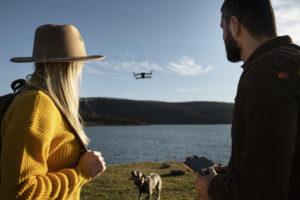
We stock and supply professional drone equipment including the DJI Mini 3 — one of the most capable and versatile drones available for commercial work at its price point. You can buy from us outright or rent from us for specific projects. Both options are available and both have their logic depending on where you are in your business journey.
The Case for Buying:
If you are committed to building a drone video company as your primary business and have validated that commitment through practice and research, purchasing your primary equipment makes financial sense over the medium term. Owning your equipment means it is available whenever you need it, you can customise and accessorise it to your specific shooting requirements, and the cost per shoot decreases steadily as you amortise the purchase price across an increasing number of projects.
We sell the DJI Mini 3 and GoPro HERO13 Black at competitive prices with genuine product support. When you buy from us you are not just buying equipment — you are buying from a team that understands how this equipment is used professionally and can advise on accessories, maintenance, and operational questions that generic retailers cannot.
The Case for Renting:
Renting from us makes sense in several specific scenarios that come up regularly in professional drone work:
You are starting out and want to validate the business before major capital commitment. Rent from us, do your first paid shoots, generate your first revenue, and make the purchase decision from a position of actual knowledge rather than hopeful projection.
You have a specific project that requires different equipment from your standard kit. A shoot requiring longer flight time, a different camera sensor, or capabilities your owned equipment does not have — renting the right tool for a specific job is smarter than either refusing the project or delivering suboptimal results with the wrong equipment.
Your primary drone is in for service or has a problem and you have a shoot commitment that cannot be moved. Our rental service means equipment problems do not automatically mean broken client commitments.
You are scaling and need additional units for a large project requiring simultaneous multi-drone operation before your purchase budget catches up with your operational needs.
The DJI Mini 3 — Why It Works For Commercial Videography:
The Mini 3 weighs under 249 grams, which has significant practical implications for commercial operators. In many regulatory frameworks this weight class faces fewer restrictions than heavier drones. It is genuinely portable — fitting into a carry-on bag without drama — which matters enormously for operators who travel to shoots regularly.
The camera produces 4K HDR video with a 3-axis mechanical gimbal that delivers the smooth, stable footage that clients expect. The 38-minute flight time means you are not constantly swapping batteries and missing shots during peak action moments.
For real estate, corporate, events, and travel content — the four most accessible commercial markets for new operators — the Mini 3 delivers professional results that justify professional fees.
The GoPro HERO13 Black — Your Ground-Level Partner:
Aerial footage tells one part of the story. Ground-level footage tells the rest.
Professional drone video companies increasingly offer both aerial and ground coverage because clients want complete visual storytelling rather than just aerial shots. The GoPro HERO13 Black — which we also stock for both sale and rent — is the ground-level complement to your aerial work.
When mounted on a gimbal, helmet, or vehicle, or used handheld for run-and-gun coverage, the HERO13 with HyperSmooth stabilisation delivers footage that cuts seamlessly alongside aerial shots in the edit. For weddings, events, and adventure content especially, the combination of Mini 3 aerial and HERO13 ground coverage produces a complete visual package that commands premium project fees.
The Essential Accessories:
Batteries — minimum four to six per drone for full day shoots. We stock genuine DJI batteries for every drone we carry.
ND Filters — essential for professional video quality. We carry filter kits compatible with the Mini 3.
Carrying cases — hard protective cases that look professional when you arrive on set.
Multi-battery charging hubs — charge multiple batteries simultaneously between flights rather than sequentially.
Landing pad — protects your drone from dust and debris on uneven surfaces.
Memory cards — high-speed, high-capacity cards rated for the write speeds your drone requires. Never compromise here.
Master Post-Production
The footage you capture is raw material. What you deliver is an edited, colour-graded, scored final product. Post-production is where the real differentiation between operators happens because most clients cannot see the difference between good and great drone flying but every client can immediately feel the difference between good and great editing.
Editing Software:
DaVinci Resolve is the industry standard for colour grading and has a genuinely professional-grade free version. Adobe Premiere Pro integrates well with the broader Adobe ecosystem. Final Cut Pro is the Mac-specific option favoured by many professional editors.
Learn one platform deeply, rather than sampling several superficially. The creative skill of constructing a compelling narrative from raw footage matters more than technical software proficiency once the basics are mastered.
Colour Grading:
The DJI Mini 3 shoots in D-Log M — a flat colour profile that captures maximum dynamic range but looks grey and lifeless straight from the camera. Colour grading transforms this raw LOG footage into the rich, cinematic images that clients are actually paying for.
DaVinci Resolve has extensive free training resources for colour grading specifically. This is a skill worth investing serious time in because it directly affects the quality of everything you deliver.
Music Licensing:
Every video needs a score and every score needs proper licensing for commercial use. Artlist, Musicbed, and Epidemic Sound all offer subscription-based access to music libraries with commercial licences that protect your delivered work from copyright claims.
Do not use unlicensed music in commercially delivered work. Ever. The short-term convenience is not worth the legal and reputational risk.
Audio Design:
Beyond music, professional videos often benefit from ambient sound design — subtle wind, nature sounds, crowd atmosphere — that adds presence and warmth to footage that was shot without usable location audio. Basic audio design capability in your editing software significantly elevates the quality of final deliverables.
Build Your Portfolio Before Charging Anyone
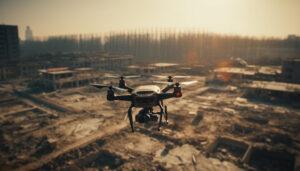
No serious client hires a drone company they cannot see relevant previous work from. Building a portfolio before approaching paying clients is the prerequisite for everything that follows.
How to Build Portfolio Work:
Approach local businesses and offer a complimentary shoot in exchange for portfolio rights. A local hotel, a restaurant with outdoor seating, a construction company mid-project — most businesses will agree to this because they receive professional footage at no cost.
Renting from us for portfolio shoots makes particular financial sense at this stage.
Rather than purchasing equipment before you have generated a single rupee of revenue, rent from us for your portfolio shoots. The rental cost is a fraction of the purchase cost and you are generating the portfolio work that will fund the eventual purchase decision from your own business revenue.
Shoot real estate properties speculatively. Approach agents with a free shoot proposal in exchange for portfolio rights. Real estate agents are visual-content hungry and almost always say yes to free professional footage.
Create personal cinematic projects. A short film of a local landscape, a time-lapse of a city from above, a montage of a festival or event — these demonstrate your creative eye alongside your technical capability.
Register Your Business Properly
Business Structure:
Private Limited Company is the most professional structure for a drone video company with growth ambitions. It provides limited liability protection, makes corporate contracts straightforward, and creates a professional impression with larger clients.
Sole Proprietorship works for the very beginning but has limitations as you grow. Partnership works if you are starting with co-founders.
GST Registration:
Register for GST early if you intend to work with corporate clients. Most will require a GST number before signing contracts regardless of your turnover level.
Business Bank Account:
Separate business and personal finances from the very first transaction. This is not optional — it is the foundation of financial clarity and professional operation.
Price Your Services Correctly
Calculate Your True Costs:
Equipment depreciation, insurance, software subscriptions, music licences, travel, regulatory fees, your own time across shooting, editing, and client communication — all of these are real costs that need to be recovered through your pricing.
If you are renting equipment from us rather than owning it, factor rental costs directly into your project pricing. A day rate that covers our rental fee plus your time plus your operational costs and leaves you with genuine profit is the minimum acceptable pricing for commercial work.
Market Rate Research:
Research what established operators in your market are charging. Call competitors as a prospective client and ask for quotes. Look at industry forums and professional networks.
Pricing Models:
Day Rate — fixed fee for a full shooting day. Common for corporate and film work.
Project Rate — fixed fee for a defined deliverable. Common for real estate and commercial work. Requires clear scope definition in the contract.
Package Pricing — bundled offerings at fixed prices. Simplifies the buying decision for clients.
The Underpricing Trap:
New operators undercut established competitors to win early clients. This is strategically damaging. It attracts price-sensitive clients who are the most difficult to work with. It establishes a price expectation in your local market that is genuinely hard to raise later. It communicates insecurity rather than confidence.
Price at professional rates from the beginning. If a client will not pay professional rates they are not the right client for where you are building toward.
Build Your Client Acquisition Strategy
Direct Outreach:
Identify specific businesses in your target niche and approach them with personalised proposals. Generic outreach gets generic responses. Specific, researched, genuinely relevant proposals get meetings.
LinkedIn is the most effective platform for reaching corporate decision-makers. A well-maintained profile showcasing your work generates inbound inquiries alongside your outbound efforts.
Strategic Partnerships:
Wedding planners, event management companies, production houses, and real estate agencies all need aerial footage and most prefer not to manage drone operations internally. Positioning yourself as their preferred drone partner gives you access to their client relationships without the cost of building those relationships yourself.
This is also a partnership opportunity with us.
Businesses and individuals who rent or purchase equipment through us frequently need operator services alongside the equipment. We can refer clients who need both equipment and operators to drone video companies in our network. If you are building a drone video company and buying or renting from us regularly, talk to us about becoming part of that referral network.
Content Marketing:
Post behind-the-scenes content from shoots on Instagram and YouTube. Show the equipment — including where you got it and why you chose it. Before-and-after comparisons showing ground-level versus aerial perspectives are particularly effective because they demonstrate the value proposition of drone footage more clearly than almost any other format.
Referral Systems:
Your happiest clients are your most effective salespeople. A formal referral programme — discounts on future work or cash referral fees for introducing new paying clients — turns satisfied customers into an active sales network.
Operate Like a Professional From Your Very First Shoot
Pre-Shoot Planning:
Site survey before the shoot day. Airspace zone check. Shot list prepared and shared with the client. Weather forecast monitored. Permissions obtained in advance. Equipment checked and packed the night before rather than the morning of.
A pre-flight checklist followed before every single flight without exception. Battery levels, GPS acquisition, obstacle avoidance systems, gimbal calibration, camera settings. The checklist exists because experienced operators who skip it are the ones who have the avoidable incidents.
On The Day:
Arrive early. Brief anyone in the shooting area. Fly the way you practiced — deliberately, patiently, with the confidence that comes from having done this many times before in practice before you did it once in front of a paying client.
Client Communication:
Set clear expectations before every project. Deliver on those expectations consistently. Communicate proactively during post-production. Follow up after delivery to ensure the client is satisfied.
These behaviours — which cost nothing except attention — are what turn single projects into ongoing relationships. Ongoing relationships are what build a sustainable business.
Contracts:
Every project needs a written contract. Scope, fee, payment schedule, delivery timeline, revision rounds, copyright ownership, cancellation terms — all of it in writing before work begins.
Manage Your Finances Like a Business
Track every expense. Invoice professionally. Follow up on late payments systematically. Set aside GST collected from clients immediately — it is not your money. Provision for income tax quarterly.
Use accounting software from the beginning. Zoho Books and Tally are both good options for Indian small businesses and the discipline of proper accounting from day one saves enormous pain at filing time and makes it possible to actually understand your business’s financial health in real time.
Scale Thoughtfully
Your First Hire:
An editor before a second pilot in almost every case. Post-production is the most time-consuming part of the operation. Delegating it frees you to focus on shooting, client relationships, and business development — the activities that directly generate revenue.
Equipment Scaling:
As your business grows and your project volume increases, your equipment needs grow with it. We are here for that scaling journey — whether you need to add units to your owned fleet, rent additional equipment for large multi-drone projects, or upgrade to more capable equipment as your market positioning moves upmarket.
Talk to us before you make significant equipment decisions. We stock what professional operators actually use, we understand how it performs across different commercial applications, and we can advise on what genuinely serves your business rather than what simply looks impressive in a gear review.
The Complete Picture
Starting a drone video company in India right now is genuinely achievable. The market for aerial content has expanded across real estate, corporate, events, tourism, agriculture, and media in ways that create real commercial opportunity for operators who approach this professionally.
What the market rewards is not just the ability to fly a drone. It rewards the complete package — regulatory compliance, creative skill, professional operations, client relationship management, and consistent delivery of results that justify the fees being charged.
Every step of that package is buildable. None of it requires any background in aviation, filmmaking, or business. It requires commitment, patience, willingness to learn properly before moving fast, and the discipline to build something real rather than something that looks good from the outside while hollow underneath.
We are here for the equipment part of that journey — drone sales, drone rentals, genuine advice on what fits your specific situation. The DJI Mini 3, the GoPro HERO13 Black, and everything that goes with them.