
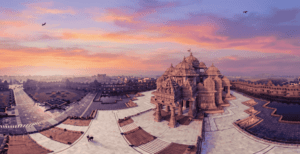
Holy places have always drawn people in different ways. Some arrive with faith, some come with questions, and others visit because their parents once brought them there. Pilgrimage sites are not only about religion. They are about journeys, pauses, and moments that feel different from everyday life.
But not everyone can make those journeys anymore. Distance, health, time, and sometimes even permission or safety can become barriers. That is where 360° image-based religious tours slowly find their place. They do not replace pilgrimage or claim to do so. They simply offer another way to see, understand, and connect.
What 360° Image-Based Tours Really Mean
A 360° image-based tour is not just a picture you scroll past. It places you inside a space, so you are no longer merely looking at a holy place but standing within it.
You can turn around, look at the ceiling or the floor, stay still, or move slowly; nothing forces you forward. That freedom changes how a religious place feels online. Instead of being rushed through highlights, you experience the space as a whole. That matters for sacred places, because they are designed to be experienced gradually.
Pilgrimage Sites and the Idea of Journey
Pilgrimage has always involved effort: walking long distances, standing in lines, waiting, and preparing the mind as much as the body. A digital tour does not recreate that effort, but it helps people understand the place before or after the journey.
For someone planning a pilgrimage, a 360° tour helps remove uncertainty. You know what the space looks like. You understand where people gather. You know what to expect. For someone who has already completed the pilgrimage once, the tour becomes reflective. It brings back memories. These are not dramatic memories but quiet ones.
Temples as Layered Spaces
Many temples are built in layers, with outer areas for movement and inner areas for silence; some parts are open while others remain closed. This structure is hard to understand through normal photos.
A 360° tour shows how everything connects. You see how the entrance leads inward. You see how space becomes more controlled and calm as you move deeper. You notice details people usually walk past. This helps first-time viewers and longtime devotees in different ways. One visitor learns, while the other remembers.
Churches and Stillness
Churches often feel quiet even when they are full. The height of the walls, the distance between rows, and the light coming from above all contribute to a sense of stillness.
In a 360° image, you can stop anywhere. You do not need to follow a path. You can stand near the altar or near the entrance and just look around.
This makes historical churches easier to understand. You notice wear on the floors. You notice paintings fading slightly. You notice how time has passed inside the space, not just outside it.
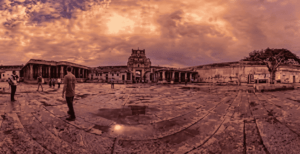
Mosques and Shared Space
Mosques are designed for community. Mosques feature open prayer halls, clear direction, and a careful balance of symmetry. Many people who have never visited a mosque do not realize how open the space actually is.
A 360° tour removes hesitation. You can explore without feeling like you might do something wrong. You see how the space flows. You see how people gather and disperse. This kind of viewing builds quiet understanding. It does not explain. It simply shows.
Accessibility Matters More Than We Admit
Not everyone can climb steps. Not everyone can walk barefoot for long distances. Not everyone can handle crowds or heat. These realities are rarely discussed openly.
360° image-based tours allow people to visit holy places without physical strain. This includes elderly people, those with disabilities, and people recovering from illness. They are often left out of traditional pilgrimage conversations. This is not about convenience. It is about inclusion.
Preserving Holy Places Through Images
Holy places are old. Weather affects them. Crowds affect them. Time affects them. Renovations change them. Sometimes damage happens suddenly.
A 360° tour records a place exactly as it is at one moment. Years later, that record becomes important. It shows what existed. It shows what changed. This is not about nostalgia. It is about keeping memory intact.
The Importance of Keeping Tours Simple
Religious places do not need enhancement. They do not need dramatic background music. They do not need bright colors or artificial lighting.
The best 360° religious tours stay simple. The best tours rely on natural light and real conditions, without filters or forced emotion. When the experience is honest, the place speaks for itself.
Learning Without Pressure or Judgment
Students, researchers, and curious people use these tours to learn about culture, history, and belief systems. They can explore without feeling watched or judged.
This is important for interfaith understanding. Seeing a place calmly is often the first step toward respect. You do not need to agree with beliefs to respect the space where those beliefs live.
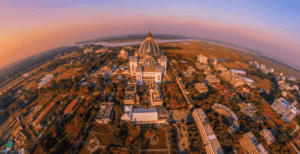
Quiet Connection in a Fast World
Most digital experiences push people to move fast. Scroll. Click. Swipe. 360° religious tours slow that down. You stop, you look, and you stay. That quiet moment, even on a screen, has value.
What Stays With Us
360° image-based religious tours of holy places and pilgrimage sites are not about replacing faith or travel. They are about access, understanding, and preservation.
They allow people to see sacred spaces without pressure. They keep records of places shaped by belief and time. They offer stillness in a world that rarely pauses. Sometimes, seeing is enough and, sometimes standing quietly—even virtually—is enough.