
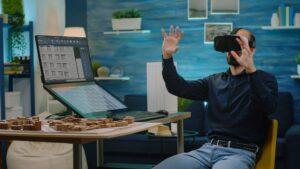
Architects and interior designers have a problem that has existed for as long as the professions themselves have existed and that nobody has properly solved until now.
Clients cannot accurately visualize what a designed space will look and feel like from two-dimensional plans and renderings. They look at floor plans and try to imagine what it will feel like to stand in the living room. They look at renders and try to understand whether the ceiling height is generous or oppressive. They look at material samples and try to project how the combination will feel when assembled in an actual room under actual light.
Most of them cannot do this accurately. Not because they are unintelligent but because accurate three-dimensional spatial imagination from two-dimensional representations is a specialist skill that years of architectural training develops — not a general human capability that clients naturally possess.
The consequences of this gap are expensive, and they fall on everyone in the project chain. Clients approve designs they do not fully understand and then request expensive changes after construction begins because the built reality does not match their expectations. Architects spend significant time managing revision cycles driven not by genuine client preference changes but by clients finally understanding what they approved. Interior designers lose relationships with clients who blame them for delivering spaces that matched the specification but not the undisclosed mental image.
The entire problem exists because the approval process happens at a stage when clients cannot yet fully experience what they are approving. VR removes that problem completely.
What This Service Actually Delivers
A VR architectural visualization service creates walkthrough experiences of designed spaces before a single brick is laid. Clients experience the actual scale, actual light, and actual spatial relationships of a proposed design in a way that no render or physical model can replicate.
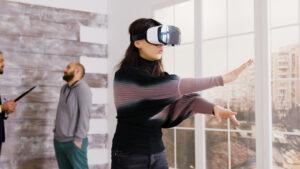
The distinction matters more than it might initially seem. A render shows you what a space looks like from a specific fixed viewpoint under specific lighting conditions chosen by the visualizer to present the space most favorably. A VR walkthrough lets you stand in the center of the room and turn around slowly. Stand by the window and look out. Walk from the living area into the kitchen and feel whether the transition works. Sit at the dining table and understand whether the ceiling feels right at that position.
These are the experiences that generate genuine client conviction about a design — and they are the experiences that reveal genuine design problems before they become construction problems. Changes made in a 3D model cost nothing compared to changes made after foundations are poured. The commercial value of catching a spatial problem at the VR walkthrough stage rather than at the site visit stage is concrete and significant.
For clients making major financial commitments—a family spending their savings on a home renovation, a business spending significant capital on a new office fit-out, or a developer investing crores in a flagship commercial project—the ability to genuinely experience the proposed design before approving it is not a luxury. It is a rational request that the industry has previously been unable to fulfill.
Understanding Your Client Base
Architecture firms working on residential, commercial, and institutional projects all face the same client communication challenge in different contexts. The residential architect designing a family home has clients who are emotionally invested and spatially inexperienced. The commercial architect designing an office complex has clients who are financially analytical and need to understand how the space will affect their business operations. The institutional architect designing a school or hospital has multiple stakeholders who all need to align around a shared vision of a space none of them can yet see.
VR serves all three contexts, but the pitch for each is different. For residential clients, the value is emotional confidence—you will know how your home feels before you commit to building it. For commercial clients, the value is operational clarity — you will understand how your people will move through and work in this space before you sign off on the design. For institutional clients, the value is stakeholder alignment—everyone involved in the decision can experience the same space simultaneously and reach genuine consensus rather than interpreting flat drawings differently.
Interior design studios have an even more acute version of the same problem because interior design decisions are more subjective, more emotionally loaded, and more difficult to convey through samples and renders than structural decisions. A client who cannot accurately visualize what a combination of materials, colors, furniture, and lighting will feel like in a space will always carry uncertainty through the approval process that translates into revision requests, scope changes, and relationship friction.
Real estate developers are perhaps the most commercially motivated client category. A developer selling off-plan properties needs buyers to make significant financial commitments to spaces that do not yet exist. Every tool that reduces buyer uncertainty and accelerates the purchase decision has direct revenue impact. VR property walkthroughs that allow buyers to experience proposed apartments before construction begins are genuinely transformative sales tools for this market.
Building the Business
This business requires two capabilities working together. The first is 3D modeling and visualization—the ability to take an architect’s or designer’s plans and build a navigable virtual version of the designed space from them. This can be developed in-house if you recruit or develop the right technical capability or through partnerships with architectural visualization studios that already have the skill. The VR-specific element is converting those 3D models into interactive, real-time walkthrough experiences rather than static rendered images.
The second capability is deployment — VR headsets for presenting these experiences to clients at design review meetings, client presentations, and sales offices. Renting headsets from us for individual client meetings in the early stages gives you professional presentation capability without the overhead of owning equipment that may not be in constant use during the period before your client volume justifies ownership. As your client base grows and presentation frequency increases, purchasing your own presentation fleet through us becomes the financially obvious decision.
The demonstration project is everything in this business. Build one genuinely excellent VR walkthrough of a real designed space—ideally a completed project where the client will allow you to compare the VR experience with the physical reality—and use it to open every subsequent client conversation. When a potential client puts on the headset and walks through a designed space and then takes the headset off and recognizes that what they just experienced matches the completed physical space behind them, the sales conversation is essentially finished.
Pricing and Building Sustainable Revenue
VR architectural visualization is priced as a professional service that delivers genuine commercial value—not as a technology demonstration. A complete VR walkthrough experience for a residential project justifies fees in the range of one to three lakhs depending on scope and complexity. A commercial project of significant scale justifies substantially more. The fee is calibrated against the value delivered — specifically the cost of the revision cycles and client relationship problems that a VR walkthrough prevents.
Retainer relationships with architecture firms and design studios that handle all VR presentations for their ongoing project pipeline are more valuable than individual project commissions because they create predictable recurring revenue and genuine business continuity. A firm that handles twenty significant projects per year and uses VR presentations on every one of them is a client relationship worth substantial investment to build and maintain.
The design industry in India is growing. Projects are getting more ambitious. Clients are getting more sophisticated in their expectations of the approval process. The market for genuinely professional VR architectural visualization services is building at a pace that rewards people who move now rather than waiting for the market to become obvious.
The Last Word on This Opportunity
The architecture and interior design industry has been struggling with the client communication problem for as long as it has existed. Every generation of visualization technology—from hand-drawn perspectives to computer renders—has partially addressed it and left significant gaps.
VR closes the gap properly for the first time. It is not a marginal improvement on renders. It is a categorically different capability that changes the fundamental dynamic of the client-designer relationship.
The businesses that build this service now — while the market is still developing and the competition is still thin — will become the established, trusted providers that new entrants find genuinely difficult to compete with when the market matures.
We have the headsets for client presentations available to rent and to purchase. The 3D modeling partnerships, the client relationships, and the portfolio of completed projects are yours to build.