
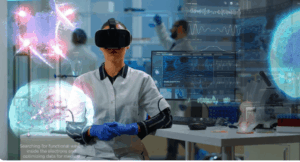
The Laboratory That Every Student Can Finally Access
STEM education has always had an equipment problem. Not a knowledge problem. Not a teacher quality problem. Not a curriculum problem. An equipment problem—the specific, structural, practically challenging problem that the hands-on laboratory experiences that STEM understanding genuinely requires are expensive to provide, logistically complex to manage, physically inaccessible to students in remote locations, and consistently underprovided in the schools and colleges that serve the majority of students.
This equipment problem is not new, and it is not going away through conventional approaches. The cost of well-equipped physics, chemistry, and biology laboratories remains significant at the level of provision that genuine curriculum coverage requires. The safety requirements of chemical and biological laboratory work impose supervision and infrastructure requirements that many institutions cannot meet. The geography of Indian education distributes students across locations where fully equipped laboratory infrastructure is simply not viable at the institutional scale available.
Virtual labs are not a compromise solution for an equipment problem that a better-funded system would solve with physical laboratories. They are a genuinely different approach to the laboratory experience that solves the equipment problem while creating specific educational advantages that physical laboratories cannot replicate.
Understanding what virtual labs actually are, what they actually deliver, and why the combination of qualities they provide makes them the right solution for remote and resource-constrained STEM education requires moving beyond the instinctive assumption that the physical laboratory is the ideal and the virtual lab is the substitute.
What Virtual Labs Are and Are Not
A virtual lab is not a video of laboratory experiments. The distinction is fundamental and frequently confused by educators and administrators who encounter the concept without experience of well-implemented virtual laboratory platforms.
A video of an experiment shows the experiment. A virtual lab puts the student inside the experiment — in an interactive simulated environment where the student selects the equipment, sets up the procedure, controls the variables, makes the measurements, and observes the outcomes of their specific choices.
The interactivity of virtual lab environments is what creates the genuine learning experience that distinguishes them from observation. The student who selects the wrong concentration of reactant, adds the reagents in the wrong sequence, or misreads the measurement instrument in a virtual lab observes the consequence of that error in real time—the reaction that does not proceed as expected, the titration that passes the endpoint before they notice, or the measurement reading that their recording method fails to capture accurately.
These error consequences are the specific learning mechanism that makes laboratory work genuinely educational rather than merely observational. The student who makes an error and observes its consequence in a real experiment learns procedural understanding that the student who watches a demonstration does not develop. Virtual labs deliver this learning mechanism—the consequence of student choice—in a format that physical laboratory provision at scale currently cannot.
The Remote Education Dimension
The specific value of virtual labs for remote STEM education is the elimination of the geography barrier that has always determined which students get genuine laboratory education and which students get the description of laboratory education.
The student in a rural school in Chhattisgarh, in a small-town college in Jharkhand, or in any of the thousands of educational institutions across India where fully equipped physical laboratories are not viable—this student has always received the curriculum that describes laboratory work alongside the examination that tests knowledge of laboratory procedures without the opportunity to develop the genuine understanding that actually doing the procedures creates.
Virtual labs eliminate this geographic limitation completely. The internet-accessible virtual lab platform provides the same interactive laboratory experience to the student in rural Chhattisgarh and the student in an urban institution with full laboratory provision. The equality of access is genuine and immediate rather than aspirational and deferred.
The implications for educational equity are significant and deserve emphasis. The skills gap between students who received genuine hands-on STEM education and students who received theoretical STEM education without the practical laboratory component is a gap that affects career trajectories, higher education opportunities, and the development of genuine STEM capability at the national level. Virtual labs address this gap at the most fundamental level—by providing the practical laboratory experience itself rather than attempting to compensate for its absence.

Specific Advantages Over Physical Laboratories
Virtual labs have specific educational advantages over physical laboratories that exist independently of the cost and access advantages—qualities that make them genuinely better in specific dimensions rather than merely accessible where physical labs are not.
The repetition advantage is among the most significant. Physical laboratory experiments consume consumables—the reagents, the biological specimens, and the materials that a physical experiment uses cannot be reset and used again without cost and preparation time. A student who wants to repeat a procedure to understand what changes when a variable is altered, or who made an error and wants to redo the experiment correctly, faces the practical constraints of consumable cost and preparation time.
Virtual lab experiments can be reset instantly and repeated as many times as the student’s understanding requires. The student who needs twenty repetitions of a titration procedure to genuinely understand the endpoint recognition that the skill requires can have twenty repetitions. The student who wants to vary each variable in an experiment systematically to understand the relationship between variables can do so at zero additional cost beyond the time the repetitions require.
The safety advantage for dangerous procedures is obvious but worth stating explicitly. Chemical reactions that carry genuine hazard risk—concentrated acid handling, exothermic reactions, and toxic gas production—can be performed in virtual lab environments without the genuine physical risk they carry in physical laboratories. Biological procedures involving infectious materials, radioactive substances, or other genuinely hazardous biological agents can be learned at the procedural level in virtual environments before students encounter the genuine materials under appropriate supervision.
The Evidence on Learning Outcomes
The educational research on virtual lab learning outcomes is consistent in its core finding—students who receive virtual laboratory instruction develop procedural understanding and conceptual knowledge of laboratory science that is comparable to students who receive equivalent physical laboratory instruction, and in specific dimensions, particularly repeated practice of complex skills, virtual lab instruction produces better outcomes than single-instance physical laboratory work.
The studies consistently find that virtual labs are most effective when they are integrated with physical laboratory work rather than completely replacing it—the combination of virtual procedural practice followed by physical implementation produces better outcomes than either alone. This integration model is the pedagogically correct approach where physical laboratory access is available, even if limited.
For students with no physical laboratory access, the virtual lab alone produces dramatically better outcomes than the description-only STEM education it replaces.
Every student in India who wants to study STEM deserves access to the laboratory experiences that STEM understanding genuinely requires. The accident of geography and institutional resources should not determine whether a student develops genuine practical scientific understanding or theoretical knowledge without the practice foundation.
Virtual labs provide the practical foundation where physical laboratories cannot. The solution is available. The implementation is the work that remains.
The students in remote locations who are studying STEM without laboratory access are not waiting for a perfect solution. They are waiting for a solution that works.