
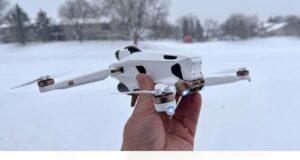
How the AntiGravity A1 Is Supporting India’s Environmental Scientists, Conservationists, and Advocacy Organizations
India’s environmental challenges are among the most complex and most consequential in the world.
The Himalayan glaciers that are retreating at rates that threaten the river systems that hundreds of millions of people depend on. The coastal wetlands are being encroached upon at speeds that satellite imagery documents but does not resolve at the detail level that local management requires. The forest cover is changing in ways that national-level assessment misses at the local scale, where the changes are happening. The river systems that carry the waste loads of a billion people and that require monitoring at the spatial and temporal frequency that conventional sampling cannot sustain.
These environmental challenges require information — accurate, current, spatially detailed information about conditions across areas that conventional monitoring methods cannot cover with adequate frequency, coverage, or resolution. The environmental scientist who needs current data about a specific watershed, the conservation organization that needs to document encroachment into a protected area, the advocacy organization that needs to demonstrate environmental change with the visual evidence that policy audiences respond to—all of these actors need the aerial monitoring capability that the AntiGravity A1 provides.
VR Ashwa has worked with environmental research teams and conservation organizations across India, providing AntiGravity A1 aerial monitoring services that support both the scientific data collection and the visual documentation that environmental communication requires.
Wildlife and Habitat Monitoring
India’s protected area network covers an enormous geographic extent across ecosystems that range from the Himalayan alpine to the tropical rainforest to the arid desert—each with distinctive wildlife and habitat monitoring requirements that drone surveys address with specific and growing effectiveness.
The population assessment of large wildlife species in open habitats—elephant herds in southern forest landscapes, great Indian bustard populations in arid zone reserves, and deer and antelope populations in grassland ecosystems—is conducted increasingly through systematic drone surveys that provide the comprehensive area coverage and the image resolution that population counting from aerial photographs requires.
The AntiGravity A1’s 8K resolution is the specific capability that makes population assessment from aerial photography viable — the resolution that allows individual animals to be identified and counted in habitat conditions where lower-resolution aerial imagery produces ambiguous results that trained observers cannot reliably interpret for population assessment purposes.
Habitat condition monitoring—the assessment of vegetation cover, water availability, invasive species distribution, and the other habitat quality indicators that wildlife managers use to assess protected area condition—is conducted through systematic aerial surveys that provide the comprehensive spatial coverage that ground-based assessment cannot achieve across large protected areas.
Forest Cover and Deforestation Monitoring
The monitoring of forest cover change—the deforestation, the degradation, the encroachment, and the natural disturbance events that alter forest extent and condition—is an environmental monitoring application where drone surveys provide the temporal frequency and spatial resolution that satellite-based monitoring alone cannot deliver for local management purposes.
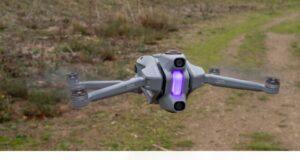
The AntiGravity A1’s survey capability applied to forest monitoring provides the seasonal updates that forest management requires—the post-monsoon assessment that documents the season’s growth and disturbance, the dry season assessment that documents fire impacts and encroachment pressure, and the regular monitoring that builds the temporal record that change detection analysis requires.
Wetland and Coastal Ecosystem Monitoring
India’s coastal and wetland ecosystems are among the country’s most biologically productive and most threatened environments. The mangrove systems that provide coastal protection and fishery nursery habitat. The inland wetlands that support migratory bird populations of global significance. The estuarine systems that mediate the exchange between freshwater and marine environments.
These ecosystem types require monitoring approaches that conventional field surveys cannot provide at the spatial coverage and temporal frequency that management requires. Drone survey with the AntiGravity A1 provides the systematic aerial coverage that maps vegetation extent and condition, documents encroachment and disturbance, and builds the temporal record that change detection and trend analysis require.
Environmental Advocacy and Visual Communication
Beyond scientific data collection, the AntiGravity A1’s visual documentation capability supports the environmental communication and advocacy work that translates scientific findings into public and policy understanding.
The before-and-after aerial documentation of environmental change—the riverbank that satellite imagery shows has changed and that the AntiGravity A1 survey shows has changed in specific, visually compelling detail—provides the visual evidence that policy audiences, media organizations, and public campaigns require to understand and respond to environmental issues.
The aerial documentation of conservation success—the forest that has regenerated under protection, the wetland that has been restored, and the wildlife that has returned to habitats that were degraded and recovered—provides the positive visual evidence that supports the case for continued conservation investment.
VR Ashwa supports environmental monitoring and communication projects with AntiGravity A1 aerial services that combine the scientific data quality that research applications require with the visual communication quality that advocacy and public engagement require.
📞 +91-9811885503 | +91-9953636109 — Environmental monitoring enquiries welcome 🌐 www.vrashwa.com