
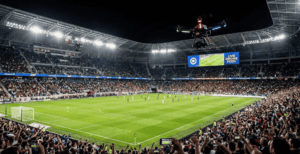
A drone used in sports events is basically a flying camera. That’s it. No intelligence, no understanding of the game, and no awareness of rules or players. Someone stands off the field and controls it. If that person stops giving input, the drone does nothing useful. On its own, it is nothing.
People think drones “change the game.” They don’t. A drone does not know what a goal is. It does not know when a match becomes intense. It cannot feel pressure or momentum. It only moves where it is told to move. Forward means forward. Higher means higher. It records what is already happening.
Most sports drones carry cameras. Those cameras capture footage. They don’t analyze the match. They don’t explain tactics. Humans watch the footage and decide what it means. The drone only provides a different view. Sometimes that view is helpful. Sometimes it adds nothing. That depends on how it is used.
People often expect drones to improve sports coverage automatically. They don’t. A boring match stays boring, even from the air. A drone only changes perspective, not performance.
Why Sports Events Started Using Drones
Sports events are controlled environments. These include fields, tracks, courts, and stadiums. Cameras have always been part of them. But traditional cameras have limits. They stay fixed. They move on rails. They require operators close to the action.
Drones entered sports not because they were exciting, but because they were practical. They could move freely. They could follow play from angles that fixed cameras could not reach. They could cover large areas without complex setups.
Cost also mattered. Installing cranes or cable cameras is expensive. Drones reduced that barrier. A single drone could cover what once required multiple systems.
Safety played a role too. Instead of placing cameras in risky positions, drones allowed distance. Operators stayed away from the field. The drone did the movement. Drones didn’t replace existing cameras. They filled gaps.
How Drones Are Actually Used in Sports Events
Showing the Bigger Picture
In many sports, understanding space matters. Where players are positioned. How teams spread out. From ground level, this is hard to see. From above, patterns become visible.
Drones are often used to show the overall layout of play. The audience sees how space is used, not just what happens near the ball. This helps viewers understand the flow of the game better.
The drone does not explain strategy. It only shows spacing. The interpretation still comes from commentators and viewers.
Live Broadcast Support
In televised sports, drones are rarely the main camera. They support coverage. They add angles between plays, during breaks, or at key moments.
Drones are often used before the match starts. Stadium shots. Crowd shots. Surroundings. They set context. They don’t replace live action cameras.
During the game, drone usage is controlled. Safety rules limit where and when they can fly. They are not allowed to interfere with play. They stay away from players.
Tracking Movement
In sports like marathons, cycling, skiing, motorsports, or surfing, movement is spread over large areas. Fixed cameras struggle here. Drones follow athletes over long distances.
This footage helps viewers understand pace and positioning. Who is leading. Who is falling behind. From the ground, this is difficult to show continuously. The drone simply follows. It does not decide speed or direction. A human operator controls every move.
Training and Analysis
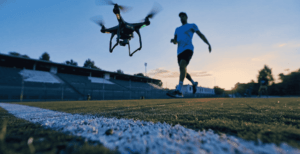
Not all drone footage is for viewers. Teams use drones during practice sessions. From above, coaches can see formations, spacing, and movement patterns clearly.
This footage is reviewed later. Mistakes become visible. Gaps in defense show up. Movement errors stand out. The drone does not provide feedback. Coaches do. The drone only records reality.
Crowd and Venue Management
Large sports events involve more than the game. Crowds, entry points, parking, exits. From the ground, managing this is difficult. Drones help organizers see crowd movement. Where congestion builds. Where people slow down.
This information helps security teams respond faster. The drone does not control crowds. It only shows what is happening. Decisions are made by people on the ground.
Safety Monitoring
In outdoor sports events, weather, terrain, and crowd behavior can change quickly. Drones give organizers a real-time view.
If something looks unsafe, action can be taken earlier. This is especially useful in open-air events like marathons, rallies, or stadium matches with large attendance. Again, the drone does not judge risk. Humans do.
Drones in Different Sports
Stadium Sports
In football, cricket, and rugby, drones are mostly used for aerial shots during breaks. They show field layout, crowd scale, and stadium atmosphere. They are not flown during active play near athletes. Safety rules are strict. Drones stay high and controlled.
In cricket, drones are also used to show field placements. This helps viewers understand strategy visually.
Racing and Endurance Sports
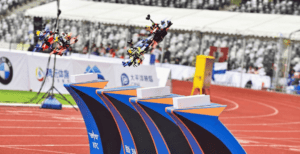
In cycling, running, and motorsports, drones follow athletes over long routes. Roads, tracks, and open terrain.
These sports benefit most from drones because action is spread out. Traditional cameras cannot cover everything smoothly. Drones provide continuity. The viewer stays connected to the athlete’s movement.
Adventure and Extreme Sports
Sports like surfing, skiing, snowboarding, and mountain biking use drones extensively. These environments are hard to access.
Drones capture angles that humans cannot reach safely. They follow athletes without disturbing them. Here, drones reduce human presence. That improves safety and authenticity.
Responsibility and Control
Professional sports drones are operated by trained pilots. Rules are strict. Permissions are required. Every flight path is planned. Nothing is random. If conditions are unsafe, drones stay grounded.
A drone failure during a sports event is unacceptable. That’s why caution matters more than creativity.
Impact of Drones on Sports Viewing
Drones did not change sports. They changed how sports are seen. Viewers now understand space and scale better.
Aerial views feel normal now. What once felt new is expected. This raises standards. Drones must be used carefully. Overuse feels unnecessary. Purposeful use feels invisible.
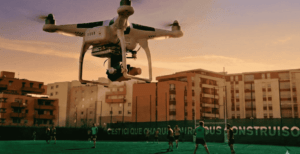
Drones in sports events are not game-changers. They are support tools. They provide angles humans cannot. Nothing more. A drone does not understand competition. People do. The drone only listens.
That is why drones work in sports. Not because they are impressive machines, but because they quietly show what is already happening. And when they are used properly, no one notices the drone at all. They only notice the game.