
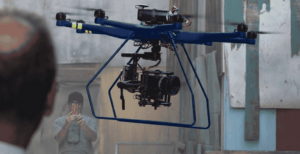
A drone used in movies is basically a camera that flies. That’s it. No one sits inside it. No one tells it a story. A person stands somewhere else and controls it using their hands. If that person stops giving input, the drone stops doing anything useful. On its own, it is nothing.
People think drones make movies cinematic. They don’t. A drone doesn’t understand cinema, emotion, or drama. It does not know what a good shot is. It only goes where it is told to go. Up means up. Forward means forward. It cannot decide framing or timing. It does not know when a moment feels right.
Most film drones carry a camera. That camera records footage. It does not explain anything. It does not know why the shot exists. A human watches that footage later and decides what it means. The drone only delivers raw visuals. Sometimes very smooth ones, sometimes useless ones. That depends on the person controlling it. People often expect drones to improve films automatically. They don’t. A bad scene stays bad, even from the air. A drone only changes the angle, not the idea.
Why Filmmakers Started Using Drones
For a long time, aerial shots in movies were difficult. Helicopters were expensive. Cranes were slow. Both were risky. Not every film could afford them. Not every location allowed them.
Drones didn’t become popular because they were artistic. They became popular because they were practical. They were smaller, cheaper, and easier to move. A drone could go up quickly, take a shot, and come back down without shutting down the entire set.
Filmmaking has limits. Time runs out. Budgets break. Safety becomes an issue. Drones fit into these gaps. They don’t replace old methods. They just reduce effort. That’s why drones stayed. Not because they looked impressive, but because they solved simple problems.
How Drones Are Actually Used in Movies
Showing Location
One of the most common uses of drones in films is showing where a scene is happening. A town. A road. A forest. A crowd. From the ground, these things take time to explain. From above, they are clear immediately.
The drone does not tell the audience anything. It just shows the place. The viewer understands on their own. That saves dialogue. That saves scenes. This is why many films start with drone shots now. Not because it looks cool, but because it works.
Following Movement
Drones are often used to follow movement. Cars, bikes, people, animals. From the ground, cameras struggle to keep up. From the air, movement looks clean and readable.
Again, the drone is not doing anything special. Someone plans the path. Someone practices it. Someone decides how fast or slow it should move. The drone only follows instructions. If the plan is bad, the shot looks bad. The drone cannot fix it.
Crowd and Scale
Crowds are hard to understand from inside them. Everything looks noisy. From above, patterns appear. Who is moving where. How large the crowd really is.
That’s why drones are used in large action scenes, festival scenes, rallies, or war sequences. They help filmmakers understand scale. The drone does not add emotion. It adds clarity.
Action Scenes
In chase scenes, drones are often used to track movement across long distances. Roads, bridges, open areas. Earlier, this required multiple setups. Now one drone can cover a lot of ground.
But drones are rarely used alone. Ground cameras still matter. Close-ups still matter. Drones only support the scene. They don’t carry it. When overused, drone shots feel empty. Viewers notice them too much. That’s when they fail.
Drones in Indian Movies
In Indian cinema, drones were first used as a show-off tool. Big sweeping shots. Cities. Beaches. Temples. Mountains. Everything from above. Over time, that excitement reduced. Filmmakers started using drones more carefully. Now they are mostly used where scale matters—crowds, landscapes, large sets.
In regional cinema, drones are often used to show rural areas, farms, rivers, and hills. These shots add context. They show how people live, not just where they stand. Drones are also used during planning. Directors use them to see locations before shooting. This footage is not always used in the final film. But it helps decision-making.
Behind the Camera: Control and Responsibility
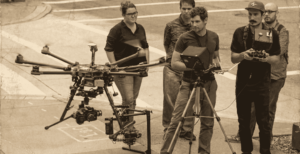
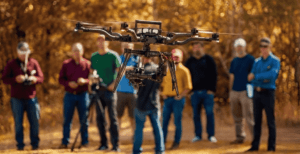
Professional film drones are not toys. They are controlled by trained operators. Safety matters. One mistake can injure someone or damage equipment.
Shots are planned in advance. Paths are decided. Permissions are taken. Nothing happens randomly. The drone does not decide when to fly. Humans do. And if something feels unsafe, the drone stays grounded.
Impact of Drones on Filmmaking
Drones did not change cinema. They changed convenience. Shots that were once difficult are now easier. That’s all. Audiences are used to aerial shots now.
They don’t feel special anymore. That forces filmmakers to think harder. A drone shot must have a reason. When used well, viewers don’t even notice the drone. When used badly, it stands out immediately.
Overall Impact
Drones in movies are not creative tools. They are support tools. They help filmmakers see more, faster, and safer. Nothing more. A drone does not make decisions. People do. The drone only listens.
That is why drones work in films. Not because they are impressive machines, but because they quietly do what they are told. And when the work is done properly, no one even thinks about the drone at all.