

Most people don’t avoid offices because they dislike the space itself. The reality is usually simpler. Offices are hard to understand from the outside. Company websites show polished photos. Recruitment pages talk about culture. But none of that really explains what a space feels like once you step inside.
An office is more than desks and chairs. It’s movement, spacing, light, noise, and how people are positioned relative to each other. These elements affect everyday work far more than slogans about collaboration or innovation. Yet, they are rarely visible before someone visits, joins, or signs a contract.
Virtual office and 360° workplace tours fill this gap. They aren’t a replacement for being there and they aren’t dramatic experiences. Instead, they allow people to see what already exists, without interpretation or pressure. A virtual tour doesn’t convince.
What a Virtual Office Tour Actually Is
A virtual office tour consists of a series of real panoramic images taken inside a workplace. Each image captures a full view from a fixed point, and these points are connected so viewers can move from one area to another.
There is no simulation, no recreated layouts, and no imagined spaces. What you see is exactly what existed when the photos were taken. Spacious offices look spacious, tight areas feel tight, and cluttered corners are visible.
Unlike videos, nothing moves unless the viewer chooses to move. This simple control changes how people engage with the space. They stop rushing, inspect details, and notice elements they would usually overlook.
Why Office Photos Often Fail to Explain Workspaces
Most corporate websites rely on selected photos that are clean, wide, and carefully framed. While professional-looking, these images remove context.
A single photo cannot explain how rooms connect. It doesn’t show what lies behind the camera or just outside the frame. A meeting room may look impressive, but surrounding noise, spacing, or traffic are unknown.
Offices work as systems, not isolated visuals. A 360° tour restores that sense of connection. It shows relationships between areas: desks next to walkways, meeting rooms near workstations, reception areas linking naturally to the rest of the office. Context helps viewers understand how the office functions, not just how it appears.
What People Pay Attention To in a Virtual Workplace Tour
Viewers rarely focus on branding or design themes. Instead, they notice practical details:
- How close desks are to each other
- Whether natural light reaches workspaces
- How much walking space exists
- Where meeting rooms are located
- Whether areas feel quiet or busy
- How open or closed the layout is
These observations influence decisions. Candidates imagine daily work routines, clients assess professionalism, and partners gauge scale and structure. The office itself communicates what matters without needing extra explanation.
360° Workplace Tours in Recruitment and Hiring
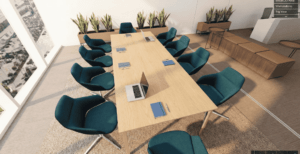
Job descriptions often highlight flexibility, collaboration, and culture. Office tours show how those ideas are supported physically.
A virtual tour allows candidates to see:
- Whether teams sit together or separately
- How formal or relaxed the environment feels
- How much personal space exists
- Whether the office feels calm or crowded
This doesn’t answer emotional questions but provides practical clarity. Candidates decide whether to apply based on this understanding. Early visibility reduces mismatched expectations and ensures new hires aren’t surprised by the workspace.
Corporate Communication Without Explanation
Companies frequently emphasize transparency. A 360° tour communicates this without words.
Instead of claiming openness, the office itself shows it. Boardrooms, workstations, cafeterias, training rooms, and common areas appear exactly as they are. No narration pushes meaning; the viewer decides what to think.
For global companies, this is even more useful. Employees, investors, or partners may never visit every location. A virtual tour ensures consistent visibility across distances without arranging physical visits.
Corporate Facilities Beyond Offices
Virtual tours aren’t limited to desk-based spaces. Many organizations showcase operational facilities that are not easily accessible.
These include:
- Manufacturing units
- Warehouses
- Data centers
- R&D labs
- Training facilities
- Corporate campuses
- Client-facing locations
Some areas are restricted, sensitive, or impractical to visit regularly. A virtual tour provides controlled access without disruption. For audits, onboarding, compliance, and client assurance, this visibility saves time and reduces friction.
How 360° Image Tours Differ from Videos
Videos guide viewers along a fixed path. The creator decides what is shown and for how long. 360° tours give control to the viewer.
You can pause, look around, zoom in, or skip areas entirely. This is essential in professional settings where people want to inspect, not just be entertained. Videos are faster, but slower, self-directed viewing leads to better understanding. Viewers absorb the space rather than just consume content.
Accuracy Matters More Than Style
Virtual office tours aren’t about cinematic presentation—they’re about honesty. Neutral lighting, practical angles, and true-to-life visuals build trust.
A well-maintained office doesn’t need dramatic effects to look professional. A poorly maintained space cannot hide. This honesty is the real value of 360° workplace tours.
Internal Uses of Virtual Workplace Tours
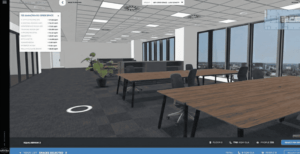
Many companies use these tours internally, not publicly.
Common internal applications include:
- New employee orientation
- Remote onboarding
- Space planning
- Facility management
- Safety training
- Emergency preparedness
Employees learn layouts before arriving. Safety teams identify exits and routes. Managers plan changes without visiting every floor. The tour becomes a reference tool, not a showcase.
Maintenance and Reality
A virtual office tour represents a specific moment in time. Layouts change, furniture moves, and branding updates. If the tour isn’t updated, it can confuse viewers and damage trust.
Accuracy is more important than permanence, especially in fast-growing companies where office spaces evolve quickly.
Who These Tours Are Actually For
Virtual office and workplace tours benefit anyone who wants clarity before committing.
This includes:
- Job candidates
- Clients
- Partners
- Remote employees
- Facility planners
- Investors
Anyone who values seeing a space before deciding gains real insight from this format.
Virtual office and 360° workplace tours don’t try to sell ambition or culture through words. They don’t replace visits or promise experiences. They simply show space.
In corporate environments, that is often enough. People can explore calmly, without pressure or presentation, and form their own understanding. That understanding is more reliable than any slogan or claim.