
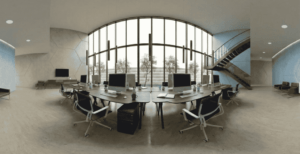
Most people don’t really know what an office is like until they actually walk into it. Before that, they rely on whatever information is available online. Company websites usually show a few neat photographs. Career pages talk about work culture, flexibility, and teamwork. But these things rarely explain how the office works in real life.
An office is not just about design or branding. It is about how space is used. How far desks are from each other. Whether there is room to move comfortably. How light enters the workspace. Where meetings happen and how people interact throughout the day. These details affect everyday work, yet they are almost never visible to someone outside the organization.
This is where 360° corporate office tours using images become useful. A virtual company walkthrough does not try to sell a story. It simply allows people to see the workspace as it is, without filters, commentary, or exaggeration.
What a Virtual Company Walkthrough Really Shows
A virtual office walkthrough is built from real panoramic photographs taken inside an actual workplace. Each image captures a complete view from a single position. These points are then linked together, allowing viewers to move naturally from one area to another.
Nothing in the tour is fabricated or digitally imagined. There are no recreated layouts or artificial enhancements. Open spaces appear open. Narrow sections feel limited. Corridors, storage zones, shared desks, and overlooked corners are all visible.
Unlike promotional videos, the tour does not guide attention. The viewer decides where to look, when to move, and how long to stay in one place. This freedom changes how the space is perceived. People slow down, explore carefully, and begin to understand the office instead of just looking at it.
Why Office Photos Don’t Give the Full Picture
Most offices rely on carefully selected photos to represent their workplace. These images are clean and well-framed, but they are incomplete.
A photograph only shows one angle. It hides what is behind the camera. It does not show how rooms connect or how busy certain areas feel. A meeting room might look impressive, but there is no way to understand its surroundings or how often it is used.
Workplaces function as connected systems. A 360° office tour restores this connection. It shows how reception areas lead into work zones, how meeting rooms sit next to teams, and how movement flows across the office. This context matters more than appearance.
What People Actually Notice in a 360° Office Tour
When people explore a virtual office, they rarely focus on design themes or branding elements. Their attention goes to practical details, such as:
- How close desks are placed
- Whether natural light reaches work areas
- How wide the walkways feel
- Where meeting rooms are located
- How open or enclosed the space is
- Whether the environment feels quiet or busy
These observations influence decisions naturally. Candidates imagine working there. Clients assess how organized the company is. Partners try to understand scale and structure. The office speaks for itself.
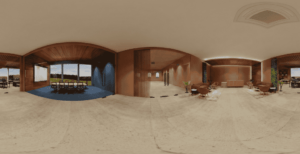
Virtual Office Tours and Hiring Decisions
Job listings often describe culture in words. A virtual office tour shows how that culture is physically supported.
Candidates can see whether teams sit together or are spread out. They notice how much personal space exists. They get a sense of how formal or relaxed the environment feels. This information helps them decide whether the workplace matches their expectations.
When people know what kind of space they are walking into, fewer misunderstandings occur after joining. This makes hiring more practical and transparent.
Showing Transparency Without Explaining It
Many companies claim transparency. A 360° corporate office tour demonstrates it without saying anything.
Boardrooms, workstations, common areas, and support spaces are visible exactly as they are. There is no narration guiding interpretation. No features are highlighted to influence opinion.
For organizations with multiple locations, this becomes even more valuable. Teams, investors, and partners can view offices remotely without scheduling visits. Every location is presented honestly.
Corporate Facilities Beyond Regular Offices
Virtual walkthroughs are not limited to desk-based environments. Many companies use them to showcase operational spaces.
These include:
- Manufacturing floors
- Warehouses
- Data centers
- Research labs
- Training facilities
- Corporate campuses
Some of these areas are difficult to visit due to safety or operational reasons. A virtual tour provides access without interrupting work. It also helps during onboarding, audits, and compliance reviews.
Why 360° Image Tours Are Different from Videos
Videos move at the pace chosen by the creator. The viewer follows a fixed path.
In a 360° office tour, the viewer controls everything. They can pause, turn around, zoom in, or skip areas. This is especially useful in professional settings where people want to understand layouts, not just watch visuals.
Slower, self-guided exploration leads to better understanding of space.
Accuracy Is the Real Value
Virtual office tours are not meant to look cinematic. Their value lies in accuracy.
Real lighting, realistic angles, and unedited views build trust. A well-maintained office does not need enhancement. A poorly maintained one becomes visible quickly. This honesty is what makes these tours useful.
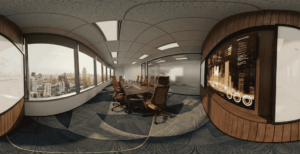
Internal Use of Virtual Office Walkthroughs
Many companies use these tours internally.
They are used for:
- Employee orientation
- Remote onboarding
- Facility planning
- Safety training
- Emergency route awareness
Employees understand layouts before arriving. Managers plan changes without visiting every floor. Safety teams use the tour as a reference tool.
Keeping the Tour Relevant
A virtual office tour captures a specific moment. Offices change. Teams grow. Layouts shift.
If the tour is outdated, it can create confusion. Updating the tour is essential to maintain trust. Accuracy matters more than longevity.
Who Benefits from These Tours
Anyone who wants clarity before making a decision benefits from virtual office tours.
This includes job seekers, clients, partners, remote employees, facility planners, and investors. Seeing the space before committing reduces uncertainty.
360° corporate office tours using images do not attempt to persuade or impress. They do not replace physical visits. They simply show the workspace as it exists.
In corporate environments, this kind of visibility is often enough. People explore freely, form their own opinions, and make better-informed decisions.