
The logistics and manufacturing industries rely on efficient operations, skilled employees, and strict safety standards. From operating heavy machinery to managing warehouse activities, proper training is essential for workers to perform their duties effectively.
However, traditional training methods such as manuals, classroom lessons, and job shadowing often fall short when it comes to preparing employees for real workplace challenges.
Virtual Reality (VR) training is changing the way companies develop their workforce by creating immersive environments where employees can safely practice real job tasks. This is why more logistics and manufacturing organizations are turning to VR to improve safety, lower expenses, and build a more skilled workforce.
What is VR training?
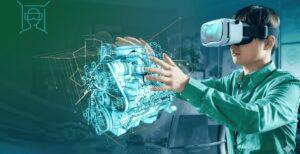
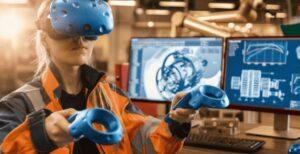
Virtual Reality (VR) training is an innovative approach that recreates real work environments—such as factories, warehouses, and production lines—inside a digital space. By wearing VR headsets, employees can interact with virtual machines, tools, and workflows in a way that closely mirrors real operations. This approach allows workers to gain practical experience and improve their understanding of processes without the risks linked to real equipment or hazardous conditions.
Why Logistics & Manufacturing Industries Need VR Training
Training employees in industrial environments is often complex and risky. Errors during training can result in equipment damage, safety issues, or interruptions to normal operations. With VR training, workers can safely practice and refine their skills in a virtual setting before applying them on the job.
Some common training challenges in logistics and manufacturing include:
- Safety risks during equipment training
- Limited access to machinery for training purposes
- High cost of training materials and trainers
- Inconsistent training across multiple locations
- Slow onboarding of new employees
Key Applications of VR Training in Logistics & Manufacturing
Warehouse Operations Training: VR simulations can recreate realistic warehouse environments where employees can practice tasks like picking, packing, inventory management, and order fulfillment.
Forklift and Equipment Operation: Workers can learn to operate forklifts, conveyor systems, and other heavy machinery in a safe environment without the risk of accidents or equipment damage.
Assembly Line Training: Manufacturing employees can practice step-by-step assembly processes in a virtual production environment before working on real assembly lines.
Workplace Safety Training: Through VR simulations, employees can prepare for emergency situations like fires, machinery breakdowns, and chemical spills in a safe environment.
Maintenance and Repair Training: Technicians can practice maintenance procedures on virtual machines, helping them understand complex systems without shutting down real equipment.

How VR Training Works
The VR training process typically involves several steps:
1. Virtual Environment Development
A digital replica of the warehouse, factory, or production floor is created.
2. Scenario-Based Training Modules
Training simulations are designed to replicate real workplace situations.
3. Immersive Learning Experience
Employees wear VR headsets and complete interactive training tasks.
4. Real-Time Feedback
The system provides instant feedback on mistakes and performance.
5. Performance Analytics
Managers can track employee progress, training completion, and skill development.
Benefits of VR Training for Logistics & Manufacturing Companies
Improved Workplace Safety: Employees can practice hazardous tasks safely in a virtual environment, reducing the risk of accidents.
Faster Employee Onboarding: VR training helps new employees understand processes quickly through hands-on learning.
Reduced Training Costs: Companies can train multiple employees at the same time without relying on costly physical equipment or interrupting production.
Better Knowledge Retention: Immersive experiences improve learning retention compared to traditional training methods.
Standardized Training Programs: VR makes it possible for companies to deliver the same training experience to employees across different locations and facilities.
Increased Productivity: Well-trained employees perform tasks more efficiently and make fewer mistakes.
Real-World Impact of VR Training
Around the world, many companies are adopting VR training for logistics and manufacturing teams. This approach has helped improve employee involvement, streamline training, and strengthen safety standards. In addition, VR also helps organizations test workflows and factory layouts in a virtual space before introducing them in real-life operations.
The Future of VR Training in Industrial Sectors
As technology continues to evolve, VR training will become even more powerful with innovations such as:
- AI-powered virtual trainers
- Multi-user collaborative VR environments
- Real-time performance analytics
- Integration with corporate learning management systems (LMS)
These advancements will make workforce training more scalable, interactive, and data-driven.
The logistics and manufacturing industries are increasingly embracing advanced technologies to improve efficiency and remain competitive. VR training has emerged as a valuable solution that allows companies to train employees in a safe, practical, and engaging environment. These realistic simulations help build practical skills, improve safety awareness, and accelerate training outcomes. Companies that invest in VR training today are laying the foundation for a stronger and more capable workforce.