
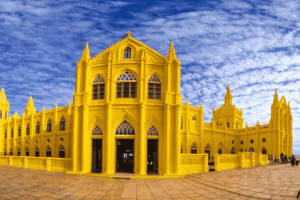
Stepping into a small temple as a child, the sound of bells filled the air, mingling with the scent of incense. There was a gentle hum of devotion, quiet yet persistent, surrounding every corner. For years, visits became rare—life, distance, and responsibilities often got in the way. Yet the memory of that space lingered, its calm presence remembered long after leaving. Even now, seeing that familiar layout or the sunlight filtering through carved windows evokes the same quiet awe, a connection that time and distance cannot erase. That’s where 360° image tours come in. They are not fancy technology for the sake of it—they are a way to reconnect with places that mean something.
Temples, churches, mosques, and pilgrimage sites are more than bricks and stones. People leave pieces of themselves there. Some go to say thank you, some to ask for help, and others just to sit quietly and watch the light change through windows or doors. These are places that carry memory. A childhood visit, a festival spent with family, a prayer during a difficult moment—these experiences linger even when you stop visiting.
But life often gets in the way. Age, distance, work, finances—sometimes you just cannot go. Gradually, these connections fade into memory. A 360° image tour doesn’t replace a visit. It isn’t supposed to. It simply gives you a chance to feel close again. For someone living far from home, seeing a familiar religious site on a screen can feel grounding. It reminds you of where you come from, even for a few minutes.
Why 360° Images Are Different
A regular photo shows one angle, one perspective. The photographer chooses what you see, and that’s it. But religious places are meant to be experienced in their entirety. They are spaces you walk through, pause in, notice little details, feel the light shift.
With a 360° image, you get control. You can look around, look up, or glance behind you. You can linger on a corner, pause at a statue, or just watch how shadows move across a floor. That small freedom changes the experience. It stops being a picture and starts feeling like a space you are standing in.
Faith is personal. Different people notice different things. Some are drawn to the main altar, some to the edges, the open spaces, or even the quiet corners. A 360° image lets that connection happen naturally.
Temples: More Than the Idol
In a temple, the idol is important, yes, but the path to it is also meaningful. The way people walk, bow, stop, and sit tells a story. Every step, every movement matters.
A 360° image tour shows this naturally. There is no forced explanation. The temple itself speaks. For those far away, it can be surprisingly emotional. They are not just seeing a temple—they are recognizing it.
For younger people or those who didn’t grow up visiting temples often, these tours are educational too. You can see how rituals and space connect. Faith is not rushed. It moves slowly, step by step.
Even crowded temples during festivals benefit from virtual tours. People can explore calmly, noticing details they might have missed in a crowd, building curiosity for a future visit.
Churches: The Calm of Space
Entering a church often brings quiet automatically. Even people who aren’t religious lower their voices. Long aisles, high ceilings, light from tall windows—it all encourages reflection.
360° images capture this without extra effects. No dramatic lighting, no artificial music—just space as it is. People who visited churches in childhood and moved elsewhere often feel a quiet familiarity. It’s memory returning.
Some viewers take it as reflection; others just watch. Either way, nothing is forced. You can linger as long as you want, notice what catches your eye.
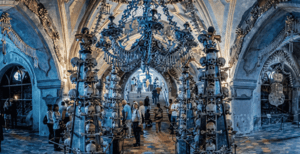
Mosques: Quiet Observation
Mosques are disciplined places. Prayer times, movement, and order matter. Many people hesitate to explore them, which is understandable.
360° image tours allow observation without disruption. Devotees and non-devotees can see the prayer hall, the courtyard, and the overall layout respectfully. For non-Muslims, it’s educational. For Muslims living far away, it can feel comforting. Even an empty prayer hall carries meaning.
It’s not about curiosity—it’s about understanding. Seeing the space clearly removes assumptions and allows quiet awareness.
Pilgrimage Sites: Preparing for the Journey
A pilgrimage is more than a destination. The journey itself can be challenging. Long walks, crowds, waiting, physical strain—all of it is part of the experience. First-timers often feel nervous.
360° tours help mentally prepare people. You can see routes, waiting areas, and surroundings. Elderly devotees benefit a lot. Knowing what to expect reduces fear and confusion. Even those who cannot travel at all find peace. It is not the real journey, but it is still meaningful.
Honest Representation
A big mistake with virtual religious tours is over-editing, over-brightened colors, artificial light, dramatic angles—they can feel fake. Sacred spaces don’t need that.
Good 360° tours show neutral lighting, real conditions, normal angles. No music, no filters, no artificial enhancement. The place should feel like it does when standing there quietly. Simplicity builds trust. The connection feels real.
Preserving Heritage
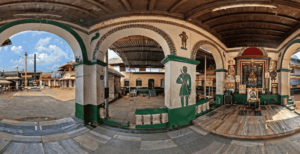
Many religious sites are centuries old. Time, weather, crowds, and renovations take a toll. 360° images become a record. They preserve how the place looks today, for future generations. Historians, students, and even families benefit from these records. Once a detail is lost, it cannot always be restored.
Access Without Changing Faith
These tours don’t modernize religion or alter belief. Faith remains personal. The screen is only a window. Not everyone needs it, and that’s fine. But for those who use it, it provides connection. Sometimes, just being able to see a sacred place is enough.