
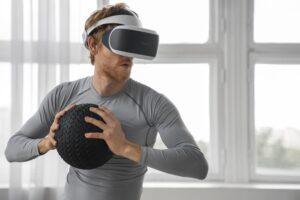
The fitness industry in India has a retention problem that nobody talks about honestly enough. Gym membership sign-ups in January are a cultural phenomenon — the queues at equipment, the renewed energy, the genuine intention to change. By March most of those new members have stopped coming. By June the gym is back to its core of regulars who would have been there regardless of any resolution.
The dropout rate for gym memberships globally is between sixty and eighty percent within the first six months. In India the numbers are consistent with global patterns. People sign up with genuine intent and stop coming because exercise — for the vast majority of people who are not intrinsically motivated by fitness — feels like work. It is effortful, repetitive, uncomfortable work that competes with every other claim on limited time and energy. VR fitness attacks this problem at its root rather than at its symptoms.
Why VR Changes the Exercise Equation
When the exercise is happening inside a boxing game, a rhythm experience, a physically demanding adventure, or a competitive sports simulation, the brain processes the activity differently. The effort is real — the calories burned, the heart rate elevated, the muscles engaged are all genuine physiological responses to genuine physical movement. But the psychological experience of that effort is completely different from the psychological experience of running on a treadmill while staring at a wall.
Research on VR fitness consistently shows the same pattern — people exercise longer, at higher intensity, and with greater reported enjoyment when the exercise is delivered through an immersive VR experience than when it is delivered through conventional gym equipment. The immersion distracts the brain from the discomfort signals that normally cause people to reduce intensity or stop. The game mechanics provide external motivation — score to beat, level to complete, opponent to defeat — that sustains effort beyond what internal motivation alone can maintain.
The person who cannot make themselves run for twenty minutes on a treadmill will play a VR boxing game for forty minutes without noticing they are exercising. That is not a marginal difference in user experience — it is a transformation of the fundamental barrier that keeps most people from maintaining consistent exercise habits.
The Business Model and Target Market
A VR fitness studio targets the largest and most consistently underserved segment of the potential fitness market — people who want the health benefits of regular exercise but genuinely dislike conventional exercise environments.
This is not a niche demographic. It is the majority of the adult population. The people who have tried gyms and stopped, who know they should exercise more but find conventional options unpleasant enough to consistently avoid, who would exercise more willingly if the experience itself were different—these people exist in enormous numbers, and they are almost entirely unserved by the current fitness market which is built almost entirely around the minority who actually enjoy conventional exercise.
The business model combines elements of a fitness studio with elements of a gaming venue. Session-based pricing — charging per session or per time block — works alongside membership models that provide recurring revenue and build the regular client base that sustains any fitness business.
Corporate wellness partnerships for group fitness sessions—companies booking regular VR fitness sessions for their employees as part of wellbeing programs—provide B2B revenue alongside individual consumer sessions. The novelty and the genuine physical engagement of VR fitness make it a compelling corporate wellness offering compared to conventional gym memberships that most employees never use.
Space and Equipment Requirements
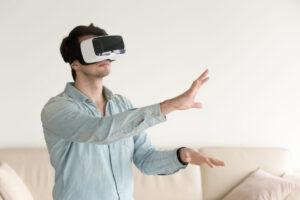
VR fitness requires more open floor space per user than standard VR gaming because the physical movements involved—boxing combinations, full-body movements, lateral steps, reaching, and ducking—require genuine room to execute safely.
A minimum of twenty-five to thirty square feet of clear floor space per simultaneous VR fitness user is a practical baseline. Safety flooring that cushions falls and provides grip for movement is genuinely important in a fitness context in a way that it is less critical in standard gaming VR.
The content library for a VR fitness studio needs to be specifically fitness-oriented rather than general gaming. Supernatural, Beat Saber, Thrill of the Fight, FitXR — these and similar titles are designed around genuine physical engagement rather than seated or minimal movement gameplay. Understanding the difference between VR gaming and VR fitness content and curating accordingly is a basic operational competence that distinguishes a genuine fitness business from a gaming cafe that happened to notice people were burning calories.
Equipment rented from us allows you to validate the specific fitness content that resonates with your local customer base before committing to a purchased fleet. Understanding whether your customers gravitate toward rhythm-based experiences, combat simulation, or sports VR before buying a library of content licenses alongside your headset purchase is genuinely valuable early-stage intelligence.
The Retention Advantage
This is the most commercially significant difference between a VR fitness studio and a conventional gym, and it deserves explicit attention.
Gyms lose members because members stop coming. VR fitness retains members at significantly higher rates because the experience itself—the game, the score, the progress—gives people a reason to return that gym equipment simply cannot provide.
A member who is trying to beat their previous score in a VR boxing session has an intrinsic reason to come back that has nothing to do with fitness goals and everything to do with game progression. That reason is more reliable than fitness motivation for the majority of the population. Better retention means better revenue per member, lower acquisition cost relative to lifetime value, and a more financially stable business model than conventional gyms typically achieve.
Getting Started
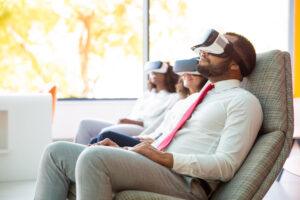
Start with rented equipment from us for the initial validation period—run trial sessions with small groups; understand which content generates the most physical engagement and genuine enjoyment, and gather data on session durations, return visit rates, and the specific experiences that generate the word of mouth filling subsequent bookings.
Purchase your own fleet when the validation data supports it. We can advise on the headset configuration and content library that best serves a fitness-oriented operation specifically as distinct from a gaming-oriented one — because the operational requirements are genuinely different and the equipment choices should reflect that.
The VR fitness market in India is at an extremely early stage. The first well-run VR fitness studio in most Indian cities will not have competition to worry about for a meaningful period. Use that window to build the client base, the reputation, and the operational systems that make the business genuinely difficult to compete with when competition eventually arrives.