
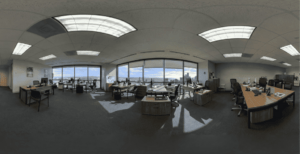
People usually understand a business space only after they have seen it themselves. Until then, they depend on what is shown online. Most company websites include a few selected images. Brochures and presentations describe the organization’s values and scale. While this information looks complete, it rarely explains how the space actually feels or functions during a normal workday.
A workplace is not defined only by appearance. It is shaped by how areas connect, how people move through them, and how space is shared. The distance between teams, the flow between rooms, and the placement of common areas all influence daily work. These details are difficult to communicate through text or standard photographs.
360° image-based corporate tours help make these details visible. They do not add interpretation or storytelling. They allow viewers to look at offices, workplaces, and business spaces in their existing form and reach their own understanding.
What a 360° Image-Based Corporate Tour Shows
An image-based corporate tour is created using real panoramic photographs taken inside an office or business facility. Each image records the full surroundings from a single point. These images are then connected so viewers can move through the space gradually.
The tour does not include recreated layouts or digital enhancements. What appears in the images reflects the actual condition of the space at the time of capture. Larger areas feel open. Smaller rooms feel restricted. Support spaces, corridors, and shared areas are visible without being edited out.
Unlike videos, the tour does not move on its own. The viewer controls the pace and direction. This allows people to pause, look around, and focus on details that matter to them.
Why Standard Office Photos Are Often Misleading
Photographs are limited by framing. They show one angle and remove everything outside that frame. Even high-quality images cannot explain how different parts of a workplace relate to each other.
A meeting room may appear impressive in a photo, but its location within the office remains unclear. There is no sense of nearby activity, movement, or noise. Without context, it is difficult to understand how the space is actually used.
360° image-based tours restore that missing context. They show how areas connect and how people might move through the space. This makes the workplace easier to understand as a whole.
What People Notice When Exploring a Workplace Tour
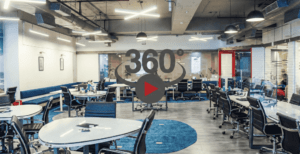
When viewers explore a business space through a virtual tour, they usually focus on practical aspects rather than design. They pay attention to things like desk spacing, walkways, and light. They notice where meeting rooms are placed and how open or enclosed the environment feels.
These observations help people form realistic expectations. Job candidates imagine daily routines. Clients assess organization. Partners try to understand scale and structure. The space communicates information without explanation.
Use of Image-Based Tours in Hiring
Written job descriptions often describe work culture in general terms. An image-based office tour shows how that culture is supported by the physical environment.
Candidates can see how teams are arranged and how much space exists between work areas. They can judge whether the office feels structured or informal. This clarity helps people decide whether the environment suits them before making commitments.
Showing Transparency Through Visibility
Many organizations speak about transparency. A corporate tour demonstrates it by simply showing the space.
Workstations, boardrooms, common areas, and support facilities appear as they are. There is no narration or emphasis placed on selected features. Viewers interpret the space independently.
For companies with multiple locations, this approach provides consistent visibility without requiring physical visits.
Business Spaces Beyond Offices
Image-based tours are also used for facilities beyond standard offices. These include manufacturing units, warehouses, data centers, training facilities, and corporate campuses.
Some locations are difficult to access regularly due to safety or operational reasons. A virtual tour allows controlled viewing without interrupting work. It is useful for onboarding, audits, and internal planning.
Difference Between Image-Based Tours and Videos
Videos follow a fixed sequence. The creator decides what is shown.
Image-based tours allow exploration. Viewers choose where to look and how long to stay in one area. This makes it easier to understand layout and spatial relationships.
Why Accuracy Matters
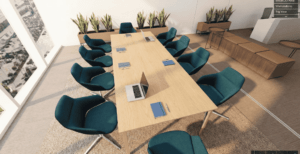
The purpose of an image-based corporate tour is not presentation. It is accuracy.
Real lighting and unedited views build trust. A well-maintained space does not need enhancement. A poorly maintained one becomes visible. This honesty is the value of the format.
Internal Uses of Corporate Tours
Many organizations use these tours internally. They support employee orientation, remote onboarding, facility planning, and safety awareness.
Teams become familiar with layouts in advance. Managers review spaces without physical walkthroughs. The tour becomes a practical reference.
Keeping Tours Updated
A tour reflects a specific point in time. Offices change. Teams grow. Layouts evolve. If the tour is outdated, it can mislead viewers. Updating it ensures accuracy and maintains trust.
360° image-based corporate tours aren’t trying to impress anyone or make a space look better than it is. They don’t replace the experience of walking through an office, feeling the atmosphere, or seeing how people actually work.
What they do is simple but important—they show workplaces, offices, and business spaces exactly as they are. You can notice how spaces flow, how people move, and how areas are used day to day. It’s a straightforward, honest view that lets anyone understand the reality of a space without guesswork or hype.