
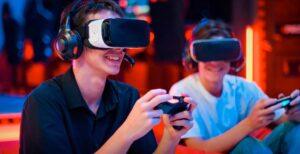
Haryana doesn’t strike most people as the obvious choice for a VR gaming cafe. When you think of virtual reality businesses, your mind probably goes to Bangalore, Mumbai, or Delhi first. But spend some time actually paying attention to what’s happening in Haryana’s cities right now, and the picture starts looking very different.
The crowd is already there—it just needs somewhere to go.
Walk through any busy area in Ambala, Rohtak, Hisar, or Faridabad on a weekend evening and you’ll notice something pretty consistent. Groups of young people — college students, young working professionals, school kids with their friends — moving around looking for something worth doing.
The options available to them are mostly the same ones that have existed for years. Dhabas, malls if the city has one, and maybe a cinema. These aren’t bad options, but they’re familiar to the point of being predictable. When something genuinely new shows up in these cities, people notice. Word travels fast here, faster than most people expect, and curiosity pulls crowds in ways that no marketing campaign can fully replicate.
A VR gaming cafe is exactly the kind of thing that creates that reaction. Most people in these cities have heard about virtual reality — seen it on YouTube, watched someone talk about it online — but have never actually tried it themselves. That gap between knowing about something and experiencing it is where opportunity lives.
Haryana’s Youth is More Ready For This Than You’d Expect
There’s a tendency to underestimate smaller cities, and it’s usually a mistake. Young people in Haryana today are connected, informed, and genuinely curious about experiences beyond what their immediate surroundings offer.
They follow the same creators, watch the same content, and want access to the same experiences as anyone in a metro city. The appetite is there. The infrastructure to satisfy it, in many cases, still isn’t there — and that gap is precisely what makes this a good time to move.
The state also has a genuinely young population. Universities and colleges across Haryana churn out thousands of students who spend significant time in cities away from home. These students have disposable time, social energy, and a strong preference for experiences they can share with their friend groups. A VR cafe hits all three of those things at once.
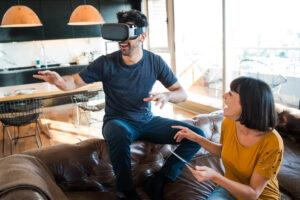
The social element is everything.
Here’s something worth understanding about how people in Haryana like to spend time together — it’s almost always in groups. Going out alone is less common. People move in circles—friends, cousins, college batches, and neighborhood groups. Plans get made collectively, and outings are treated as shared experiences rather than individual ones.
One person puts on the headset, and suddenly everyone around them is involved. The reactions — the laughter, the sudden movements, the loud commentary — become part of the entertainment for the whole group. People waiting for their turn aren’t bored; they’re genuinely entertained by watching their friend navigate a virtual world. That energy feeds itself.
A well-designed VR cafe in Haryana should lean into this completely. Comfortable seating for the people watching and screens showing what the player sees. There should also be enough open space so groups feel like they can settle in and stay a while rather than rushing through. When people are comfortable, they stay longer. When they stay longer, they spend more and come back sooner.
Pick the Right City and the Right Location
Not every city in Haryana makes equal sense as a starting point. Gurugram has obvious foot traffic but also significantly higher costs and stronger competition. A better starting point might be a city like Rohtak, Karnal, or Ambala—large enough to have a solid young population but without the overhead costs and market saturation of the bigger metros.
Location within the city matters just as much. Areas near colleges and universities are natural fits — students are always looking for something different to do between classes or after the day ends. Markets and commercial areas with consistent evening foot traffic also work well. Visibility helps enormously in the early days. When people can see what’s happening inside, curiosity does the rest.
Starting Doesn’t Require as Much as People Think
One of the things that stops people from acting on ideas like this is the assumption that the setup costs are enormous. They don’t have to be.
A solid starting setup with four to six VR stations is genuinely achievable without a massive initial investment. Good-quality VR headsets have become more accessible in price over the last few years, and the range of content available — games, experiences, multiplayer options — is broad enough to keep a rotating crowd interested.
Starting smaller and letting the business grow organically is a smarter approach than expanding immediately. Get the experience right first. Figure out which games people in your specific city love most. Build the regular crowd before expanding the setup.

The Timing Feels Right
Gaming culture in India has been growing steadily for years, and smaller cities are catching up quickly. The audience that once only existed in metros has been building quietly in cities across Haryana. VR specifically still has very limited physical presence outside major urban centres, which means whoever moves first in a given city has a real head start.
Haryana is practical, direct, and doesn’t waste time once something makes sense. If you’ve been sitting on this idea, that’s probably the most Haryanvi advice anyone can give you.